💰 Budget
Chanthaburi is one of the cheaper provincial capitals in eastern Thailand, with few foreign visitors and prices set by local demand. Guesthouses in the old town and hotels near the centre cost far less than the coast at Pattaya or Koh Chang, and food is inexpensive. The extra costs are hired transport to the waterfalls and park entry fees, and rooms tighten at weekends and during the fruit season.
- Daily Budget Midrange
- USD 60–120 (town or riverside hotel, restaurant meals, a hired car or driver for the parks)
- Daily Budget Shoestring
- USD 25–45 (guesthouse, market food, songthaews and local buses)
Come on a weekend if the gem trade is the reason for visiting, and on a weekday if quiet streets and cheaper rooms matter more.
📅 Best Time to Visit
November to February is dry, warm and comfortable. May and June are wet but bring the durian, mangosteen and rambutan harvest and the fruit fair, and the waterfalls in the hills are at their strongest late in the rains. Chanthaburi faces the southwest monsoon and is among the wettest parts of Thailand from May to October.
⏳ Suggested Number of Days
One to two days covers the old town, the cathedral and the gem streets. Allow about three in all to include the waterfalls, the coast or the orchards. Fruit season and the weekend gem market both reward a longer stay.
- First Visit
- 1–2 days
- With Surroundings
- 3 days
🚆 Transportation
The town centre is small enough to cross on foot, and songthaews, motorbike taxis and hired motorbikes cover the rest. Buses and minivans from Bangkok's Eastern terminal at Ekkamai and from Suvarnabhumi airport reach the bus terminal on the edge of town, with services along the coast to Rayong, Pattaya and Trat. There is no railway. The national parks and the beaches need a hired car, a motorbike or a driver.
Arrange a car or driver a day ahead for Namtok Phlio and Khao Khitchakut; public transport to the parks is limited.
🛬 Airport & Station Connections
Chanthaburi lies about 245 kilometres south-east of Bangkok, roughly four hours by bus or minivan from the Ekkamai terminal and a little less by car on the motorway and Highway 3. Buses also run from Suvarnabhumi airport and along the coast from Pattaya, Rayong and Trat. The nearest airports are U-Tapao near Sattahip and Trat, both a few hours away.
🚶 Walkability
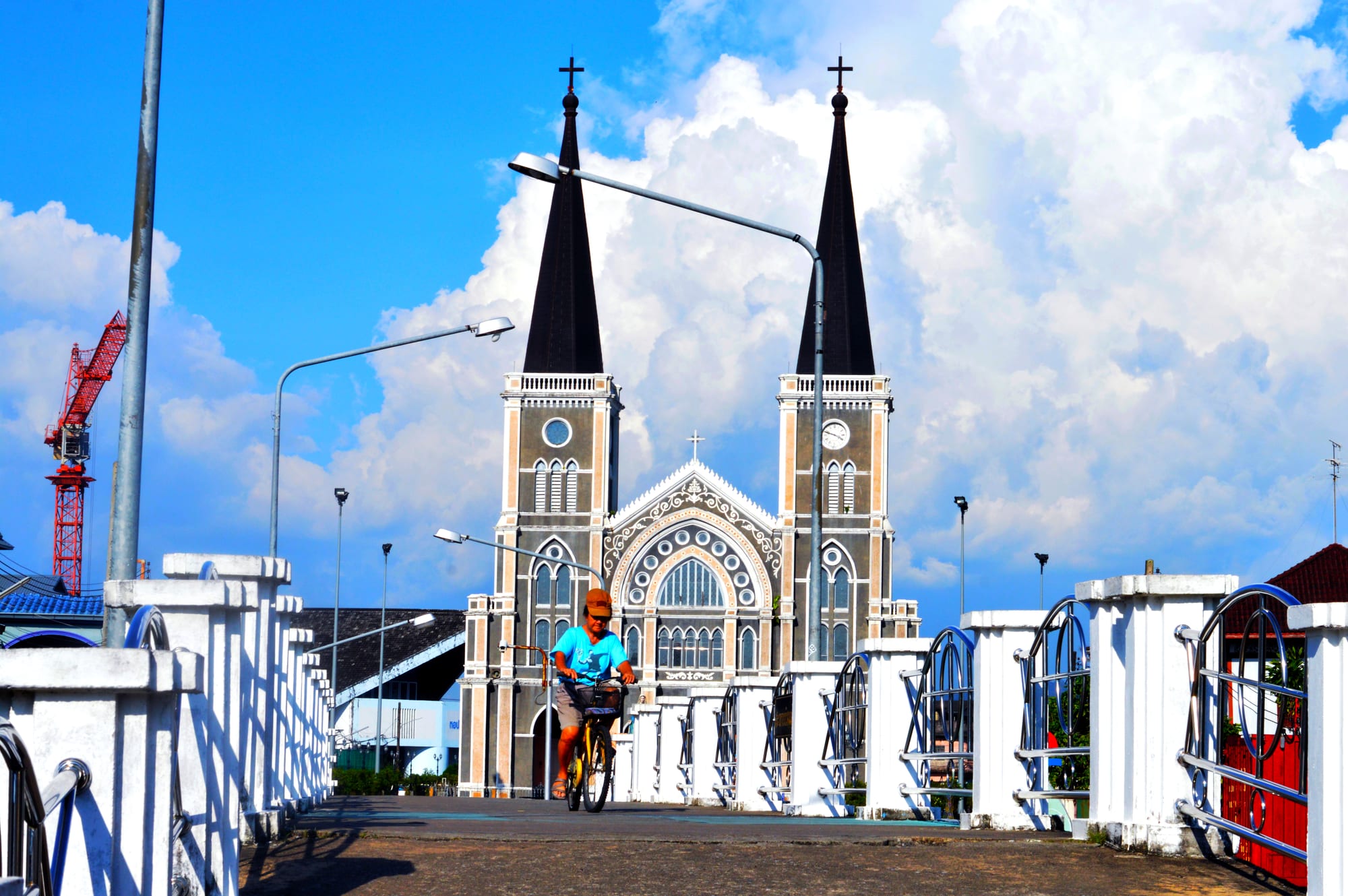
The old waterfront lane, the cathedral and the town market are all within a short walk of each other, and the footbridge links the two banks of the river. Beyond that grid the streets are hot, busy with motorbikes and short of shade, and the bus terminal and outer hotels are too far to walk comfortably in the middle of the day.
🛡️ Safety
Chanthaburi is a quiet provincial town with little crime affecting visitors. The best-known risk is the gem trade, which has a long record of scams aimed at outsiders who cannot judge stones. Road accidents, especially on motorbikes, are the other real danger, and rocks at the waterfalls are slippery. Clashes on the Cambodia–Thailand border reached Chanthaburi province in July 2025; a ceasefire agreed in December 2025 has held, but border crossings have been closed or restricted at short notice.
Buy gems only with independent expertise, wear a helmet on a motorbike, take care on wet rocks at the falls, and check the status of Cambodian border crossings. Check current official travel advice before travelling.
🌦️ Climate
Tropical and, because the province faces the southwest monsoon across the Gulf, among the wettest in Thailand. The dry season runs from November to April; the rains from May to October are heavy and can flood streets and swell the river.
- Summer
- hot and humid, about 28–35°C from March to May, turning stormy as the rains arrive
- Winter
- dry and warm from November to February, about 22–32°C, with pleasant evenings
🤝 Local Customs
Usual Thai manners apply: a wai rather than a handshake, shoes off indoors and in temples, shoulders and knees covered at religious sites, and no touching of anyone's head. The cathedral is a working parish church, so services should not be interrupted. Speaking calmly and avoiding open anger matters; so does respect for the monarchy, which is protected by law. Tipping is not expected, though small change is often left.
Ask before photographing people, shopkeepers or gem dealers at work, dress modestly for the cathedral and for temples, and remove shoes where others have.
💳 Common Payment Methods
The currency is the Thai baht. Cash is still the everyday method in markets, songthaews and small restaurants, and ATMs are easy to find in the town centre. Cards are accepted at hotels, supermarkets and larger shops, and Thai QR-code payment is widespread but generally needs a Thai bank account. The gem trade works largely in cash.