💰 Budget
Reaching Orkney adds a ferry or flight to the cost of any trip, and rooms in Kirkwall are limited and fill quickly in summer. Once there, eating out in cafés and pubs is moderately priced, many sights such as the cathedral and the museum are free, and a bus day ticket covers the Mainland, though a car makes the scattered Neolithic sites easier.
- Daily Budget Midrange
- USD 200–370 (guest house or bed and breakfast, restaurant dinners, a distillery tour and site tickets, a hire car)
- Daily Budget Shoestring
- USD 80–130 (hostel or campsite, cafés and supermarket food, buses)
Have accommodation sorted before arriving on a late-evening ferry, and check the cruise ship calendar to avoid the busiest days at the main sights.
📅 Best Time to Visit
May to September brings long days, the St Magnus Festival at midsummer and the easiest travel, though the main sights are busiest when cruise ships are in. Spring and autumn are quieter. Winter is dark, windy and wet, but the Ba' Game at Christmas and New Year is the town's most distinctive event.
⏳ Suggested Number of Days
Kirkwall itself fills a day, and two or three days allow time for the main sites on the Mainland. Four to six days give room for the outer islands, which depend on ferry and flight timetables, and for days lost to weather.
- First Visit
- 2–3 days
- With Surroundings
- 4–6 days
🚆 Transportation
The old town is compact and easily walked. Stagecoach buses run from Kirkwall across the Mainland, including an hourly service to Stromness via Stenness and a route south over the Churchill Barrier past the Italian Chapel, but timetables are geared to shoppers and the school run, with gaps in the afternoon. Bikes are not carried on the buses, so a hire car is the easiest way to see several sites in a day.
Ferries to the North Isles leave from the town-centre piers, not from Hatston; check which pier before setting off.
🛬 Airport & Station Connections
Kirkwall Airport, the main airport for Orkney, is south-east of the town, and Loganair flies there from Aberdeen, Edinburgh, Glasgow, Inverness and Sumburgh in Shetland; a bus links it to the town. The NorthLink ferry between Aberdeen and Lerwick calls at Hatston several nights a week, while shorter crossings from Caithness land at Stromness and St Margaret's Hope, with buses on to Kirkwall.
🚶 Walkability
The historic centre is small and walkable, along a narrow paved lane from the harbour to the cathedral. Beyond it Kirkwall is a modern, working town with marine industries along the shore, and the Hatston ferry terminal, about two miles north, is best reached by bus or taxi.
🛡️ Safety
The UK is generally safe, with the main risks being pickpocketing and phone theft in crowded parts of London and other cities, occasional late-night antisocial behaviour, and drink-related trouble around nightlife. Kirkwall is a small, quiet town. The main hazards are the weather — strong winds and rain — cold seas, and cliffs on coastal walks elsewhere in Orkney.
Keep away from cliff edges in strong winds, and allow for ferry and flight disruption in bad weather. Check current official travel advice before travelling.
🌦️ Climate
An oceanic climate with a strong maritime influence: Kirkwall is generally cooler than the rest of the UK in summer, though warmer than Shetland, and days are very long around midsummer and very short in winter.
- Summer
- cool — across Orkney summer temperatures average about 12°C
- Winter
- mild for the latitude but windy and wet — across Orkney winter temperatures average about 4°C
🤝 Local Customs
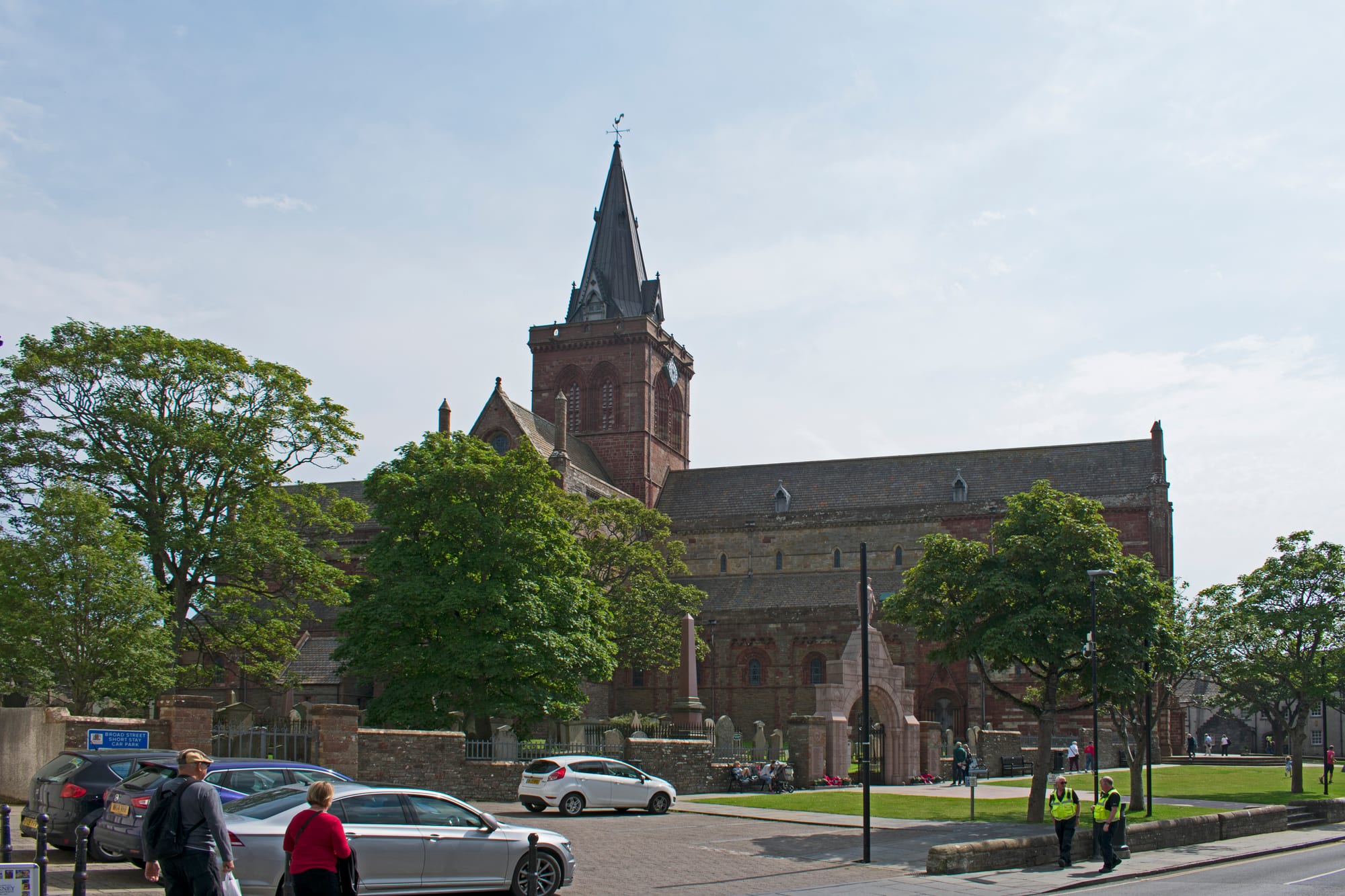
Orkney's identity is shaped by its Norse past: the town's name comes from Old Norse, and the islands' Norn language survived until the end of the 18th century before giving way to the Orcadian dialect of Scots. The cathedral is a working parish church and closes to visitors during services and funerals. On cruise days the old town and the main sites fill up, and visitors often return to the town in the evening after the ships have left.
Respect services and funerals at the cathedral, and give way to local traffic on the narrow streets of the old town.
💳 Common Payment Methods
The currency is the pound sterling. Cards and contactless payment are widely accepted, and bus drivers give change. Scottish banks issue their own sterling banknotes, which can be hard to change outside the UK, so leftover cash is best swapped for Bank of England notes before leaving.