History
The islands hold some of Europe's finest prehistoric remains. Orkney's Neolithic village of Skara Brae and its stone circles are around 5,000 years old, the standing stones of Calanais on Lewis are of similar age, and later Iron Age brochs, tall drystone towers, survive in Shetland and Caithness. Picts held the north and east, while from about 500 AD Gaels from Ireland built the kingdom of Dál Riata in Argyll, with Dunadd as a royal fort. In 563 St Columba founded the monastery on Iona.
From the late 8th century Vikings settled the islands. Orkney and Shetland were ruled by Norse earls and passed to Scotland only in 1468–69 as a pledge for a Danish princess's dowry, and the Hebrides stayed Norse until 1266. In the Middle Ages the MacDonald Lords of the Isles ruled much of the west until the crown suppressed them in 1493.
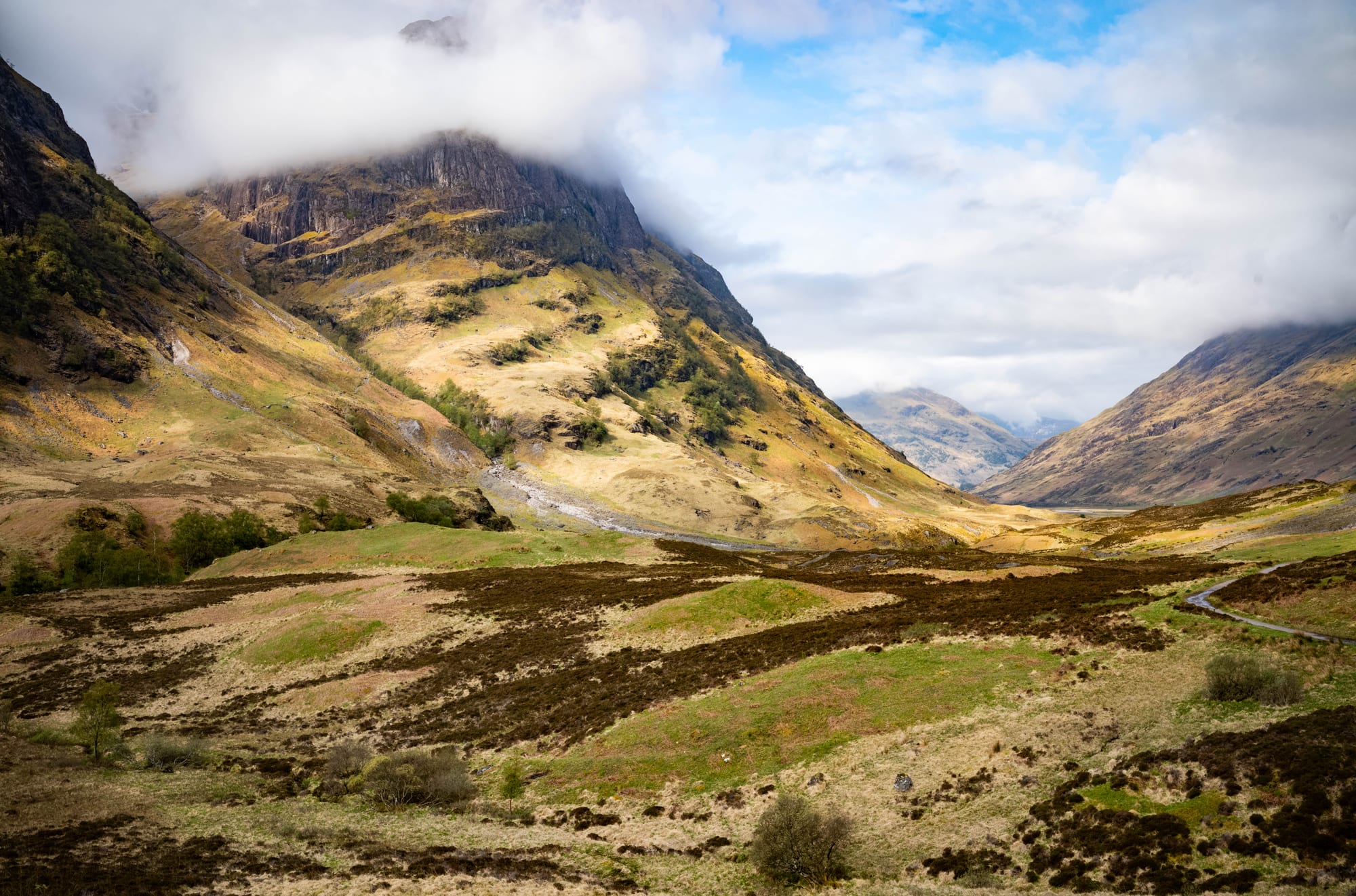
The clan system shaped the mainland until the 18th century. The Massacre of Glencoe in 1692 and the Jacobite risings ended at Culloden, near Inverness, in 1746, after which the government dismantled clan power. In the Highland Clearances of the late 18th and 19th centuries landlords evicted tenants to make way for sheep, sending many to the coast, the cities or abroad; protest on Skye and elsewhere led to the Crofters Act of 1886. In the 20th century Scapa Flow was a naval base in both world wars, oil came to Shetland and Orkney in the 1970s, and community land buyouts such as Eigg in 1997 have since returned estates to local ownership.