💰 Budget
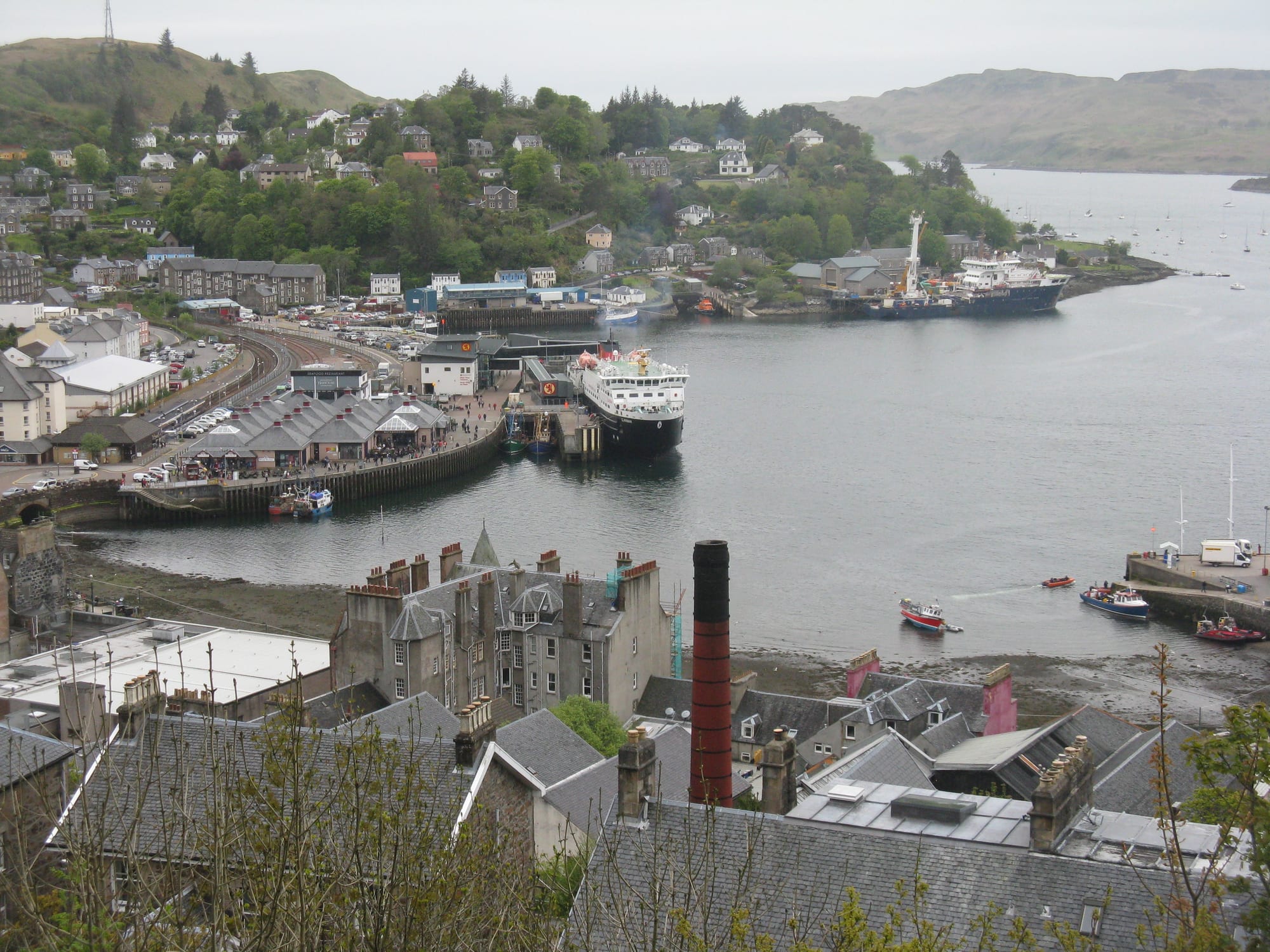
Oban is a busy transport hub, and its population of about 8,000 swells to more than 24,000 in the tourist season, so rooms are scarce and dearer in summer. Eating can be cheap at the seafood stall by the pier and the town's pubs. Island day trips, castle entry and car ferry crossings add most to the bill.
- Daily Budget Midrange
- USD 200–370 (guest house or bed and breakfast, seafood dinners, distillery tour, an island day trip or car ferry)
- Daily Budget Shoestring
- USD 80–130 (hostel bed, seafood from the pier stall and pub meals, foot-passenger ferries and buses)
Book car space on ferries well ahead in summer — caravans and motorhomes must book — and fill the fuel tank in town before heading to the islands.
📅 Best Time to Visit
May to September is the main season, when island trips, boat tours and sea kayaking are easiest and the Highland games is held in late August. Winters are mild and wet, ferry timetables are reduced, and the town is quiet but still working as the shopping centre for the islands.
⏳ Suggested Number of Days
Many visitors pass through Oban on the way to the islands and stay a night or two. Four or five days allow time for day trips to nearby islands and castles; longer stays depend on how many islands are added and how the ferry timetables fit together.
- First Visit
- 1–2 days
- With Surroundings
- 4–5 days
🚆 Transportation
Most sights in town can be reached on foot, though some guest houses are up a steep hill. Local buses run north to Dunbeg, Connel and the airport. The ferry to Kerrera leaves from Gallanach, three miles south of town, and does not carry visitors' cars. Bikes are useful for the coast roads, and a car is needed for sights further out.
Check ferry times and book car space ahead; Calmac does not let caravans or motorhomes join the stand-by queue.
🛬 Airport & Station Connections
Trains from Glasgow Queen Street take about three hours along the West Highland Line, and Citylink coaches from Glasgow take about the same; coaches from Edinburgh take about four hours and from Fort William about ninety minutes. The railway station, bus terminus and ferry terminal are side by side. Glasgow Airport is the nearest with a full range of flights; Oban Airport at North Connel, about 5 miles north-east, has only small planes to Coll, Colonsay, Islay and Tiree.
🚶 Walkability
The centre is compact and flat along the bay, from the ferry terminal to the North Pier and along the Corran Esplanade. Anything away from the seafront climbs steeply, including the steps up to McCaig's Tower, and Dunollie Castle is about a mile's walk north along the shore road.
🛡️ Safety
The UK is generally safe, with the main risks being pickpocketing and phone theft in crowded parts of London and other cities, occasional late-night antisocial behaviour, and drink-related trouble around nightlife. Oban is a small, quiet town. The hazards are mostly at sea and on the coast: cold water, strong tides and changeable weather for kayakers, divers and boat trips.
Use a guide or outfitter for sea kayaking and diving, check the weather and tides before heading out, and allow for ferry cancellations in bad weather. Check current official travel advice before travelling.
🌦️ Climate
A maritime climate with cool summers and mild winters. Rainfall is high, but thanks to the Gulf Stream the temperature seldom falls below 0°C.
- Summer
- cool to mild — across Scotland summer days typically average about 18°C and evenings about 11°C, with long evenings and frequent rain
- Winter
- mild and wet — across Scotland winter days typically average about 7°C and evenings about 2°C, and in Oban the temperature seldom falls below 0°C
🤝 Local Customs
Oban's culture is Gaelic: it is regarded as the home of the Royal National Mòd, its Gaelic choir and pipe bands compete with success, and in 2011 8.2 per cent of the town's people aged over three could speak the language. Shinty is more popular than football, with two town clubs, Oban Camanachd and Oban Celtic.
Hebrideans come to Oban for shopping and appointments, so the ferries and supermarkets are busy with locals as well as visitors; let local traffic through on the roads.
💳 Common Payment Methods
The currency is the pound sterling. Cards and contactless payment are widely accepted. Scottish banks issue their own sterling banknotes, which can be hard to change outside the UK, so leftover cash is best swapped for Bank of England notes before leaving.