💰 Budget
Salisbury costs about the English average for a small city. Rooms are fewer than in Bath or London and fill up in summer and during the arts festival. The cathedral asks for a donation rather than a fixed ticket; Stonehenge and the historic houses are the main paid costs.
- Daily Budget Midrange
- USD 180–330 (B&B or small hotel, restaurant dinners, Stonehenge and house entry, buses or a hire car)
- Daily Budget Shoestring
- USD 75–110 (hostel or budget room, market food and pub meals, buses and walking)
The Close, the water meadows, the Market Place and the riverside gardens cost nothing to walk.
📅 Best Time to Visit
May to September brings the longest days, the arts festival in late May and early June, and the racing season. Spring and autumn are quieter. The cathedral and museums suit any season, and winter is calm, if short on daylight.
⏳ Suggested Number of Days
One or two days cover the city itself. Three or four allow time for the prehistoric sites and country houses on the plain around it; having a car makes the extra days go further.
- First Visit
- 1–2 days
- With Surroundings
- 3–4 days
🚆 Transportation
The city centre is small enough to walk across in a few minutes. Local buses run to the suburbs, the surrounding villages and towns, and to Stonehenge from the railway station forecourt, and there are five park-and-ride sites on the edge of the city. Traffic is notoriously slow, particularly on the A36, because there is no motorway between Southampton and Bristol.
Leave a car at a park-and-ride rather than driving into the centre.
🛬 Airport & Station Connections
Salisbury station, a five-minute walk from the centre along Fisherton Street, is where the West of England line from London Waterloo to Exeter crosses the Wessex Main Line between Bristol and Southampton. Southampton Airport, with its own railway station, is about 25 miles away, and London Heathrow about 75 miles by road; coaches also run from Heathrow.
🚶 Walkability
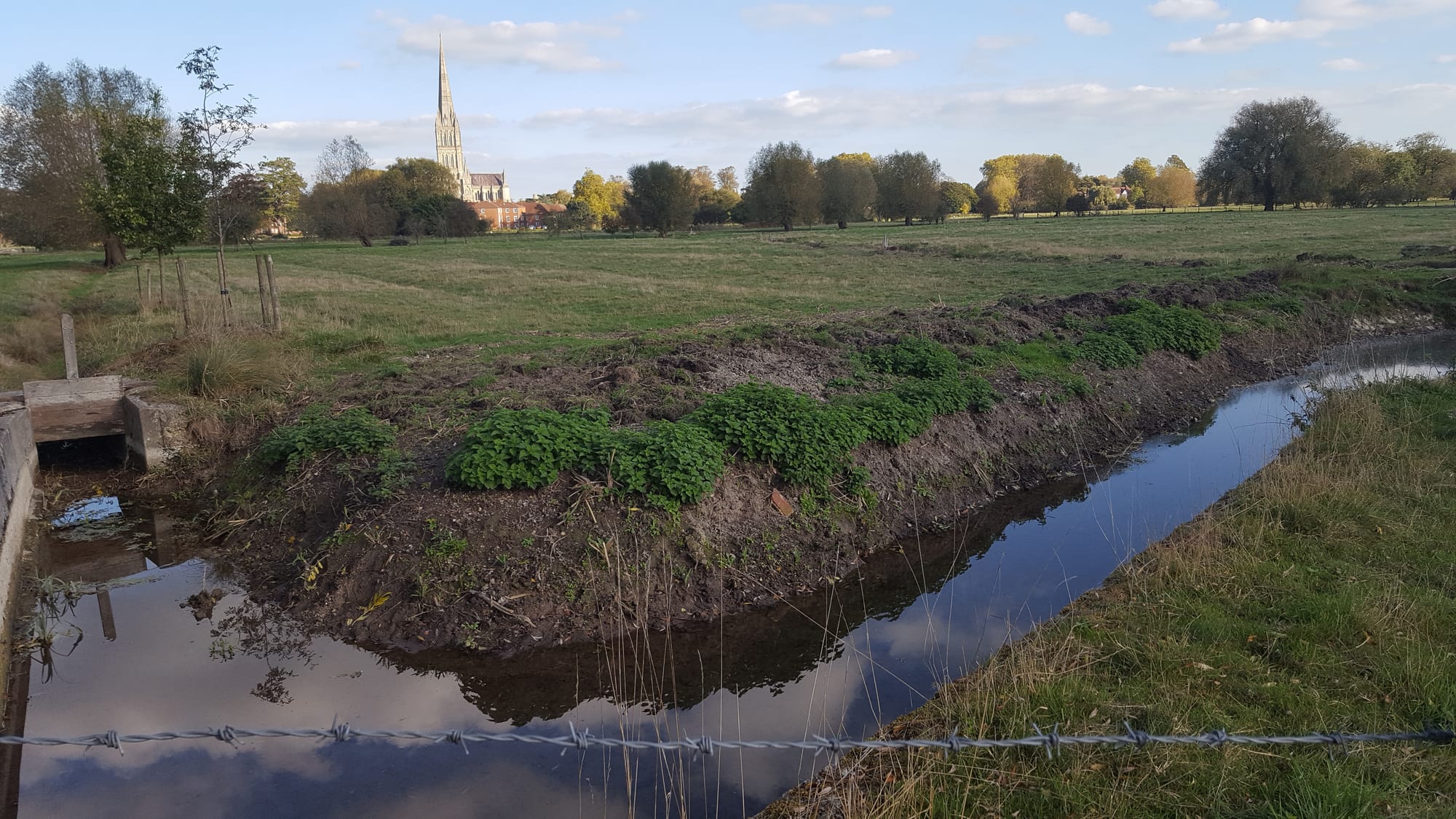
Very walkable: the centre is compact and flat, and the Close, the Market Place and the station are all within a short walk. The Town Path crosses the water meadows to Harnham but is at times impassable when the rivers are high, and Old Sarum is about a 50-minute walk north along the river valley.
🛡️ Safety
The UK is generally safe, with the main risks being pickpocketing and phone theft in crowded parts of London and other cities, occasional late-night antisocial behaviour, and drink-related trouble around nightlife. Salisbury is a quiet city; the more likely nuisances are summer crowds in the Close and flooded paths across the meadows after heavy rain.
Keep to the paths on the water meadows when the rivers are high. Check current official travel advice before travelling.
🌦️ Climate
An oceanic climate like almost all of the UK, mild and changeable, with rain in every season. Salisbury is among the sunniest inland places in the country, averaging over 1,650 hours of sunshine a year.
- Summer
- mild to warm and often sunny; the hottest recorded at nearby Boscombe Down since 1960 was 34.5°C, in July 2006
- Winter
- cool and damp; the coldest recorded at nearby Boscombe Down since 1960 was −12.4°C, in January 1963
🤝 Local Customs
Salisbury is a working cathedral city: services take place every day, and visitors are expected to keep quiet during them. Photography of the original Magna Carta in the chapter house is not allowed. The pub is the centre of social life, and orders are placed at the bar.
Check service times before visiting the cathedral, and give a donation if entering without a ticket.
💳 Common Payment Methods
The currency is the pound sterling. Shops widely accept debit and credit cards, including foreign ones, and some no longer take cash at all. Scottish and Northern Irish banks issue their own banknotes, with their own designs.