💰 Budget
The Big Island is generally cheaper than Maui or Kauai, and Kailua-Kona has a wide range of condominiums and hotels along Aliʻi Drive. A rental car is the main fixed cost; boat trips, manta ray night snorkels, fishing charters and helicopter flights to the volcano are the big extras.
- Daily Budget Midrange
- USD 280–520 (condominium or mid-range hotel, restaurant meals, rental car, a snorkel or manta trip)
- Daily Budget Shoestring
- USD 120–200 (hostel or budget room, poke and plate lunches, free beaches and snorkelling)
Snorkelling from the shore at the beach parks costs nothing, and buying coffee at the farms lets visitors check that it is 100 per cent Kona rather than a blend.
📅 Best Time to Visit
Kailua-Kona is warm and dry all year. Winter, roughly mid-December to March, is the busy season, with humpback whales offshore. October brings the Ironman and its crowds; November brings the coffee festival.
⏳ Suggested Number of Days
Three or four days suit the town and the nearby coast. A week or more allows the rest of the Big Island, which is large: the volcano park and the wet eastern side are a long drive away, so many visitors split a stay between the two coasts.
- First Visit
- 3–4 days
- With Surroundings
- 7–10 days
🚆 Transportation
Traffic in town can be slow, but the town itself is small. A trolley runs along Aliʻi Drive between Keauhou and the village, but a rental car is close to essential for the beaches, coffee farms and historic sites along the coast.
Allow plenty of time for the drive to the volcano park and the east side of the island, which is a long way from Kona.
🛬 Airport & Station Connections
Kona International Airport at Keāhole, about 7 miles north of town, is the main airport on the island, opened in 1970 and built partly on an 1801 lava flow from Hualālai. It has open-air terminals, inter-island flights from Honolulu and Kahului, and nonstop flights from the US mainland and Canada.
🚶 Walkability
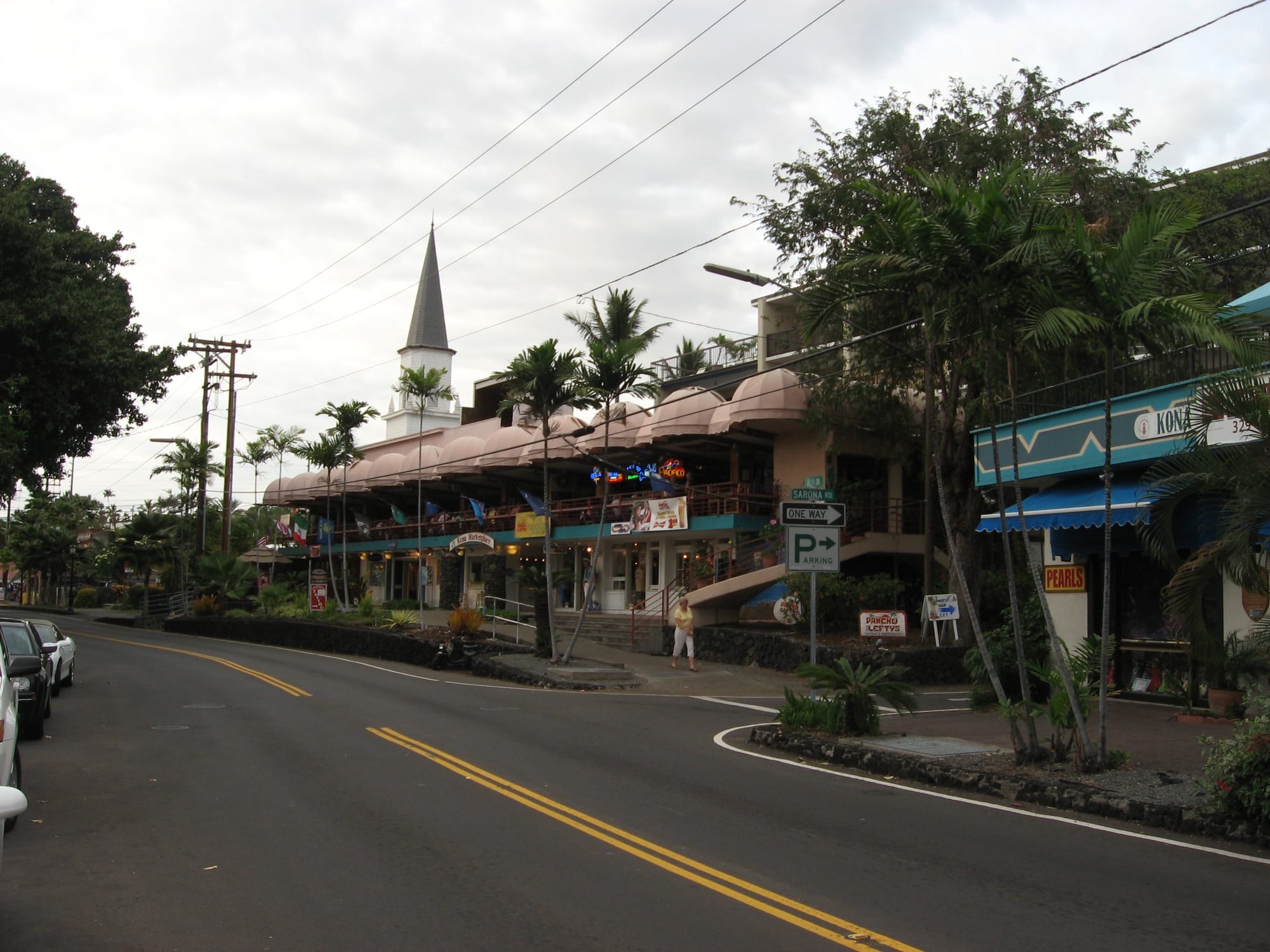
The historic village is easy and pleasant on foot: the pier, the palace, the church and the seafront restaurants lie within a few minutes of each other along Aliʻi Drive. Beyond it the town spreads out along the coast and up the hill, and the heat at midday is strong.
🛡️ Safety
Crime against visitors is low, but car break-ins at beaches and parks happen. The ocean is the main danger: Magic Sands and other beaches have strong shore breaks, and currents can be powerful. Vog, a volcanic haze from Kīlauea, sometimes settles over the coast.
For most visitors the US is safe, with the main risks being petty theft and car break-ins in tourist areas of some cities, road accidents over long distances, extreme weather, and the hazards of the outdoors. Leave nothing in parked cars, keep a respectful distance from turtles, and check the surf before swimming. Check current official travel advice before travelling.
🌦️ Climate
Tropical and semi-arid, sheltered from wind and rain by Hualālai, with about 19 inches of rain a year. It is the warmest place in the United States in January on average, and the temperature has never been recorded below 56°F. Mornings are usually clear, with clouds building in the afternoon.
- Summer
- hot and dry — August highs average about 87°F
- Winter
- warm — February, the coolest month, has average highs of about 81°F
🤝 Local Customs
Tipping follows the US norm of roughly 18–22 per cent in restaurants. Dress is casual. Heiau, the temples where the ancient Hawaiian religion was practised, should be treated with respect: nothing at them should be moved or taken, and some, such as ʻAhuʻena Heiau, may be viewed but not entered.
The legal age for alcohol is 21. Keep at least 20 feet from basking turtles, and never touch manta rays or coral.
💳 Common Payment Methods
The currency is the US dollar. Cards and contactless payment are accepted almost everywhere, and ATMs are easy to find. A little cash helps at small stands and food trucks.