💰 Budget
Los Angeles is expensive. Prices vary greatly by area: Santa Monica, Beverly Hills and the Westside are the dearest places to stay, while Koreatown and the San Fernando Valley are cheaper. Most visitors hire a car, and parking, fuel and ride-hailing across long distances add up.
- Daily Budget Midrange
- USD 250–480 (mid-range hotel, restaurants with tax and tips, museum and studio tickets, a hire car and parking)
- Daily Budget Shoestring
- USD 110–180 (hostel bed, taco trucks and food halls, Metro Rail and buses)
Choose a base close to what matters most, since crossing the city can take an hour; the Griffith Observatory grounds, the beaches and many hikes cost nothing.
📅 Best Time to Visit
The city is sunny all year, with more than 3,000 hours of sunshine. Summer is warm and dry, and September has the most very hot days; in autumn and winter dry Santa Ana winds can raise the risk of wildfire. Winter brings mild days and most of the year's rain, between November and March.
⏳ Suggested Number of Days
Three or four days suit a first visit, chosen around one or two areas at a time because of the distances. Five to seven allow time for the theme parks and the neighbouring cities as well. Traffic is the main factor that makes visits take longer than expected.
- First Visit
- 3–4 days
- With Surroundings
- 5–7 days
🚆 Transportation
Los Angeles is built around the freeway and the car, and its roads are among the most congested in the United States. Metro Rail now has two subway lines and four light rail lines — the light rail is the busiest in the country — linking downtown with Hollywood, Koreatown, Santa Monica, Pasadena and Long Beach, and Metro buses cover the rest. Union Station is the hub for Metro, Metrolink commuter trains and Amtrak.
Allow far more time than the distance suggests at rush hour, and use Metro Rail for Hollywood, downtown and Santa Monica to avoid parking.
🛬 Airport & Station Connections
Los Angeles International Airport (LAX), one of the busiest airports in the world, is in Westchester about 18 miles south-west of downtown. An airport people-mover connects the terminals with the LAX/Metro Transit Center on the Metro C and K lines, and FlyAway buses run nonstop to Union Station. Hollywood Burbank Airport serves the San Fernando Valley side. Amtrak trains arrive at Union Station.
🚶 Walkability
The city as a whole is not walkable — it covers about 469 square miles — but individual districts are: downtown, Hollywood Boulevard, Koreatown, Venice's boardwalk and Santa Monica are all good on foot. The beach path between Santa Monica and Venice is a pleasant walk or ride, and Griffith Park has many trails.
🛡️ Safety
For most visitors the US is safe, with the main risks being petty theft and car break-ins in tourist areas of some cities, road accidents over long distances, extreme weather, and the hazards of the outdoors. Homelessness is widespread, concentrated in Skid Row downtown, and open drug use affects parts of downtown and Hollywood. Natural hazards matter most: wildfires driven by Santa Ana winds — the Palisades Fire of January 2025 killed 12 people — earthquakes, smoke, and strong rip currents at some beaches.
Leave nothing visible in a parked car, follow evacuation orders immediately in fire season, learn the drop, cover and hold on routine for earthquakes, and swim at lifeguarded beaches. Check current official travel advice before travelling.
🌦️ Climate
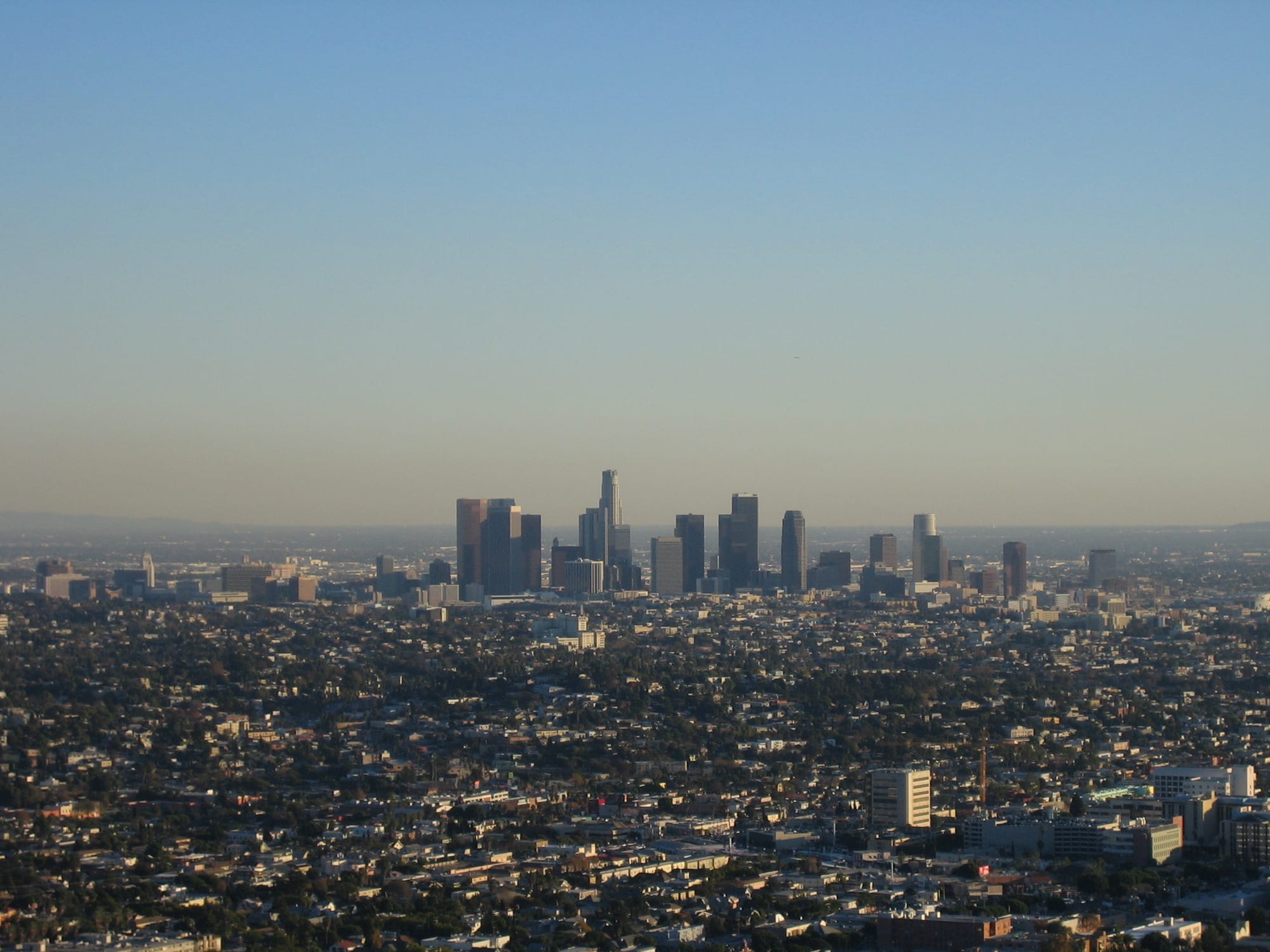
A dry, sunny Mediterranean climate with only about 35 days of measurable rain a year, nearly all between November and March. Microclimates are strong: the average July maximum is about 70°F at the Santa Monica Pier but about 95°F in Canoga Park in the San Fernando Valley, 15 miles away. Smog builds most from about May to October.
- Summer
- warm and dry — the coast stays near 70°F while the valleys reach the 90s °F; the coastal basin passes 90°F on about a dozen days a year, most often in September
- Winter
- mild and sunny between rain spells — daytime highs average around 68°F
🤝 Local Customs
Tipping is expected, at roughly 18–22 per cent in restaurants and about a dollar a drink at a bar. Dress is casual almost everywhere. Locals refer to freeways with 'the', as in 'the 405'. More than half of residents speak a language other than English at home, Spanish above all.
Identification is asked for when buying alcohol (the legal age is 21). Ask before photographing people, and stay off private film sets.
💳 Common Payment Methods
The currency is the US dollar. Cards and contactless payment are accepted almost everywhere; taco trucks and small stalls often prefer cash, so a small amount is useful. ATMs are easy to find. Prices are shown without sales tax, which is added at the till.