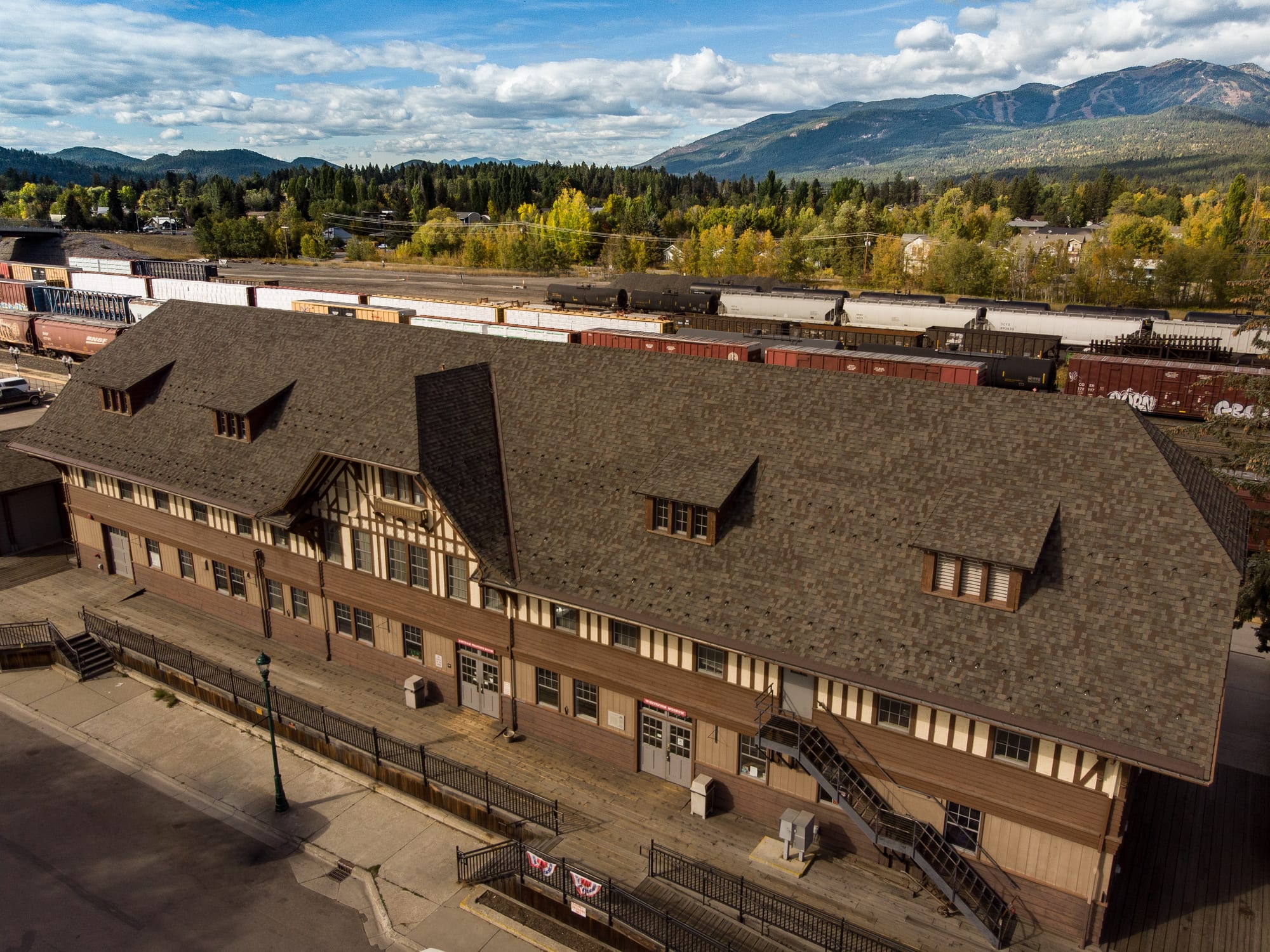
The long half-timbered Tudor Revival railway depot in Whitefish beside a rail yard of freight cars, with forested mountains behind

The Rocky Mountains, United States

Whitefish

The Great Northern Railway depot in Whitefish, Montana, still a stop on Amtrak's Empire Builder. (Andy Merrill / Wikimedia Commons · CC BY-SA 4.0)

A small mountain town at the southern end of Whitefish Lake in north-west Montana, west of Glacier National Park. Born as a Great Northern Railway town in 1904 and first known as Stumptown for the tree stumps left in its streets, it now lives from skiing on Big Mountain, summer visitors to the lake and the park, and the busiest Amtrak stop in Montana.

Neighbourhoods

  • Downtown and Central Avenue
    • First-time visitors
    • Shopping
    • Nightlife

    The compact centre around Central Avenue, a few blocks from the depot, with family-run shops, galleries, restaurants and the town's bars. Larger chain stores lie on the highway to the south.

    Open in Maps
  • The Avenues
    • Historic district
    • Quiet and residential

    The historic residential district beside downtown, between East 2nd and East 7th streets, where many houses are on the historic register.

    Open in Maps
  • Big Mountain
    • Skiing
    • Mountain biking
    • Summer hiking

    The mountain about four miles north of town, home to the Whitefish Mountain Resort's base village and lodges, busy with skiers in winter and with hikers and bikers in summer.

    Open in Maps

Things to do

In and around town

  • Whitefish stationtransit hub

    The Tudor Revival Great Northern depot, listed on the National Register of Historic Places in 2002, the busiest Amtrak station in Montana and home to the Stumptown Historical Society's museum of logging and railway history.

    Open in Maps
  • Whitefish Lakepark

    A natural lake about 5.8 miles long at the north-west corner of town, within walking distance of downtown, with a city beach and boating in summer.

    Open in Maps
  • Whitefish Lake State Parkpark

    A small lakeside park two miles north-west of town, with swimming, boating, fishing and camping.

    Open in Maps
  • Whitefish Mountain Resortattraction

    The ski area on Big Mountain, four miles from town, built with the help of local volunteers and opened in 1947, with an average of about 300 inches of snow a year; in summer it offers hiking, mountain biking and ziplines.

    Open in Maps

Short trips from the town

  • Glacier National Parkpark

    Montana's national park of glacier-carved valleys and more than 130 named lakes on the Canadian border, established in 1910; its west entrance at West Glacier is about 27 miles east of town.

    Open in Maps
  • Going-to-the-Sun Roadlandmark

    The only road across Glacier National Park, completed in 1932, crossing the Continental Divide at Logan Pass at 6,646 feet.

    Open in Maps
  • Flathead Lakepark

    A large natural lake south of Kalispell, a remnant of the Ice Age Lake Missoula and one of the cleanest lakes in the populated world for its size and type.

    Open in Maps

Seasonal events

  • Whitefish Winter Carnivalfirst weekend of February

    A winter festival with a parade, snow sculptures and a 'penguin plunge' into the frozen lake.

  • Whitefish Arts FestivalFourth of July weekend

    A handmade arts and crafts fair held for more than forty years, with artists from across the country.

  • Huckleberry Days Arts Festivalannually

    An arts festival with around 100 artists and food vendors and a huckleberry dessert bake-off.

  • Whitefish Trail Legacy Runearly October

    Trail races up to a 50-kilometre ultramarathon on the town's trail network, held alongside an Oktoberfest celebration.

Eat and drink

Long-standing places and food districts in Whitefish. Hours, ratings and directions come from your maps app, always current.

Whitefish classics

  • Great Northern Bar and Grillrestaurant

    Usually the busiest bar in town, on Central Avenue, with burgers and sandwiches, live music several nights a week, pool and shuffleboard.

    Open in Maps
  • Palace Barrestaurant

    A small bar on Central Avenue popular with locals.

    Open in Maps
  • Bonsai Brewing Projectrestaurant

    A small-batch brewery with a kitchen serving comfort food on a seasonal menu.

    Open in Maps

Food districts

  • Central Avenue restaurantsneighborhood

    Most of the town's restaurants, cafés and bars sit on and around Central Avenue downtown, a short walk from the depot.

    Open in Maps

Experience Whitefish

History

The valleys around Whitefish Lake were shared hunting grounds of the Kootenai, the Pend d'Oreilles and the Bitterroot Salish; the Kootenai lived west of the Continental Divide for thousands of years and crossed it to hunt buffalo. The town's Salish name means "has whitefish". Trappers, traders and settlers passed through in the late 19th century, a community of Métis lived near the site, and in the early 1890s loggers began working the forests, damming the river mouth to float logs down to Kalispell.

The town owes its existence to the railway. In 1904 the Great Northern Railway moved its main line north to avoid the steep Haskell Pass, and a railway town grew up beside the lake. Whitefish was incorporated in 1905 and became a city when its population reached 1,000 by 1910. So many trees were cleared for the railway and the town, and so many stumps were left in the streets, that it was known as Stumptown. Most early residents worked in logging or for the railway; in 1919 the town started a curfew siren known as the "ding-dong ordinance", restored at the new city hall in 2017.

Skiing came next. In 1937 the Whitefish Lake Ski Club obtained a Forest Service permit to build cabins and trails in the Hell Roaring Creek area of Big Mountain, and on 14 December 1947 a thousand townspeople watched the first T-bar lift open at the ski area they had helped build. Tourism grew with Glacier National Park, established in 1910 and reached by the Great Northern, and the depot, listed on the National Register of Historic Places in 2002, still brings visitors by train.

Culture & Customs

Whitefish combines a railway and logging past with ski-town and outdoor culture. The depot houses the Stumptown Historical Society's museum, which tells the story of the area's logging and railway industries. Skiing on Big Mountain, boating on the lake, fly fishing on the rivers and hiking in Glacier shape local identity, and the town is known for its environmental commitment: an extensive system of protected trails and forests surrounds it, celebrated each year with a downtown fundraiser and a trail race.

The festival calendar is busy for a town of its size. The Winter Carnival in early February brings a parade, snow sculptures and a penguin plunge into the lake; the Whitefish Arts Festival over the Fourth of July weekend has run for more than forty years; Huckleberry Days adds artists and a huckleberry bake-off; and the Under the Big Sky music festival presents traditional and contemporary American music on two stages in natural amphitheatres on a local ranch. Every year Nashville songwriters gather at a ranch near town for a week-long retreat, and a miniature-golf "World Indoor Golf Championship" is played downtown.

The town has also been described as a "model of resistance" against hate and racism. Locals are informal and outdoorsy, and the bars on Central Avenue are where much of the town's social life happens.

Daily Life

Whitefish had 7,751 people at the 2020 census. It lies on the western side of the Continental Divide in Flathead County, with the Whitefish River running through town towards the Flathead River and Kalispell, the county seat and the region's commercial centre, to the south. More than a fifth of the town's housing units stood vacant at the 2020 census.

The old industries of logging, ranching and farming have given way to tourism, skiing and service work. Downtown keeps many family-run shops, while chain stores cluster on the highway south of town. The railway is still part of daily life: freight trains pass through the yard beside the depot, and the Empire Builder stops daily.

The town is run by a mayor, a city manager and a six-member council, and children attend the Whitefish School District's schools, whose high-school teams, the Bulldogs, have won many state titles. The year turns on the seasons: ski crowds in winter, park visitors in summer, and quieter weeks in between.

Food

Whitefish's food is mountain-town American: burgers, sandwiches and bar food on Central Avenue, alongside pizza, Italian, Cajun-themed and breakfast places. Most restaurants are on and around Central Avenue downtown. The town's bars double as places to eat, and small breweries add their own beers and seasonal comfort food.

The huckleberry is the town's local flavour. It is Montana's state fruit, ripening in mid-to-late summer and used in jams, pies and ice cream, and Huckleberry Days includes a huckleberry dessert bake-off. The Taste of Whitefish, held for more than twenty-five years, brings together more than twenty-five restaurants, caterers and drink makers to offer samples of their specialities.

Beer is part of the après-ski and après-hike routine, and Big Mountain hosts spring and summer brewfests and a winter wine festival. For days in Glacier National Park, where services are limited, most visitors stock up at the supermarkets in town before setting out.

Planning tools

Budget

Whitefish is a resort town and prices reflect it, especially in summer, when Glacier National Park draws its biggest crowds, and at the height of the ski season. Staying a town or two further out in the valley can save money. A car is the main extra cost for anyone heading into the park.

Daily Budget Midrange
USD 220–420 (motel or mid-range hotel, restaurant meals, rental car and fuel, park entry or lift tickets)
Daily Budget Shoestring
USD 90–150 (campground or budget motel, supermarket food and bar meals, local buses)

Book summer rooms early; arriving by train avoids airport transfers, and the lake beaches and town trails cost nothing.

Best Time to Visit

Late June to mid-September is the main season, when Going-to-the-Sun Road and most of the park are open and the lake is busy with boats. September brings fewer crowds. Ski season on Big Mountain runs through the winter, with the Winter Carnival in February; spring and late autumn are the quietest times.

Suggested Number of Days

Two or three days are enough for the town, the lake and a first look at the national park. Allow four to six for longer hikes or to see more of the valley. Winter visits are usually planned around the number of ski days, and road openings in the park change what is possible.

First Visit
2–3 days
With Surroundings
4–6 days

Transportation

The town is small enough to walk or cycle. Local Eagle Transit buses link Whitefish with Columbia Falls and Kalispell, and the SNOW Bus serves Big Mountain. A car is needed for the national park and the wider valley; rental cars are available at the airport and at a window in the railway station.

Check with the park service before travelling for road openings on Going-to-the-Sun Road and any vehicle reservation rules in force.

Airport & Station Connections

Glacier Park International Airport lies about 11.5 miles south-east of town, six miles north-east of Kalispell; there is no public transport from the airport, so arrivals use a rental car, taxi or ride-hailing. Amtrak's Empire Builder between Chicago and Seattle or Portland stops daily at the historic depot near downtown, and intercity buses link the station with Kalispell and Missoula. Calgary is about five hours' drive north.

Walkability

Downtown, the depot and the Avenues are all within easy walking distance, and the lake is a short walk from the centre. Big Mountain, the airport and the park need a car, a bus or a shuttle.

Safety

Crime is low. The risks are natural: grizzly and black bears in the surrounding forests and the park, winter driving and avalanche terrain on the mountains, and forest fires, which occur in the national park almost every year.

For most visitors the US is safe, with the main risks being petty theft and car break-ins in tourist areas of some cities, road accidents over long distances, extreme weather, and the hazards of the outdoors. Carry bear spray on trails and know how to use it, keep food away from wildlife, and check road and fire conditions before setting out. Check current official travel advice before travelling.

Climate

A humid continental climate with large differences between the seasons: warm to hot summers and cold, sometimes severely cold, winters. The temperature figures below are for the wider Rocky Mountains; far more snow falls on Big Mountain than in the valley.

Summer
warm to hot in the valley; the wider Rocky Mountain region's high parks are typically 59–77°F, with cold nights
Winter
cold and snowy — 14 to 41°F across most of the wider Rocky Mountain region, far colder in the northern Rockies, with an average of about 300 inches of snow a year on Big Mountain

Local Customs

Whitefish is casual, outdoorsy and proud of its trails and forests, many of them protected to keep the town's water clean. Tipping of around 18–22 per cent is expected in restaurants. Ski and hiking clothes are normal everywhere.

Identification is asked for when buying alcohol (the legal age is 21). Pack out litter on trails and keep dogs under control in bear country.

Common Payment Methods

The currency is the US dollar. Cards and contactless payment are accepted almost everywhere, and ATMs are easy to find downtown. A little cash is useful for tips.