💰 Budget
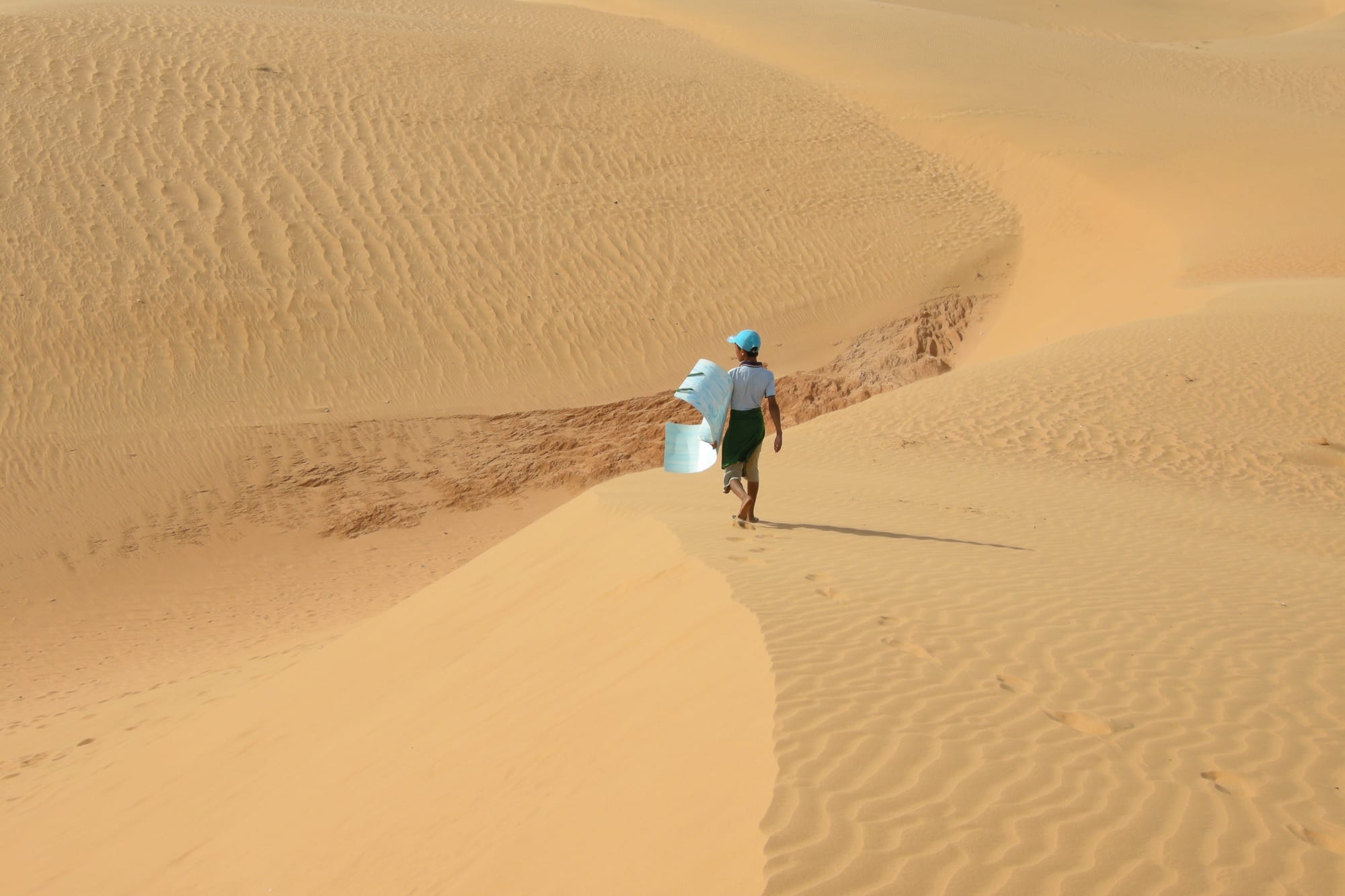
Mũi Né spans a wide range, from simple guesthouses on the inland side of the road to large beachfront resorts. Food is cheap in the village and dearer on the resort strip. Kitesurfing lessons and equipment hire are the largest single expense for most visitors, and jeep trips to the dunes are the other.
- Daily Budget Midrange
- USD 70–150 (beach resort, restaurant meals, a jeep trip and a kitesurfing lesson)
- Daily Budget Shoestring
- USD 20–35 (guesthouse, village food, a rented motorbike)
Rooms on the landward side of the road cost far less than beachfront ones and are a minute's walk from the sand.
📅 Best Time to Visit
This stretch of coast is dry and windy from about November to April, which is the main season and the time kitesurfers come, though the sea is choppy and the air can feel cool in the wind. April to October is calmer and hotter, better for swimming, with rain mostly in short afternoon bursts from about May.
⏳ Suggested Number of Days
Two days are enough for the beach, the harbour and the dunes. Three or four suit anyone learning to kitesurf or adding the Cham towers and the coast towards Kê Gà. Many visitors treat it as a break on the way between Ho Chi Minh City and the centre of the country.
- First Visit
- 2 days
- With Surroundings
- 3–4 days
🚆 Transportation
Everything is strung along one coastal road, so getting about means a rented motorbike, a taxi, a ride-hailing car or the resort shuttles. Jeeps and quad bikes are hired for the dunes, usually before sunrise or in the late afternoon. Local buses run between Phan Thiết and the village.
Agree a price before taking an unmetered taxi or a jeep, and keep to marked tracks on the dunes, where soft sand traps vehicles easily.
🛬 Airport & Station Connections
Most visitors come by road from Ho Chi Minh City, about four hours by sleeper bus or car on the expressway and coast road. Trains on the north–south line stop at Phan Thiết, about 20 kilometres west, where taxis and buses continue to the strip. Nha Trang is some four hours up the coast by bus or train.
🚶 Walkability
The beach itself makes a long walk, and each cluster of resorts has restaurants within a few minutes on foot. The strip as a whole is far too long to cover walking, the road is narrow with heavy traffic and few pavements, and there is no lighting on some stretches after dark.
🛡️ Safety
The area is calm, with occasional petty theft from beaches and rooms. The sea is the main hazard: strong onshore wind, breaking waves and rip currents in the windy season, when much of the beach is not suitable for casual swimming and there are few lifeguards. Sunburn, heat and soft sand on the dunes catch people out, and the coast road is busy.
Ask at the hotel about conditions before swimming, and keep valuables off the beach. Only ride a motorbike if experienced and licensed, and always with a helmet; hold bags away from the road; drink bottled or filtered water; and check surf conditions before swimming. Check current official travel advice before travelling.
🌦️ Climate
One of the driest parts of Vietnam, hot all year, with a wet season from about May to October made up of short afternoon storms and a dry, windy season from about November to April. Sea breezes make the heat bearable, and the wind is what shapes the local calendar.
- Summer
- hot and humid, around 27–34°C, with brief heavy showers and calmer seas
- Winter
- dry, sunny and breezy, around 24–31°C, with steady wind and rough water
🤝 Local Customs
Swimwear belongs on the beach and at the pool; shorts and a shirt are normal in the village and expected at Cham and Buddhist sites. Tipping is not obligatory but is common in resorts. The fishing community works through the night and sleeps in the morning, so the harbour is at its busiest before dawn, and boats and drying yards are workplaces rather than attractions.
Ask before photographing fishermen and their boats, cover shoulders and knees at the Cham towers and pagodas, and remove shoes where indicated.
💳 Common Payment Methods
The currency is the Vietnamese đồng. Resorts, larger restaurants and dive and kite schools take cards; village restaurants, markets, jeep drivers and motorbike hire want cash, and QR-code payment by phone is increasingly accepted. ATMs are spread along the strip and in Phan Thiết.