💰 Budget
Beds and meals in the village are inexpensive, with homestays and guesthouses at low prices and a few comfortable small hotels and resorts. The caves are where the money goes: the show caves are cheap to enter, while guided treks that camp underground cost far more, and the largest expeditions are among the most expensive tours in Vietnam and are booked long in advance.
- Daily Budget Midrange
- USD 50–120 (small hotel or riverside resort, restaurant meals, a guided cave day with transport)
- Daily Budget Shoestring
- USD 20–35 (homestay or hostel bed, local kitchens, rented bicycle or motorbike, one show cave)
Renting a motorbike or bicycle in the village is cheaper than taking separate tours to each cave, and cash is needed for homestays and park tickets.
📅 Best Time to Visit
February to August is the practical season, dry and increasingly hot, when the rivers are low and the trekking trips run. April and May are pleasant before the summer heat and the dry westerly wind arrive. From September to December heavy rain and floods close river caves and roads at times, and January is cool, damp and quiet.
⏳ Suggested Number of Days
Two or three days cover the accessible caves and the countryside around the village. Longer stays are for overnight cave treks, which take days in themselves, and for cycling the valleys; the wet season can shorten any plan at short notice.
- First Visit
- 2–3 days
- With Surroundings
- 4–5 days
🚆 Transportation
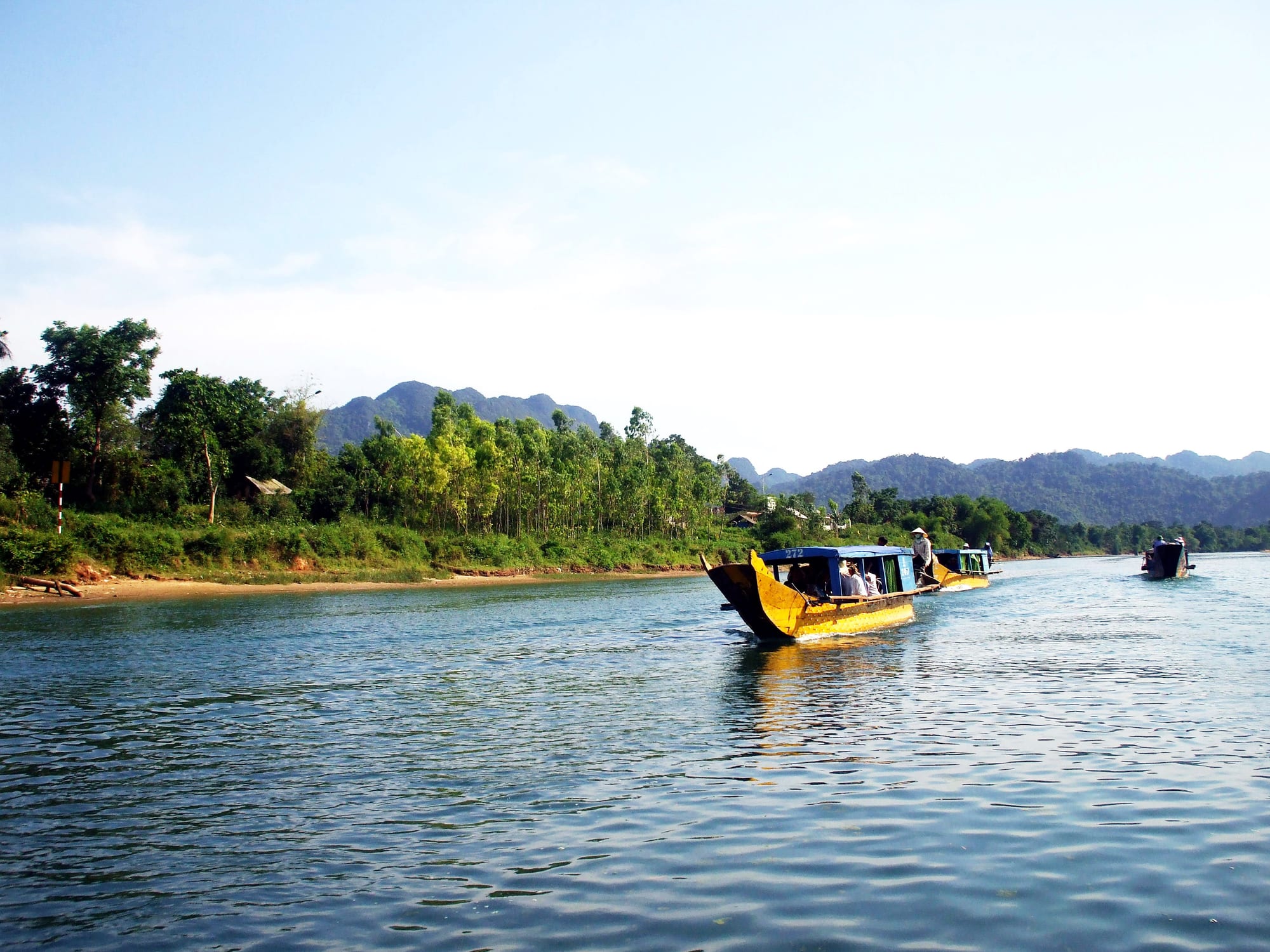
The village is small and everything beyond it is reached by road or water. Rented motorbikes and bicycles are the usual transport, and most accommodation arranges drivers or minibuses to the caves. Boats on the Son River serve Phong Nha Cave and the nearby hamlets, and kayaks are hired at the riverside. There is no local bus network of use to visitors.
Roads into the park are winding, and rain makes both the tarmac and cave walkways slippery; carry a torch and water on any trip into the hills.
🛬 Airport & Station Connections
Đồng Hới, about 40 km east, has the nearest airport, with flights from Hanoi and Ho Chi Minh City, and a station on the north–south railway; transfers take roughly an hour. Buses and tourist minibuses run from Huế, Đồng Hới and Hà Tĩnh, and sleeper buses link the village directly with Hanoi, Huế and Hội An. Many travellers arrive by motorbike over the mountain roads.
🚶 Walkability
The village itself is walkable end to end in twenty minutes, with the hotels, restaurants and boat landing along one riverside street. Beyond it, distances open up quickly: the farmland and valleys are a few kilometres out and the caves tens of kilometres, so a bicycle, motorbike or driver is needed. Paths in the park are sometimes rough and often wet.
🛡️ Safety
The village is safe and crime is rare. The hazards are natural and practical: strong river currents and sudden rises after rain, slippery cave walkways, heat and dehydration on treks, and unexploded ordnance, which remains a real risk in this province if visitors leave marked paths. Caves should be entered only with licensed operators and guides.
Only ride a motorbike if experienced and licensed, and always with a helmet; hold bags away from the road; and drink bottled or filtered water. Check current official travel advice before travelling.
🌦️ Climate
Hot and wet, with a pronounced rainy season from roughly September to December when the rivers rise and flooding is common. Spring and summer are dry and hot, sometimes fiercely so when the dry westerly wind blows off the Lao mountains, and the forest keeps the air humid all year.
- Summer
- hot and humid, often 33–38°C, with thundery downpours and hotter spells in the dry wind
- Winter
- mild but wet, about 18–23°C, with long rain and river floods early in the season
🤝 Local Customs
This is a farming village that acquired visitors quickly, and it remains conservative in dress and routine. Swimwear belongs at the river and pools, not on the street; shoes come off in homestays; and noise late at night carries in a small place. Guides and boat crews are local families, and payment is usually in cash. Tipping is not expected but is welcomed.
Ask before photographing people, houses or ancestral altars, take nothing from the caves, and stay on marked paths in a province still contaminated by wartime ordnance.
💳 Common Payment Methods
The currency is the Vietnamese đồng. Hotels, tour operators and larger restaurants accept cards and QR-code payments, but homestays, boatmen, market stalls and cave tickets are usually cash. ATMs exist in the village but are few and occasionally empty, so it is sensible to arrive with money drawn in Đồng Hới or Huế.