History
For most of Vietnamese history this coast was a frontier. Thanh Hóa and Nghệ An were the southern edge of the delta kingdoms, and the land further south was long disputed with Champa. Thanh Hóa bred rulers: Hồ Quý Ly built his stone citadel there in 1397, and Lê Lợi raised his rebellion against Ming China from Lam Sơn in 1418, founding the Lê dynasty.
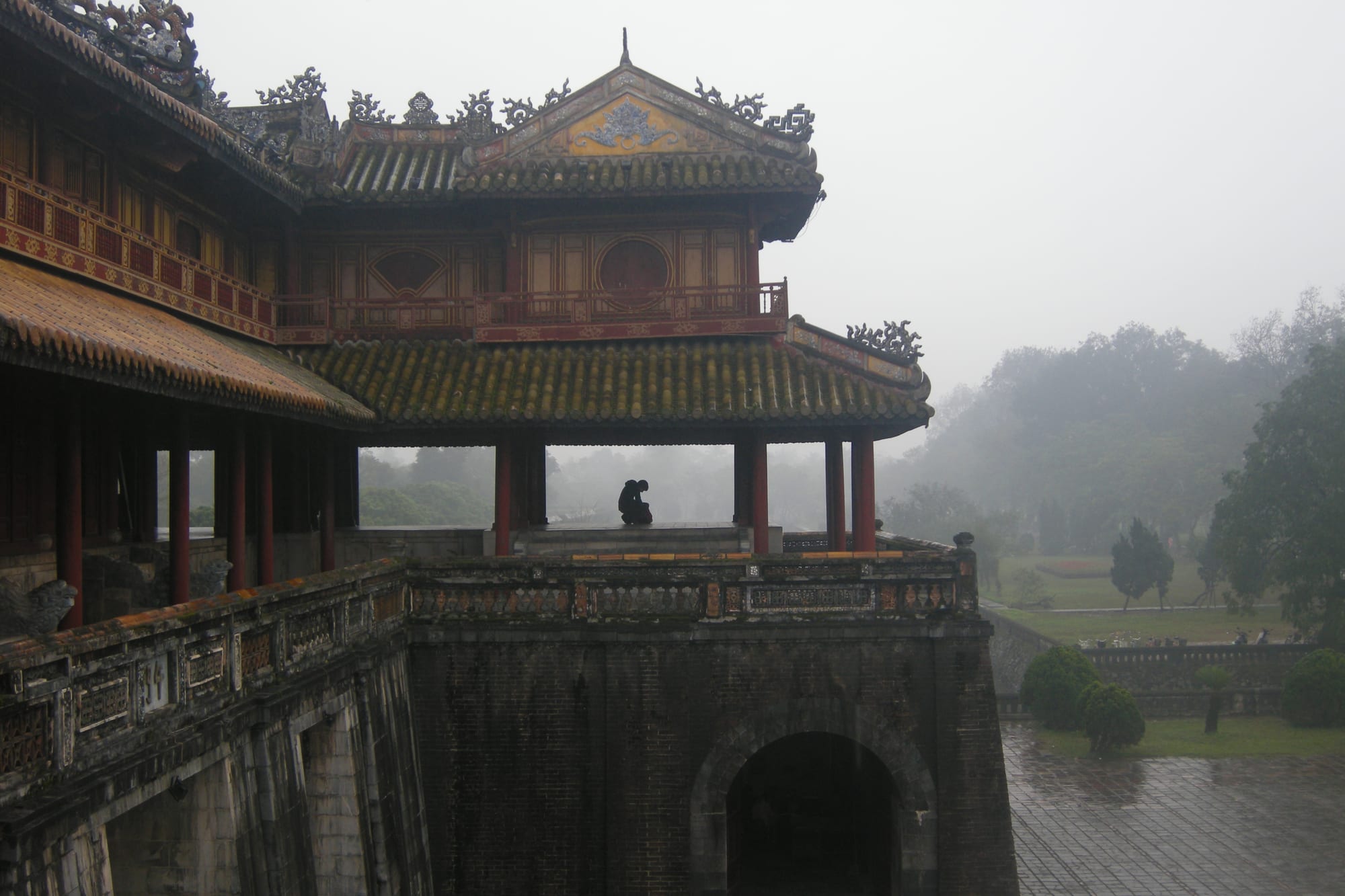
From the 16th century the country split between the Trịnh lords in the north and the Nguyễn lords in the south, who fortified walls across Quảng Bình and ruled from Phú Xuân, today's Huế. After the Tây Sơn upheaval, Gia Long reunified the country in 1802 and made Huế the imperial capital, building the citadel on the Perfume River. His successors ruled from it until 1945, the later emperors under French control, and the last emperor, Bảo Đại, abdicated at the Meridian Gate.
The region's poverty made it revolutionary. Hồ Chí Minh was born near Vinh in 1890, and the Nghệ-Tĩnh uprising of 1930–31 was an early communist revolt. After 1954 the Bến Hải River in Quảng Trị divided the country, and the provinces either side became battlefields: the Hồ Chí Minh Trail ran through the mountains, Khe Sanh was besieged in 1968, and Quảng Trị's citadel was destroyed in 1972. In Huế the Tết Offensive of 1968 brought weeks of street fighting and mass killings of civilians. Vinh was largely destroyed in both wars and rebuilt with East German help. Since 2025 Huế has been a city governed directly by the central government.