History
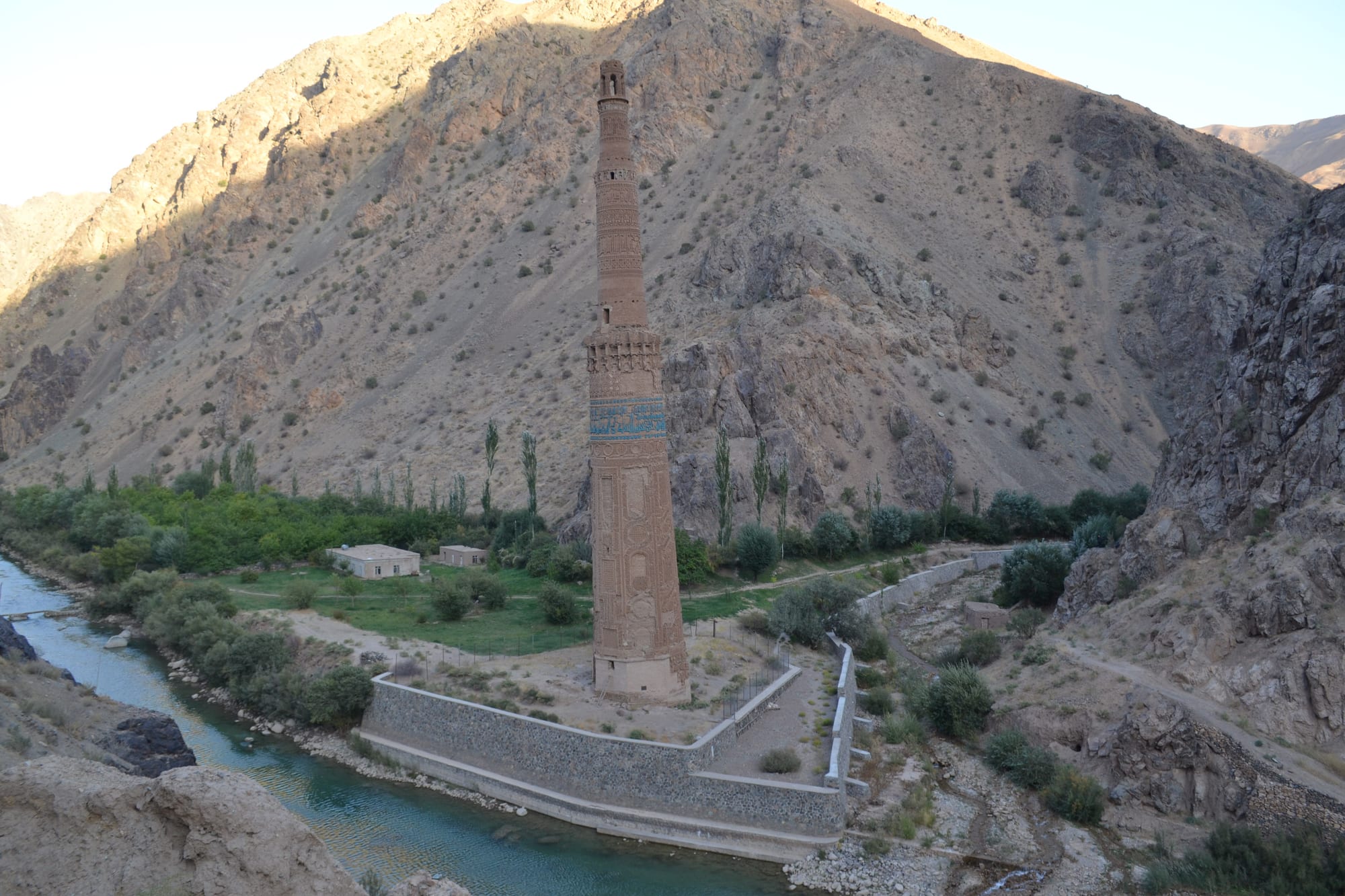
Herat is one of the oldest cities of the Iranian world: the Aria of the Achaemenid Persians and the Alexandria of Aria founded, or refounded, by Alexander the Great, whose fortress tradition places beneath the present citadel. The irrigated Hari valley made it rich, and it passed through Persian, Kushan, Sasanian and early Islamic hands. In the 12th century the Ghurids, a dynasty from the mountains of Ghor, built an empire reaching into northern India; their summer capital, Firozkoh, is thought to have stood around the Minaret of Jam, and in Herat they founded the Friday Mosque. Genghis Khan's armies sacked the city in the 1220s.
Herat's golden age came under the Timurids. Shah Rukh, son of Timur, made it his capital in the early 15th century, and his wife Gawhar Shad built the Musalla complex of mosque and madrasa. Under Sultan Husayn Bayqara, late in the century, the court gathered the poet Jami, the Turkic poet Ali-Shir Nava'i and the painter Behzad, whose miniatures defined the Herat school.
Safavid Persia and then Ahmad Shah Durrani's kingdom fought over the city, and Persia besieged it again in the 19th century before it was settled within Afghanistan. In 1885, fearing a Russian advance, British and Afghan engineers demolished most of the Musalla to clear a field of fire. The March 1979 Herat uprising against the communist government was crushed with heavy loss of life, the deadliest episode before the Soviet invasion that December. The Taliban took Herat in 1995, lost it in 2001, and took it again in 2021.