History
Rome guarded this frontier along the Danube with fortress towns such as Novae near Svishtov and Durostorum, today's Silistra, and built Nikopolis ad Istrum north of Veliko Tarnovo. After the Bulgars crossed the river in the 7th century, their khans made Pliska, in today's Shumen province, the capital of the First Bulgarian Empire from 681; the Madara Rider was carved nearby in the early 8th century. In 893 the capital moved to Veliki Preslav, where the Preslav Literary School developed the literature of the new Slavonic script.
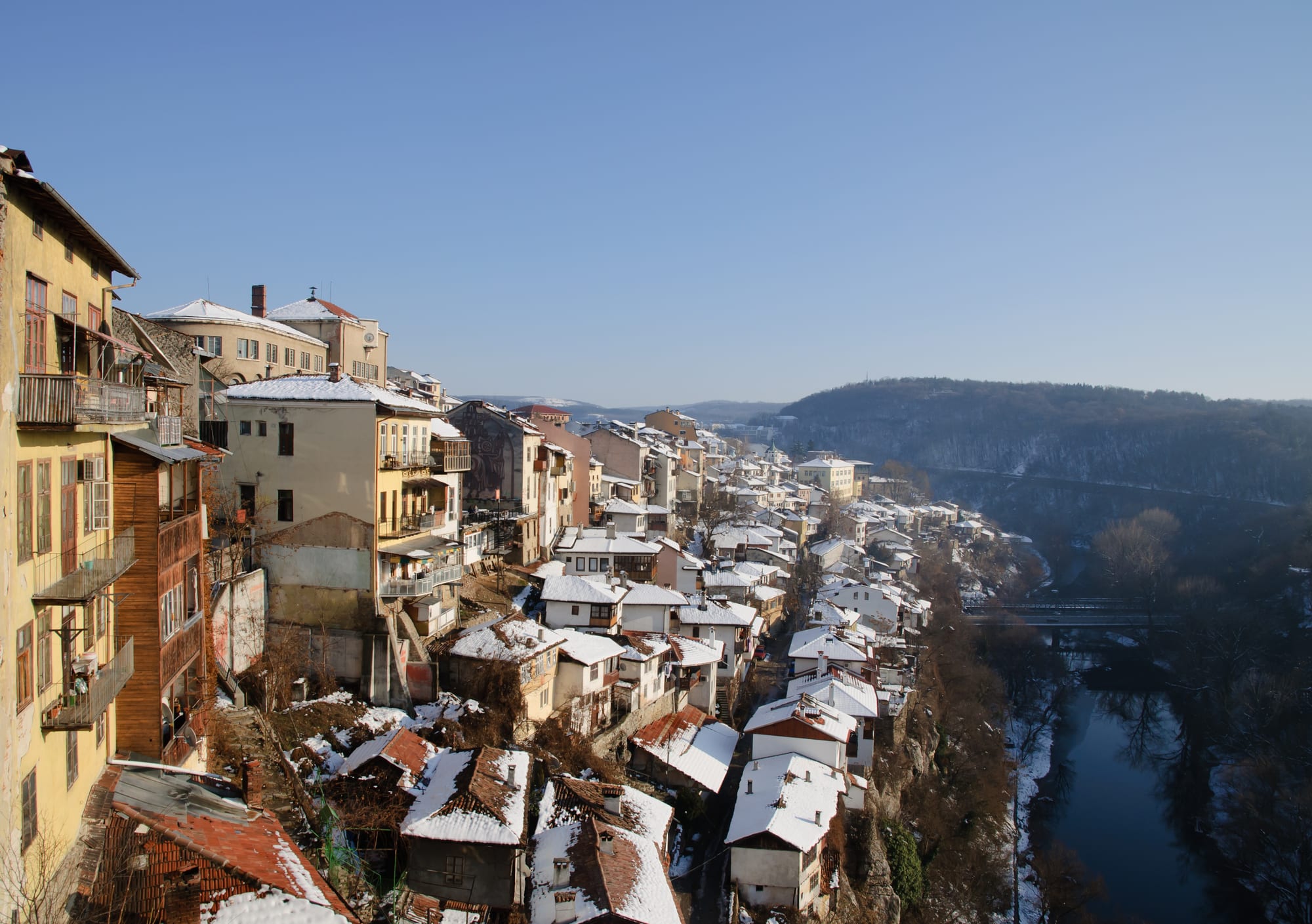
In 1185 the brothers Asen and Peter led a revolt at Tarnovo that founded the Second Bulgarian Empire, and Tarnovo, on the hills above the Yantra, became its capital, a city of churches, monasteries and royal palaces on Tsarevets. The Ottomans took it in 1393, and in 1396 a crusader army was defeated at Nicopolis, today's Nikopol on the Danube.
Under Ottoman rule the plains of the northeast were settled by Turks, while the foothill towns of Gabrovo, Tryavna and Elena grew rich on crafts and trade in the 18th and 19th centuries. Ruse became a Danube port and the terminus of the first railway in Bulgaria, to Varna, opened in 1866. In the Russo-Turkish war, Pleven was besieged for months before falling in December 1877. The first constitution was adopted in Tarnovo in 1879, and Bulgarian independence was proclaimed there in 1908.