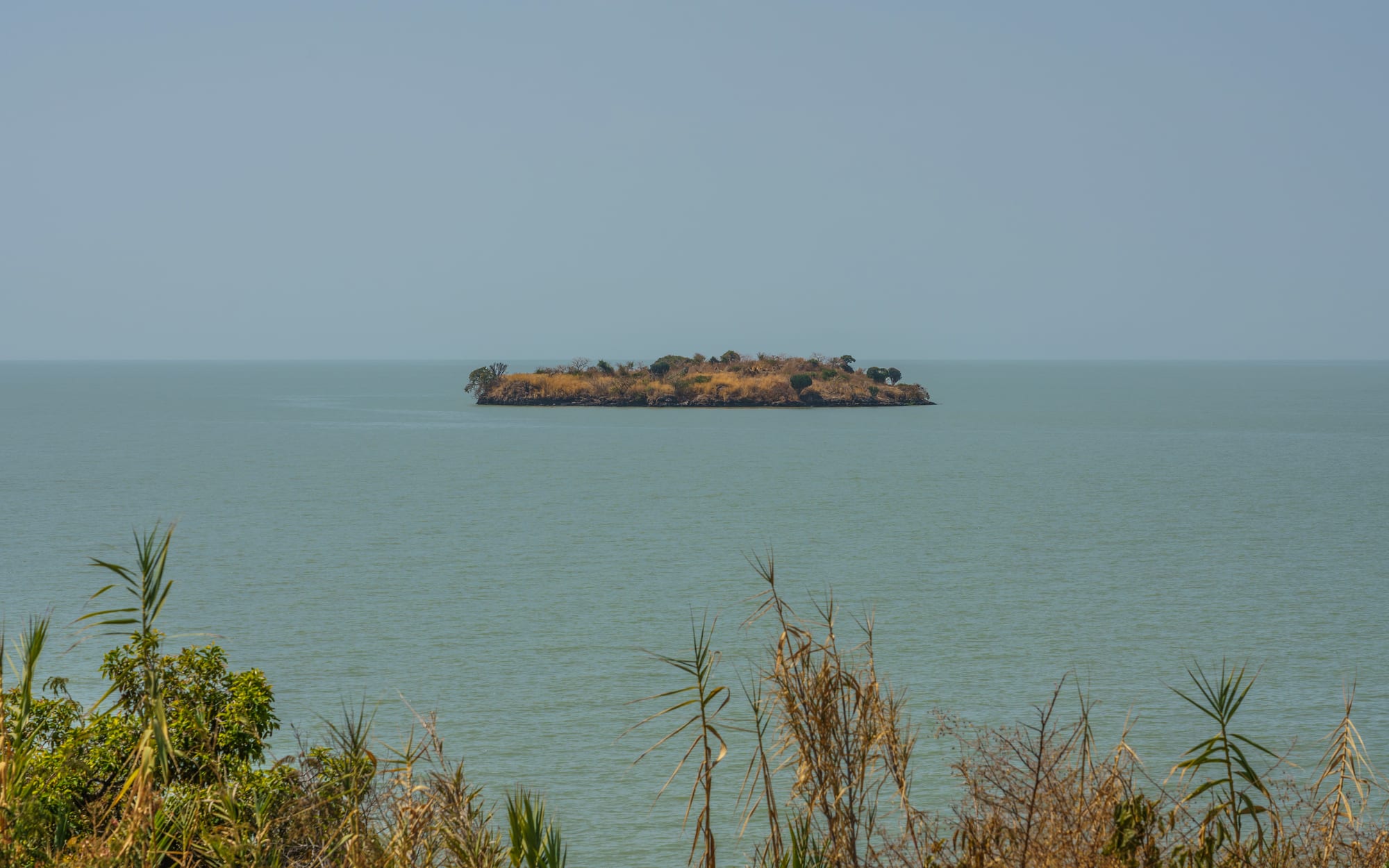
A small wooded island in the calm grey-green water of Lake Tana, with reeds and bushes in the foreground

Ethiopia

Lalibela, Gondar & the North

The island of the Mendaba monastery in Lake Tana, seen from Gorgora near Gondar. (A.Savin / Wikimedia Commons · FAL)

Ethiopia's northern highlands and lowlands — Amhara, Tigray, Afar and Benishangul-Gumuz — the heartland of the ancient kingdom of Aksum and the Orthodox Christian empire, with the rock churches of Lalibela, Gondar's castles, Lake Tana and the Simien Mountains, falling east to the salt flats and volcanoes of the Danakil.

Explore Lalibela, Gondar & the North

History

The north is where Ethiopian history is written down. Before Aksum, the temple at Yeha in Tigray shows a culture with links across the Red Sea to South Arabia. From the first centuries AD the kingdom of Aksum traded ivory and gold through the port of Adulis, minted coins and raised its great carved stelae, and in the fourth century King Ezana adopted Christianity. After Aksum declined, the Zagwe dynasty ruled from the mountains of Lasta, and its king Lalibela had the rock churches of his capital, then called Roha, cut in the late 12th and early 13th centuries.

From 1270 the Solomonic emperors, claiming descent from Solomon and the Queen of Sheba, moved between tented camps until Fasilides settled at Gondar around 1636. Gondar's era of castle-building, churches and court culture was followed by the Zemene Mesafint, the "Era of the Princes", when regional lords held power. In the 19th century the north produced the emperors Tewodros II, who died at his fortress of Magdala in 1868 facing a British expedition, and Yohannes IV of Tigray; at Adwa in 1896 Menelik II's army defeated the Italians.

The 1984–85 famine hit Tigray and Wollo hardest, and the Tigray People's Liberation Front, which led the coalition that overthrew the Derg in 1991, dominated Ethiopian politics until 2018. War broke out between the federal government and Tigray's leadership in November 2020, drawing in Eritrean troops and Amhara forces, and ended with the Pretoria agreement of November 2022 after very heavy loss of life. Since 2023 Fano militias have fought federal forces in Amhara, western Tigray remains disputed between Tigray and Amhara, and relations with Eritrea are tense. In Benishangul-Gumuz, the Grand Ethiopian Renaissance Dam on the Blue Nile began generating power in 2022 and was formally inaugurated in September 2025.

Culture & Customs

The northern highlands are the core of Orthodox Christian Ethiopia. Amharic is spoken across Amhara, Tigrinya in Tigray and Afar in the eastern lowlands, while Benishangul-Gumuz is home to the Berta, Gumuz and other peoples, and close to half its people are Muslim. Ge'ez, Aksum's old language, survives as the language of the liturgy, and priests, deacons and church schools remain part of village life.

The calendar is religious. Genna brings white-robed pilgrims to Lalibela at Christmas; at Timkat priests carry the tabot, a replica of the Tablets of the Law, in procession, and Gondar's crowds gather at the pool of the Fasilides Bath; Axum's Hidar Tsion festival in late November honours St Mary of Zion. In August girls celebrate Ashenda in Tigray, and in Amhara the equivalent festival is known by local names, with singing, dancing and grass skirts. Hand crosses in brass, silver and wood, illuminated manuscripts and church wall paintings are the great art forms, and the azmari, a singer with the one-stringed masenqo, improvises verses in bars and at weddings.

The Afar are Muslim pastoralists whose clan loyalties and knowledge of the desert make them the essential guides of the Danakil, where the salt trade has long been theirs.

Daily Life

Bahir Dar, on the southern shore of Lake Tana, is a palm-lined city of several hundred thousand people and one of the fastest-growing in Ethiopia; Gondar is of similar size, and Mekelle is the capital of Tigray. Dessie and Debre Markos are other highland centres, Semera is Afar's small administrative capital, and Asosa that of Benishangul-Gumuz.

Most people farm: teff, barley and wheat on the highland plateaus. In the Danakil, the salt flats have long supported the Afar salt trade. Tourism was a major employer around Lalibela and Gondar before the conflicts.

War has shaped daily life for years now: displacement, destroyed clinics and schools in Tigray, blocked roads, curfews and interrupted internet and banking at times in Amhara, and the collapse of tourist numbers. The rhythm of village life still follows the church, the market day and the rains.

Food

This is the land of classic highland cooking. Injera made from teff is eaten with doro wat, the chicken stew of feast days, and fasting dishes of shiro, lentils and greens, while tej and home-brewed tella fill the glasses at weddings and festivals. Dabo kolo, small crunchy nuggets of spiced dough, are the travelling snack.

Tigray has its own specialities: tsebhi, the Tigrinya word for stew; tihlo, balls of roasted barley dough dipped in a spicy sauce, a dish tied to the region; and ga'at, a stiff porridge served with a well of spiced butter and berbere. Fish from Lake Tana is fried or cooked in stews around the lake, a change from meat and pulses.

The Afar lowlands eat a herder's diet of goat meat, milk and bread, while Benishangul-Gumuz's lowland farmers rely more on sorghum and maize. In every town the coffee ceremony remains the social centre of the afternoon.

Attractions & Natural Wonders

Lalibela's churches are the region's great sight: Bete Medhane Alem, home to the Lalibela Cross, Bete Maryam with its painted interior, and Bete Giyorgis, linked to the others by trenches. Nearby, Yemrehanna Kristos is built inside a cave, and the Asheton Maryam monastery lies farther afield. Gondar's Fasil Ghebbi holds Fasilides' castle and later palaces, libraries and halls, with the Fasilides Bath and the church of Debre Berhan Selassie, whose ceiling is painted with rows of angels' faces, nearby.

Bahir Dar is the base for Lake Tana, where boats reach the monasteries of the Zege Peninsula such as Ura Kidane Mehret, and for the Blue Nile Falls, known as Tis Abay. North of Gondar, the Simien Mountains National Park, a UNESCO World Heritage Site, is trekked from Debark along escarpments above deep gorges, with gelada troops, walia ibex and Ras Dashen, at about 4,550 metres.

Further north, Axum keeps its field of stelae, the tombs of its kings and the Church of Our Lady Mary of Zion, and the Gheralta cliffs of Tigray hide rock-cut churches such as Abuna Yemata Guh, reached by climbing. In Afar, the Danakil Depression holds the yellow and green sulphur springs of Dallol and the salt flats of Lake Asale, and Erta Ale, a basalt shield volcano known for its lava lake, rises from the desert further south.

Cities in Lalibela, Gondar & the North

Planning basics

Budget

The historic route is the costliest part of Ethiopia to travel in because of domestic flights, church and site entry fees and the compulsory guides at Lalibela and in the Simien Mountains. Danakil trips are organised multi-day tours with vehicles, cooks and escorts, priced far above anything else in the country. Hotels in Bahir Dar and Gondar are good value, and local food is cheap everywhere.

Daily Budget Midrange
USD 85–170 roughly USD 100–200 (mid-range lodges, domestic flights, private guides, Simien trek packages)
Daily Budget Shoestring
USD 25–45 roughly USD 30–50 (basic hotels, local food, buses, shared site guides)

Buy site tickets at the official offices, agree guide fees in advance, and budget Danakil and Simien trips as separate, larger costs.

Safety

This is the most conflict-affected part of Ethiopia. Tigray is recovering from the 2020–22 war and remains tense, and fighting between federal forces and Fano militias has affected much of Amhara, including roads to the main historic sites, since 2023. The Afar and Tigray borders with Eritrea are sensitive, and the Danakil is hot, remote and has seen attacks on visitors. Many governments advise against travel to much of this region.

Check current advisories closely and route around conflict-affected regions. Visit only with a licensed operator who tracks the local situation, travel the Danakil only with an organised, escorted group, and be ready to change plans at short notice. Check current official travel advice before travelling.

Climate

The highlands around Gondar, Lalibela and the Simien are cool to mild, with the main rains from June to September; the Simien plateau is cold at night and can see frost. Axum and Tigray are drier and warmer. The Danakil, much of it below sea level, is one of the hottest inhabited places on Earth, and Benishangul-Gumuz on the Sudan border is hot, humid lowland.

Summer
wet and green in the highlands, around 15–25°C; brutally hot in the Danakil, well above 40°C
Winter
dry and clear in the highlands, 20–27°C by day with cold nights; the Danakil is only bearable from about November to March

Transportation

Domestic flights link Addis Ababa with Bahir Dar, Gondar and Lalibela and, when security allows, Axum and Mekelle, and have been suspended at times during the conflicts. Roads connect Bahir Dar and Gondar in a few hours and continue to Debark for the Simien, but long road journeys across Amhara are affected by the fighting. The Danakil is reached only on organised tours.

Fly between the historic sites rather than driving, and check with airlines and operators shortly before travel, as schedules change with the security situation.

Best Time to Visit

October to March is the season for the whole region: dry roads, clear mountain views and the coolest months in the Danakil. Genna, Orthodox Christmas on 7 January, draws pilgrims to Lalibela, Timkat in January fills Gondar's Fasilides Bath, and Meskel in late September marks the end of the rains. Any visit depends first on the current security situation.