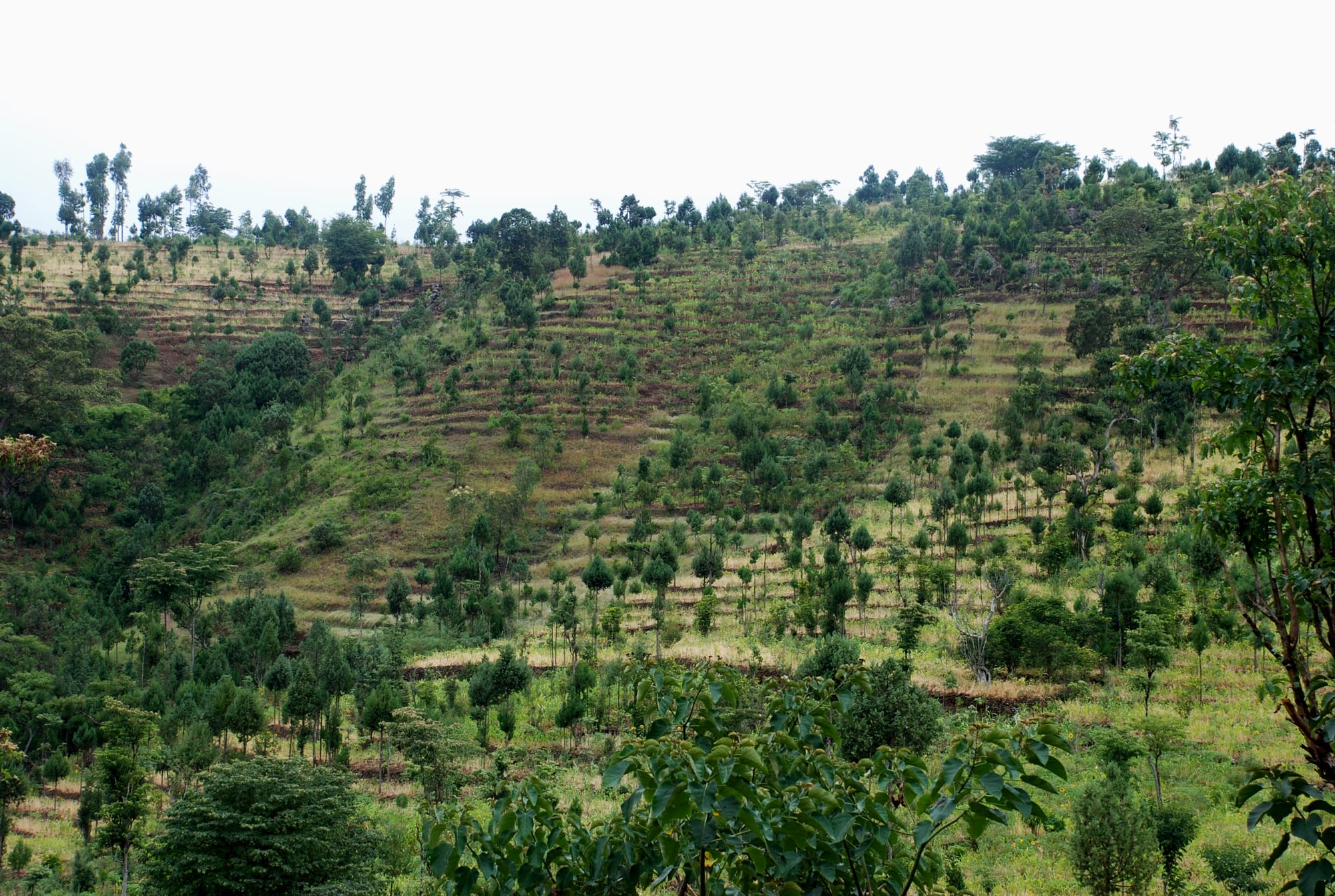
A green hillside lined with stone terraces and scattered trees under a pale, overcast sky

Ethiopia

The Omo Valley & the South

Traditional dry-stone farming terraces in the Konso Cultural Landscape of southern Ethiopia. (JosepMGracia / Wikimedia Commons · CC BY-SA 4.0)

Ethiopia's south and south-west — the former Southern Nations region, Sidama, South West Ethiopia and Gambela — a patchwork of dozens of peoples stretching from the lakes of Hawassa and Arba Minch through the Konso terraces to the Omo Valley and the Kenyan border, with wild coffee forests in the highlands of Kaffa and hot lowland plains around Gambela.

Explore The Omo Valley & the South

History

The south holds some of the deepest human history anywhere. Fossils found in the Omo Kibish formation include among the oldest known remains of anatomically modern humans, and the Lower Omo is a UNESCO World Heritage Site for its hominin and stone-tool finds. For most of recorded history the region was organised in independent kingdoms and chiefdoms — Kaffa, Wolaita, Sidama, Gamo and many others — and in the pastoral societies of the lowlands, trading ivory, coffee, slaves and gold towards the highlands and the coast.

The kingdom of Kaffa, ruled from the forested highlands around Bonga, kept its independence until Menelik II's armies conquered it in 1897, the same era in which Wolaita and much of the south were brought into the Ethiopian empire. The conquests brought northern settlers and landlords, and resentments over land lasted well into the 20th century; the Derg's 1975 land reform abolished the old tenancy system.

Under the 1995 constitution most of the south was joined into the Southern Nations, Nationalities and Peoples' Region. Its peoples then pushed for their own states: Sidama became a region after a 2019 referendum, South West Ethiopia followed in 2021, and in 2023 what remained was divided into the South Ethiopia and Central Ethiopia regional states. Gambela, on the Baro River, was once a British-run trading port for steamers from Sudan, and has hosted large numbers of South Sudanese refugees. In the Omo, the Gibe III dam and new sugar plantations have changed the river's flood cycle on which lowland farming depended.

Culture & Customs

No part of Ethiopia is more diverse. Dozens of languages are spoken, and religion ranges from Protestant churches, very strong in the south and west, to Orthodox and Muslim communities and older beliefs. In the Omo Valley, the Mursi and Surma women's clay lip plates, the Hamer's bull-jumping ceremony, which marks a young man's passage to adulthood are widely known; visits raise hard questions about photography and payment that guides and communities negotiate daily.

The Konso are known for their walled hilltop towns, communal gathering places, and waka, carved wooden figures raised over the graves of respected men. Their stone-reinforced terraces, some up to 8 metres high, are built and kept up by whole families. The Dorze, in the Gamo highlands above Arba Minch, are known for weaving and build tall beehive-shaped houses of bamboo. The Sidama celebrate Fichee-Chambalaalla, their New Year, which is on UNESCO's intangible heritage list. Gambela's Anuak and Nuer peoples, river and cattle cultures with ties across the South Sudan border, are different again.

Daily Life

Hawassa, the Sidama capital, is the largest city, with a population of several hundred thousand, an industrial park for textiles and a university; Arba Minch, Wolaita Sodo, Hosaena and Dilla are the other main towns. Jinka and Turmi are small, and Gambela town sits on the Baro River near the South Sudan border. Most people live in the green, crowded highlands, which are densely populated.

The highland economy runs on coffee — Sidama and Yirgacheffe coffees are exported worldwide — together with enset, the "false banana" whose starchy stem feeds millions, and khat, maize and fruit. In the lowlands, people herd cattle and goats and farm along the Omo's banks. In Kaffa, wild coffee grows in the forests.

Daily life follows market days, which in Omo towns such as Turmi draw people from far around, and church services on Sundays. Land pressure, drought in the lowlands, displacement by development schemes and the arrival of roads and mobile phones in once-isolated valleys are the region's pressing issues.

Food

Enset is the staple of the southern highlands. Its fermented pulp becomes kocho, a dense, slightly sour flatbread, and its finer starch bulla, used for porridge; kitfo, the minced beef dish of the Gurage people, is traditionally eaten with kocho and ayib cheese. Butter, cabbage and kale are everyday additions, and coffee is drunk strong and often, sometimes with butter in the countryside. Ethiopia is the only country where enset is farmed as a food crop, and it is the staple of some 20 million people.

Around the lakes, fish is the local meal: fish from Lake Hawassa, and Nile perch from Lake Chamo in Arba Minch. The Konso grow sorghum and maize as their staple crops, and in Sidama maize is often eaten as a snack with coffee. In the Omo lowlands the diet is pastoral — milk, sorghum porridge and, on special occasions, meat. Kocho itself is fermented for weeks before it is cooked.

Attractions & Natural Wonders

Arba Minch stands on a ridge between Lake Abaya, reddish-brown with sediment, and Lake Chamo, where boats go out to see crocodiles and hippos. Nechisar National Park lies across the isthmus between them, with plains of zebra and gazelle, and the Dorze villages of the Gamo highlands sit above the town. To the south, the Konso Cultural Landscape spreads over the hills around Karat Konso.

Further south-west, Jinka is the base for Mago National Park and for Mursi villages, and roads lead on to Key Afer, Turmi in Hamer country and the Karo villages on the Omo's banks. The Lower Valley of the Omo, where the river flows towards Lake Turkana, is protected as a World Heritage Site for its fossil beds.

North of the lakes, Hawassa is a lakeside city with birdlife and Tabor hill, within reach of Sidama's coffee country. In the west, the Kaffa Biosphere Reserve around Bonga protects the forests where wild Arabica coffee grows. Beyond, Gambela National Park covers wetlands and grasslands along the Baro and Akobo rivers, known for the seasonal movements of white-eared kob, though it is little visited.

Cities in The Omo Valley & the South

Planning basics

Budget

Hawassa and Arba Minch are cheap, with plenty of modest hotels and lake fish at low prices. The Omo Valley is a different matter: most visitors hire a 4x4, driver and guide, pay village entry fees and, by local custom, a fee for each photograph, so costs rise quickly. Gambela and the Kaffa forests have basic hotels and few organised services.

Daily Budget Midrange
USD 85–170 roughly USD 100–200 (lodges, domestic flights, a 4x4 with driver and guide for the Omo)
Daily Budget Shoestring
USD 20–35 roughly USD 20–40 (basic hotels, local food, buses and minibuses)

Agree photo fees and the guide's role before entering Omo villages, and carry small notes, as change is scarce.

Safety

The south is generally calmer than the north, but not uniformly so. Intercommunal clashes over land and cattle occur in the Omo lowlands and along the Kenyan border, Gambela has seen ethnic violence and cross-border raids from South Sudan, and armed groups have been active along parts of the boundary with Oromia. Roads can be closed by unrest at short notice, and road accidents are a serious risk.

Check current advisories closely and route around conflict-affected regions. Travel in the Omo with a reputable local guide, avoid Gambela's border areas, and do not drive after dark. Check current official travel advice before travelling.

Climate

The south has two rainy seasons rather than the north's single long one: the heavier rains usually come from about March to May and lighter ones around October and November. Hawassa and the highlands are mild; Arba Minch is warmer; the Omo Valley and Gambela are hot lowlands, and the Kaffa and Sheka highlands are forested and wetter.

Summer
mild and often cloudy in the highlands, 20–27°C; hot in the Omo and Gambela, often above 35°C
Winter
dry and warm in most of the region, 25–30°C in the lake towns; still hot in the lowlands

Transportation

Domestic flights reach Arba Minch, Jinka, Hawassa and Gambela from Addis Ababa. By road the main highway south runs through Hawassa, and a road continues through Arba Minch to Konso; beyond, the roads to Jinka, Turmi and the Omo villages are partly paved and partly rough track. Most visitors to the Omo travel by hired 4x4.

Fly into Arba Minch or Jinka and hire a vehicle there rather than driving the whole way from Addis Ababa.

Best Time to Visit

December to February is the most reliable period, with dry dirt roads to the Omo and clear skies over the lakes. The long rains from about March to May can make the Omo tracks impassable. Coffee is harvested in the Kaffa and Sidama highlands from about October to January, and the Sidama New Year, Fichee, falls in the dry months.