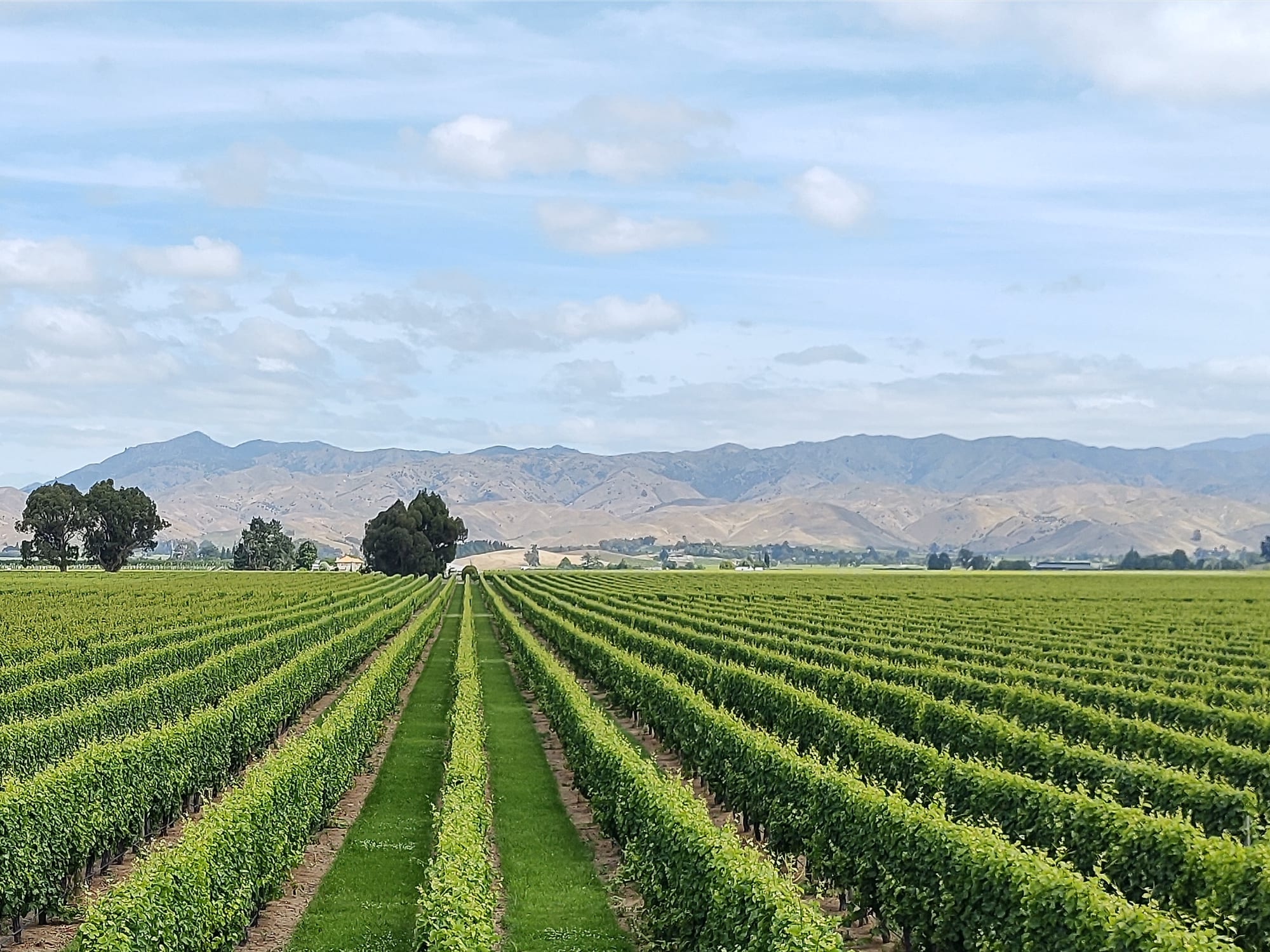
Long straight rows of green grapevines stretching towards dry brown hills under a pale blue sky

New Zealand

Nelson, Marlborough & the West Coast

Vineyards on the floor of the Wairau Valley in Marlborough, looking south towards the Wither Hills. (Jonathan Harker / Wikimedia Commons · CC BY 4.0)

The top and west of New Zealand's South Island — the sunny, vineyard-filled north around Nelson and Blenheim, the drowned valleys of the Marlborough Sounds and the golden coast of Abel Tasman, and the long, rain-soaked West Coast of gold and coal towns, pancake rocks, rainforest and glaciers.

Explore Nelson, Marlborough & the West Coast

History

The Dutch navigator Abel Tasman anchored in Golden Bay in December 1642, and a clash with Ngāti Tūmatakōkiri killed four of his crew; he left without landing. James Cook later used Ship Cove in Queen Charlotte Sound as his base on several voyages. Several iwi of Te Tau Ihu, the top of the South Island, held the north, and Ngāti Toa under Te Rauparaha conquered much of it in the 1820s and 30s. On the West Coast, Poutini Ngāi Tahu guarded the region's great treasure, pounamu (greenstone), carried the length of the country for tools and ornaments.

The New Zealand Company founded Nelson in 1841–42. In 1843 a dispute over the company's claim to land in the Wairau Valley led settlers to try to arrest the Ngāti Toa chiefs Te Rauparaha and Te Rangihaeata; in the Wairau Affray that followed, 22 British settlers and four Māori were killed. Blenheim grew as a farming town on the Wairau plains.

Gold changed the West Coast in the 1860s: rushes at Hokitika and along the rivers filled the coast with miners, and Hokitika briefly became one of the country's busiest ports. Coal followed, mined at Denniston, Stockton and around Greymouth, and the coast's mining history is scarred by disasters, from the Brunner Mine explosion of 1896 to the Pike River Mine explosion of 2010, which killed 29 men. Under the Ngāi Tahu settlement of the late 1990s, ownership of the region's pounamu was vested in the iwi. In Marlborough, the first commercial sauvignon blanc vines were planted in the 1970s, and the region has since become the heart of the country's wine industry.

Culture & Customs

The region has two personalities. The sunny north around Nelson and Golden Bay attracts artists, potters, retirees and alternative lifestylers, and Nelson calls itself an arts city; the World of WearableArt show began there in 1987 before moving to Wellington. Motueka and the Moutere hills grow hops and fruit, and seasonal workers from the Pacific Islands arrive for the harvests.

"Coasters", the people of the West Coast, have a reputation for independence, hospitality and suspicion of distant governments, rooted in their mining and timber past. Pubs, whitebaiting and hunting are central, and the Hokitika Wildfoods Festival has served unusual foods to crowds. Hokitika is the centre of pounamu carving, and Māori tradition treats the stone as a taonga (treasure), properly given as a gift.

Marlborough is wine country, with a harvest calendar and a wine and food festival, and the Sounds keep a bach and boat culture.

Daily Life

Nelson and its neighbour Richmond have about 70,000 people between them, and the wider top of the south lives on horticulture, forestry, fishing, tourism and wine. Nelson is one of the country's main fishing ports, and Marlborough's Sounds hold mussel and salmon farms. Blenheim, with about 30,000 people, is the wine capital, and vineyards cover much of the Wairau and Awatere valleys.

The West Coast has only about 32,000 people along several hundred kilometres of coast. Greymouth, Westport and Hokitika are small, and the economy mixes mining, dairy, tourism and conservation. Declining coal, storm damage and long distances to hospitals and services are local worries, as is the argument between conservation and jobs.

Food

Marlborough sauvignon blanc, sharp and aromatic, is the country's biggest wine export, and the region also makes pinot noir, chardonnay and sparkling wine. Nelson's Moutere hills and Waimea plains grow grapes, apples and the hops that supply the country's craft brewers.

The Sounds produce farmed green-lipped mussels, and Havelock calls itself the green-shell mussel capital of the world; salmon is farmed in the same waters, scallops are dredged in parts of the Sounds, and Nelson's fishing fleet lands a wide range of species.

The West Coast's signature is whitebait, the tiny translucent young of native fish, caught in the river mouths in a short legal season and eaten in a whitebait fritter, bound with egg. Venison and wild pork from the hills turn up in pubs, as do West Coast craft beers.

Attractions & Natural Wonders

Abel Tasman National Park, the country's smallest national park, is the highlight of the north: the Coast Track, one of the Great Walks, links golden beaches from Mārahau towards Tōtaranui, with Kaiteriteri's beach and Split Apple Rock nearby. Golden Bay beyond has Te Waikoropupū Springs, Wharariki Beach and the long sand arm of Farewell Spit. Nelson has its cathedral hill and cafés, and Nelson Lakes National Park lies inland.

The Marlborough Sounds are best seen on the Queen Charlotte Track, from Ship Cove towards Anakiwa, or by boat from Picton and Havelock. Around Blenheim, the wineries of the Wairau Valley offer tastings, often by bicycle, and the Omaka Aviation Heritage Centre shows First World War aircraft. Further south, over the regional boundary in Canterbury, lies Kaikōura, where boats watch sperm whales off the coast.

On the West Coast, Punakaiki's Pancake Rocks and blowholes sit in Paparoa National Park; the coast also has the Oparara arches in Kahurangi National Park, the Cape Foulwind seal colony near Westport, and the turquoise Hokitika Gorge. In the south, Franz Josef and Fox glaciers descend from the Southern Alps within Westland Tai Poutini National Park; both have retreated, but valley walks and helicopter flights reach them, and Lake Matheson reflects Aoraki / Mount Cook on still mornings.

Cities in Nelson, Marlborough & the West Coast

Planning basics

Budget

Costs are close to the national average. Nelson and Blenheim have a good range of motels and hostels, and Abel Tasman and the Queen Charlotte Track can be done cheaply with campsites or pricier with lodges and boat transfers. On the West Coast, beds are limited and costly in the small glacier villages in summer, and a helicopter flight onto the ice is the region's biggest single expense.

Daily Budget Midrange
USD 150–290 (motel or lodge, restaurants, a hire car, a winery tour or glacier flight)
Daily Budget Shoestring
USD 55–85 (hostel or DOC campsite, supermarket food, a water taxi or shuttle)

Book Abel Tasman campsites and huts and glacier-village beds well ahead for December to February.

Safety

The towns are safe; theft from cars parked at trailheads and glacier car parks is the main crime risk. The hazards are natural: flooded rivers, slips that cut the West Coast highway, tidal crossings on the Abel Tasman Coast Track, and rockfall and ice collapse in the glacier valleys. Earthquakes are a real risk along the Alpine Fault.

Obey the barriers in the glacier valleys, check tide times for the Abel Tasman crossings, and never ford a river in flood. Check current official travel advice before travelling.

Climate

Nelson and Blenheim are among the sunniest places in the country, with warm, dry summers and frosty but bright winters. The West Coast is the opposite: westerly winds drop heavy rain against the Southern Alps, so the coast is very wet but mild, with clear, still spells in winter. Sandflies are a constant on the West Coast and in the Sounds.

Summer
warm and sunny in Nelson and Marlborough, 22–28°C; mild and often wet on the West Coast, 17–21°C
Winter
cool and clear, frosty inland; mild but wet on the West Coast, with snow on the passes

Transportation

The Cook Strait ferries arrive at Picton from Wellington, and Nelson and Blenheim have airports with flights to the main cities. The Coastal Pacific train runs from Picton to Christchurch and the TranzAlpine from Christchurch to Greymouth. Buses link the towns, but a car is the usual way to drive the West Coast road, which crosses to Wānaka over the Haast Pass. Abel Tasman is reached by water taxi from Kaiteriteri and Mārahau.

Allow a full day to drive from Nelson to the glaciers, and check the West Coast road status after heavy rain.

Best Time to Visit

December to April for the coast tracks, beaches and kayaking, with February and March the most settled and past the school holidays. The grape harvest in Marlborough runs from about March to April. The West Coast rains in every season, and winter often brings its clearest days for glacier views.