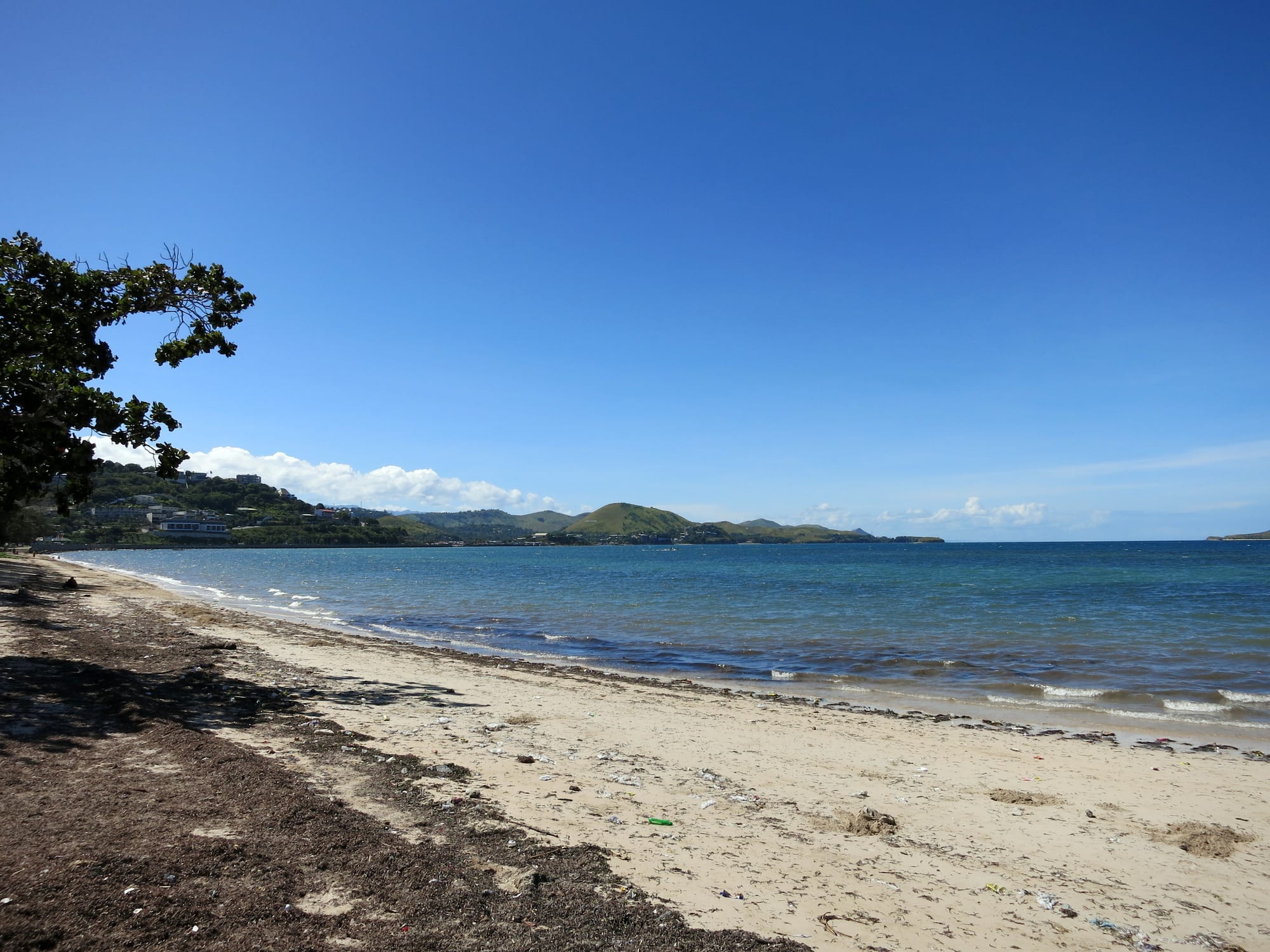
A sandy beach curving along calm blue water towards green hills and houses under a clear sky

Papua New Guinea

Port Moresby & the Southern Region

Ela Beach, the waterfront beach on the edge of central Port Moresby. (Nick-D / Wikimedia Commons · CC BY-SA 4.0)

The southern coast and hinterland of mainland Papua New Guinea, from the capital Port Moresby and the Owen Stanley Range to the island-strewn waters of Milne Bay, the volcanic coast of Oro and the swamps and rivers of the Gulf and Western provinces — the country's political centre and the heartland of its Second World War story.

Explore Port Moresby & the Southern Region

History

The coast around Port Moresby is the land of the Motu and Koita peoples. Each year the Motu sailed great lakatoi, multi-hulled canoes with crab-claw sails, west to the Gulf of Papua in the hiri trading voyages, exchanging their clay cooking pots for sago and canoe logs. Further east the islands of Milne Bay were linked by the kula ring, the ceremonial exchange of shell necklaces and armbands made famous by the anthropologist Bronisław Malinowski's work in the Trobriand Islands.

Captain John Moresby surveyed the harbour in 1873 and named it after his father, and London Missionary Society teachers settled among the Motu soon after. Britain proclaimed a protectorate over the southeast of New Guinea in 1884, and the colony of British New Guinea passed to Australia, becoming the Territory of Papua in 1906, run from Port Moresby, with Samarai in Milne Bay as a busy trading port.

In 1942 the region became a front line. Japanese forces landed on the Oro coast and pushed over the Kokoda Track towards Port Moresby before being driven back, while at Milne Bay Australian troops defeated a Japanese landing in August and September. The battles of Buna and Gona on the Oro coast followed at heavy cost. In 1951 the eruption of Mount Lamington in Oro killed about 3,000 people.

Port Moresby became the capital at independence in 1975 and has grown fast since. In Western Province the Ok Tedi copper and gold mine brought revenue and severe pollution of the Fly River system, leading to lawsuits and compensation claims, and the PNG LNG pipeline now crosses the Gulf to a plant near the capital.

Culture & Customs

The Motu and Koita remain the traditional landowners of Port Moresby, and Hanuabada, their village on the harbour, is still lived in. Hiri Motu, the trade language of the old voyages, grew from Motu and is one of the country's official languages, though Tok Pisin and English dominate in the capital today. The Hiri Moale festival recalls the voyages with canoe races, dancing and a beauty contest around Independence Day.

The capital also gathers people from every province, and settlements are often organised by home area, with wantok ties shaping jobs, housing and politics. In Milne Bay, the matrilineal Trobriand Islanders still hold the yam-harvest season, when yams mark wealth and standing, play their own boisterous form of cricket and trade in the kula. Alotau's Kenu and Kundu festival brings war canoes and drumming groups from across the province.

Oro Province is known for barkcloth, called tapa, painted with bold designs, especially among the Maisin people. The Gulf Province once staged great masked cycles among the Elema people, and carving and canoe-building traditions continue along its rivers and in Western Province. Rugby league is followed everywhere, and the national team, the Kumuls, plays its home matches in Port Moresby.

Daily Life

Port Moresby is the largest city, with several hundred thousand people and growing, spread between the old downtown by the harbour, the government district of Waigani, and fast-growing informal settlements on the hills. Government, the national university, banks, construction and the resource companies provide most formal jobs, but many residents live on informal trade — selling betel nut, cooked food and phone credit at roadside stalls. High walls, razor wire and security guards shape the look of the city.

Outside the capital the region is thinly populated and rural. Alotau, the Milne Bay capital, is a small harbour town; Popondetta serves Oro's oil-palm and cocoa growers; Kerema in the Gulf and Daru, an island off the Western Province coast, are remote and poorly served. Villages live from gardens, fishing and sago, with cash from copra, betel nut, cocoa and seasonal work in town.

Current concerns include crime, rapid urban growth, unreliable electricity and water in the capital, tuberculosis, and continuing disputes over how mining and gas revenues reach the landowners of the Fly River and the Gulf.

Food

Coastal cooking rests on fish, shellfish and coconut: reef fish and mud crab cooked in coconut cream, and greens such as aibika simmered with coconut milk and served with boiled bananas, taro or yam. In the Gulf and along the Fly River, sago — the starch washed from the pith of the sago palm — is the staple, eaten as a jelly-like paste or baked into flat cakes, with river fish and game.

Milne Bay and the Trobriands are yam country, and the size and quality of a family's harvest carries social weight. Earth-oven mumu feasts of pork, chicken and root vegetables mark weddings, funerals and church events.

Port Moresby's markets sell smoked fish, betel nut with mustard stick and lime, and cooked bananas wrapped in leaves, while town food leans on rice, tinned tuna, instant noodles and fried chicken. Lager is the everyday beer, and Highlands coffee is served in the city's hotel cafes.

Attractions & Natural Wonders

Port Moresby holds the National Museum and Art Gallery, the Parliament House built in the style of a Sepik spirit house, the Port Moresby Nature Park, and Bomana War Cemetery, where Australian soldiers of the New Guinea campaigns are buried. Ela Beach and Hanuabada lie close to downtown. Inland, Varirata National Park on the Sogeri Plateau has forest walks and birdwatching, and Owers' Corner marks the start of the Kokoda Track, a trek of four to twelve days over the Owen Stanley Range to Kokoda village, passing battle sites and mountain villages.

To the east, Milne Bay's diving is the main draw: reefs, muck diving and Second World War wrecks around Alotau, where memorials recall the 1942 battle. Beyond lie Samarai, the old colonial port, and the Trobriand Islands. On the Oro coast, Tufi's fjords are steep drowned valleys where guesthouses offer reef diving, snorkelling and village visits, and the battlefields of Buna and Gona lie further north.

West of the capital, the Gulf and Western river country is among the least visited parts of the country: the Kikori River and its delta, the Fly River winding through forest and swamp, and Lake Murray, the country's largest lake, where villages and birdlife are reached only by boat and small plane.

Cities in Port Moresby & the Southern Region

Planning basics

Budget

Port Moresby is one of the most expensive cities in the Pacific for visitors: secure hotels, drivers and restaurants are priced for business and resource-industry travellers. Milne Bay and Tufi are reached by domestic flight and visited mostly on dive or lodge packages, while the Kokoda Track is done with a licensed trek operator whose fee covers porters, permits and food. The Gulf and Western provinces have few facilities and costly charter flights and boats.

Daily Budget Midrange
USD 280–550+ (secure hotel in Port Moresby with driver, a Kokoda trek package, or a Milne Bay or Tufi dive-lodge stay with flights)
Daily Budget Shoestring
USD 100–170 (guesthouse or mission lodging in Alotau or Popondetta, market food, shared transfers arranged by a host)

Book Port Moresby airport transfers through the hotel, and budget separately for the domestic flights that every trip beyond the capital requires.

Safety

Port Moresby has serious violent crime: armed robbery, carjacking, break-ins and bag-snatching by criminal gangs known as raskols, with particular risk after dark, in settlement areas and on the roads to and from the airport. Unrest can flare quickly, as the January 2024 riots showed. Milne Bay and Tufi are generally calmer but not free of crime. The Kokoda Track has been closed at times by landowner disputes, and remote parts of the Gulf and Western provinces are far from medical help.

Stay in a secure hotel, never walk around Port Moresby after dark, trek Kokoda only with a licensed operator, and carry insurance with evacuation cover. Check current official travel advice before travelling.

Climate

Port Moresby lies in a rain shadow and is unusually dry for the tropics, with brown savannah hills for much of the year. Inland the Owen Stanley Range is wet and cool at altitude, and the Kokoda Track is muddy in any season. The Gulf Province is among the wettest parts of the country, Milne Bay is humid and rainy much of the year, and the Trans-Fly in Western Province has a marked dry season.

Summer
the wetter northwest monsoon, roughly December–March: hot and humid, 25–33°C on the coast, with heavy rain in the Gulf and on the ranges
Winter
the southeast trade season, roughly May–October: breezy and drier around Port Moresby, 23–30°C, cooler nights on the Kokoda Track

Transportation

No road links Port Moresby to the Highlands or the north coast. Roads run a short way along the coast and inland to Sogeri and Owers' Corner, the southern end of the Kokoda Track. Alotau, Popondetta, Tufi, Daru and Kerema are reached by domestic or charter flights, and many villages in the Gulf and on the Fly River only by boat. Milne Bay's islands are reached by dinghy, dive boat or small coastal ship.

Travel between the airport, hotel and sights with a hotel driver or operator, and allow spare days around small-plane flights to Tufi and the islands.

Best Time to Visit

May to October is the usual season: drier for trekking the Kokoda Track, when most operators run their departures, and with the Hiri Moale festival in Port Moresby around Independence Day in September. Milne Bay diving is possible year-round, with visibility varying by site and wind, and the Kenu and Kundu canoe festival is held in Alotau late in the year. The Gulf and Western provinces are hardest to reach in the wettest months.