History
The Karst and its caves were used by prehistoric peoples, and hillforts crown many of its summits. Under Rome, roads from Aquileia crossed the Vipava valley towards Emona, and the late Roman fort of Castra at Ajdovščina guarded the route. In the Middle Ages the coastal towns — Koper, Izola and Piran — came under Venice in the late 13th century and stayed Venetian until 1797, trading salt, oil and wine, while the Karst, Vipava and the Soča valley belonged to the Habsburg counties of Gorizia and Carniola. In 1580 Archduke Charles founded the Lipica stud, and from the late 15th century mercury was mined at Idrija.
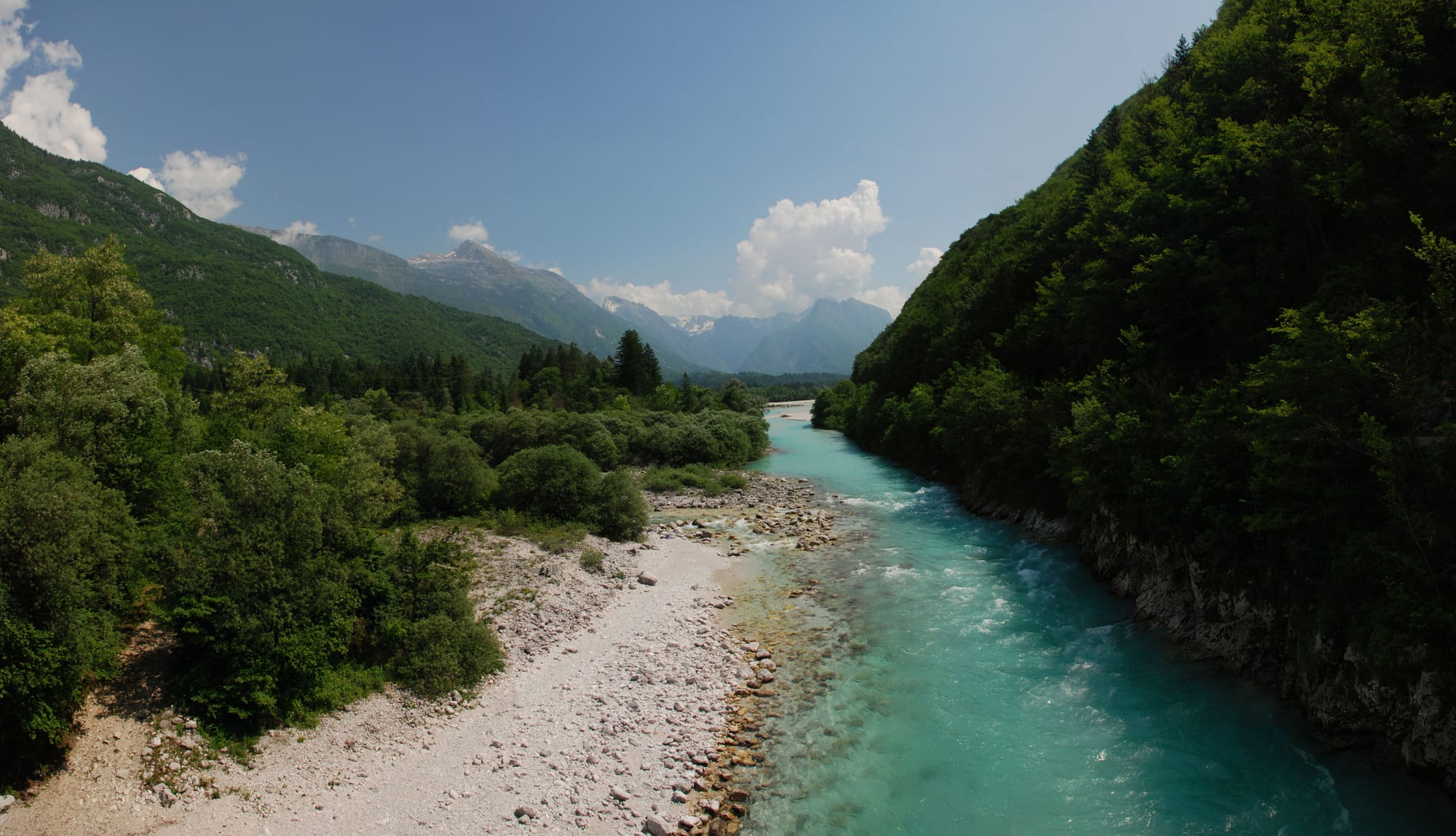
The First World War brought the Soča Front, where Italian and Austro-Hungarian armies fought twelve battles along the river from 1915 to 1917; in October 1917 German and Austro-Hungarian forces broke through at Kobarid, known to Italians as Caporetto. After the war the whole region was awarded to Italy by the 1920 Treaty of Rapallo, and Fascist rule banned Slovene in schools and public life, provoking the underground resistance group TIGR.
After 1945 most of the region went to Yugoslavia, but Gorizia remained Italian, so Nova Gorica was built on the Yugoslav side from 1947. The coast from Koper to Piran formed Zone B of the Free Territory of Trieste until 1954, and many of its Italian-speaking inhabitants left. Koper grew into Slovenia's port, and the border that once divided Gorizia became an open Schengen crossing in 2007.