History
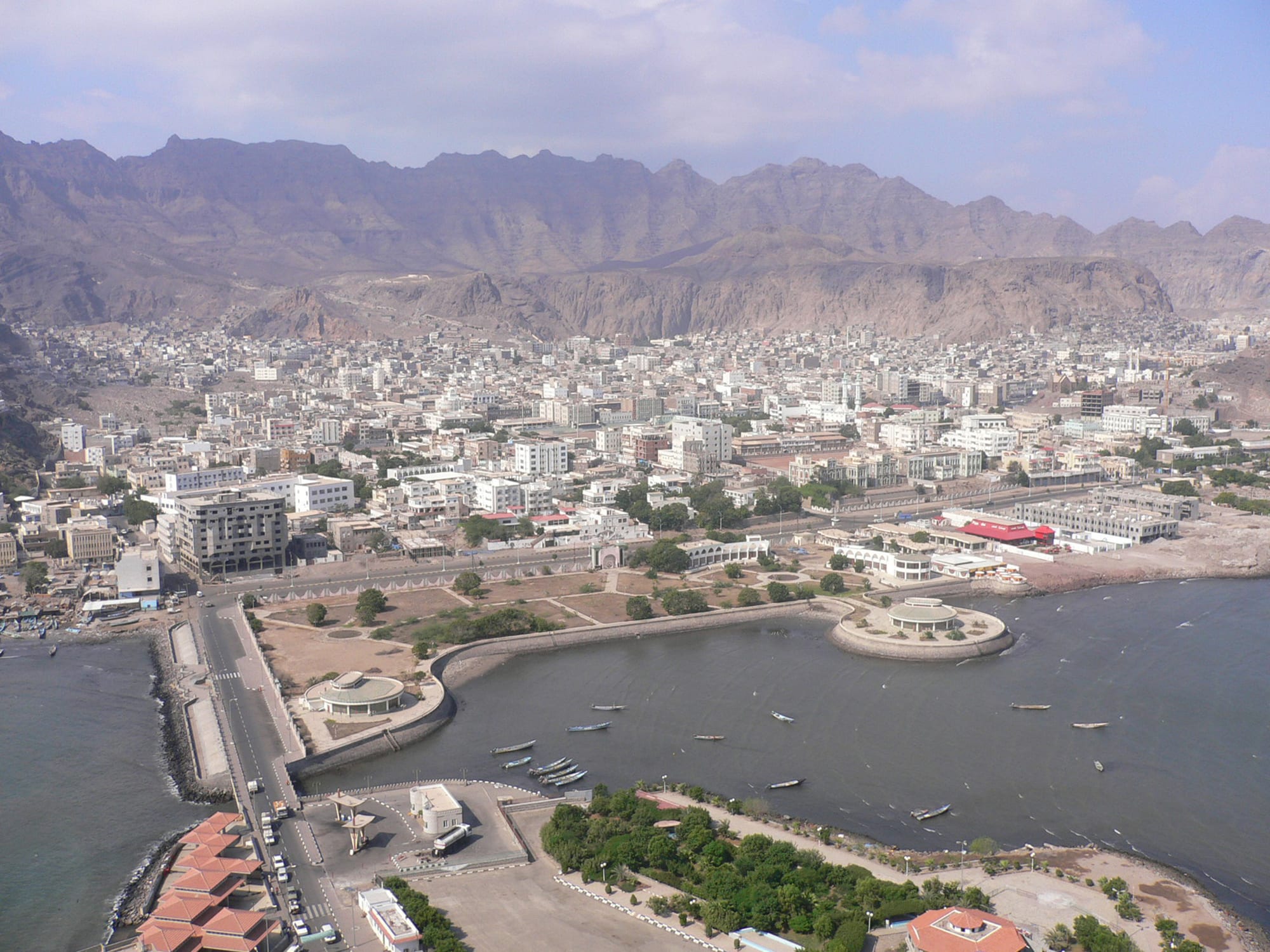
Aden's harbour, sheltered by the volcanic peninsula of Jabal Shamsan, has drawn traders since antiquity, when it served ships sailing between India, Egypt and East Africa. The Cisterns of Tawila, cut into the ravine above Crater to catch the rare floods, are of uncertain but old date, and in the Middle Ages Aden was one of the great ports of the Indian Ocean before it declined under later rulers.
In 1839 the British East India Company captured Aden to serve as a coaling station on the route to India. The opening of the Suez Canal in 1869 made it one of the busiest ports in the world, and Aden grew into a cosmopolitan city of Arabs, Indians, Somalis, Jews and Europeans, ruled from Bombay until 1937 and then as a Crown colony. Around it, Britain signed treaties with the sultans and sheikhs of the hinterland — among them the Abdali of Lahij and the Fadhli of Abyan — to form the Aden Protectorate.
The armed struggle against British rule began in the Radfan mountains in October 1963, and the Aden Emergency ended with British withdrawal in 1967. Aden became capital of the People's Democratic Republic of Yemen, whose ruling party tore itself apart in a brief civil war fought in the city in January 1986. After unification in 1990 and the southern defeat of 1994, resentment of northern rule grew into the Southern Movement. Houthi forces reached Aden in 2015 but were driven out, and the city has since served as the temporary seat of the internationally recognised government. From 2017 the Southern Transitional Council, a UAE-backed movement seeking southern independence, held Aden and much of the south, until Saudi-backed government forces drove it out in January 2026; some of its leaders then announced its dissolution, which others rejected.