Food · United Kingdom
United Kingdom: Food and the National Dish
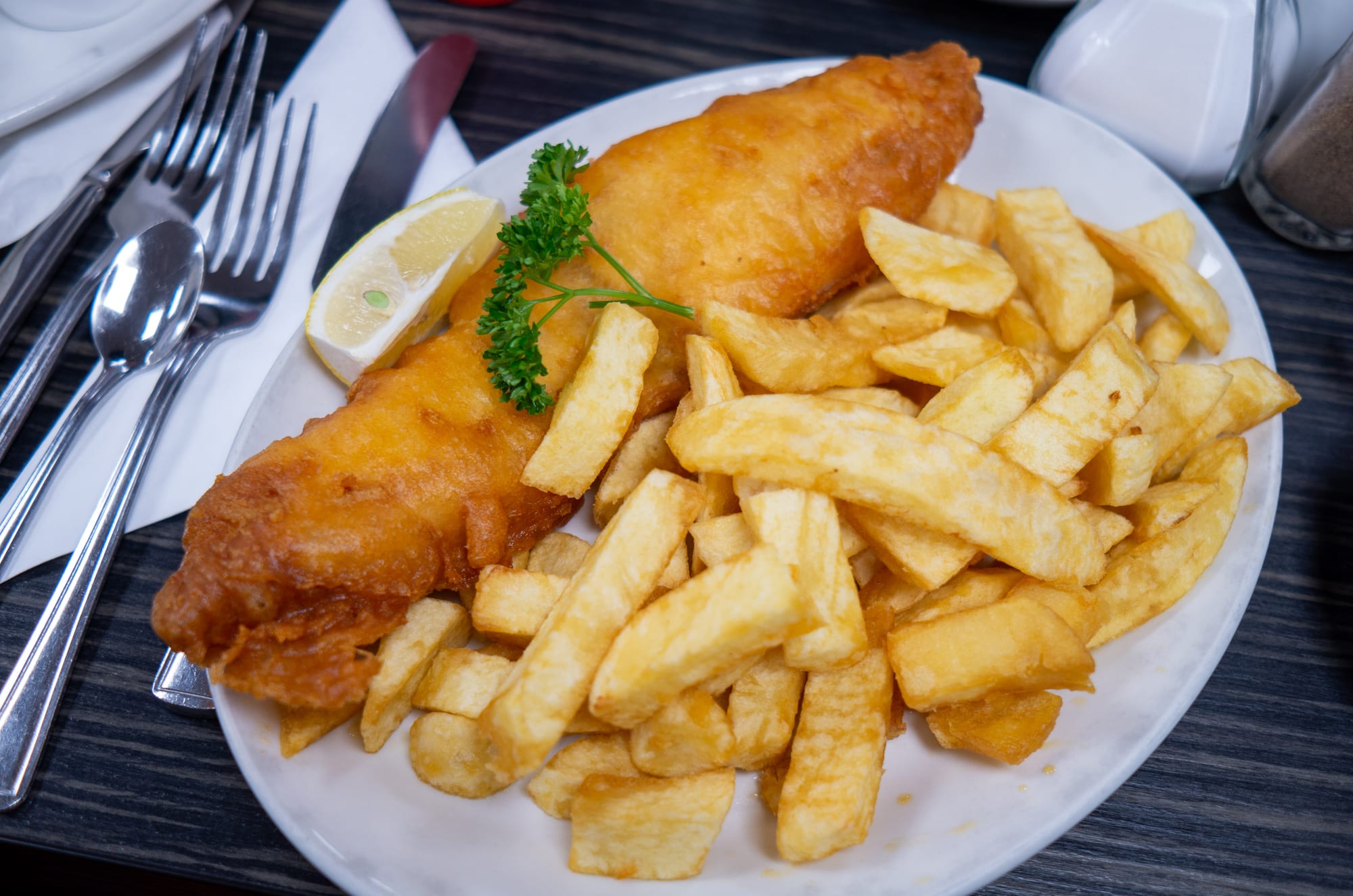
Battered fish and chips wrapped up hot, a seaside staple that has stayed the country's most recognised meal for well over a century
By Globeway Editorial · 30 September 2026
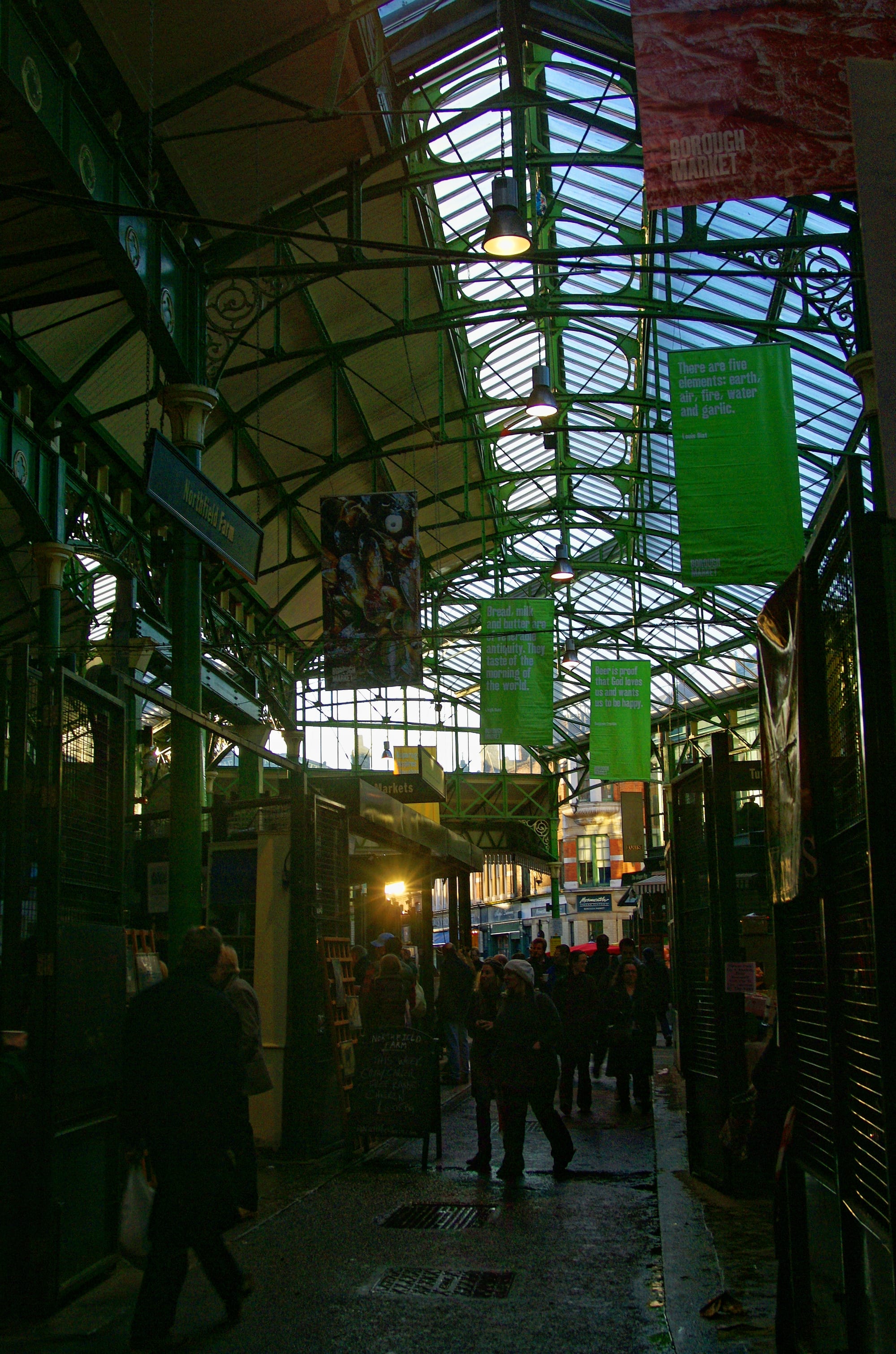
A cuisine reshaped repeatedly by trade and migration
British food has been shaped by centuries of trade, empire and, more recently, migration, producing a cuisine that genuinely spans a simple fried fish supper, a slow Sunday roast, and dishes brought by South Asian communities that have become just as central to how Britons actually eat today.
The national dish: fish and chips
Fish and chips, battered and deep-fried white fish served with thick chip-cut fried potatoes, is often considered the United Kingdom's national dish. Emerging in the 1860s as an affordable meal for industrial workers, thanks to trawler fishing and the railways bringing fresh fish inland quickly, fish and chips became a genuine working-class staple that has remained popular across all of British society ever since, traditionally wrapped in paper and eaten by the seaside.
Potatoes, roast meat and a genuinely layered pantry
Potatoes, roast meat and gravy anchor much of traditional British cooking, alongside a spice-forward South Asian food culture that has become just as genuinely embedded in everyday British eating, from curry houses to supermarket ready meals. Dairy, in cheese and butter, and root vegetables round out a pantry shaped by both native farming tradition and the country's long history of trade and migration.
History behind the fryer
Fish and chips developed during the Industrial Revolution, when railway networks could bring fresh sea fish inland fast enough to supply growing city populations, and fish battered and fried in oil, a tradition brought by Spanish and Portuguese Jewish immigrants, met cheaply available potatoes chipped and fried separately; the first known shops opened in London and Lancashire in the 1860s. The dish's affordability and speed made it a genuine working-class staple, and one of the few foods in the UK not subject to rationing during the world wars.
Dishes to know
Five more to recognise across the United Kingdom:
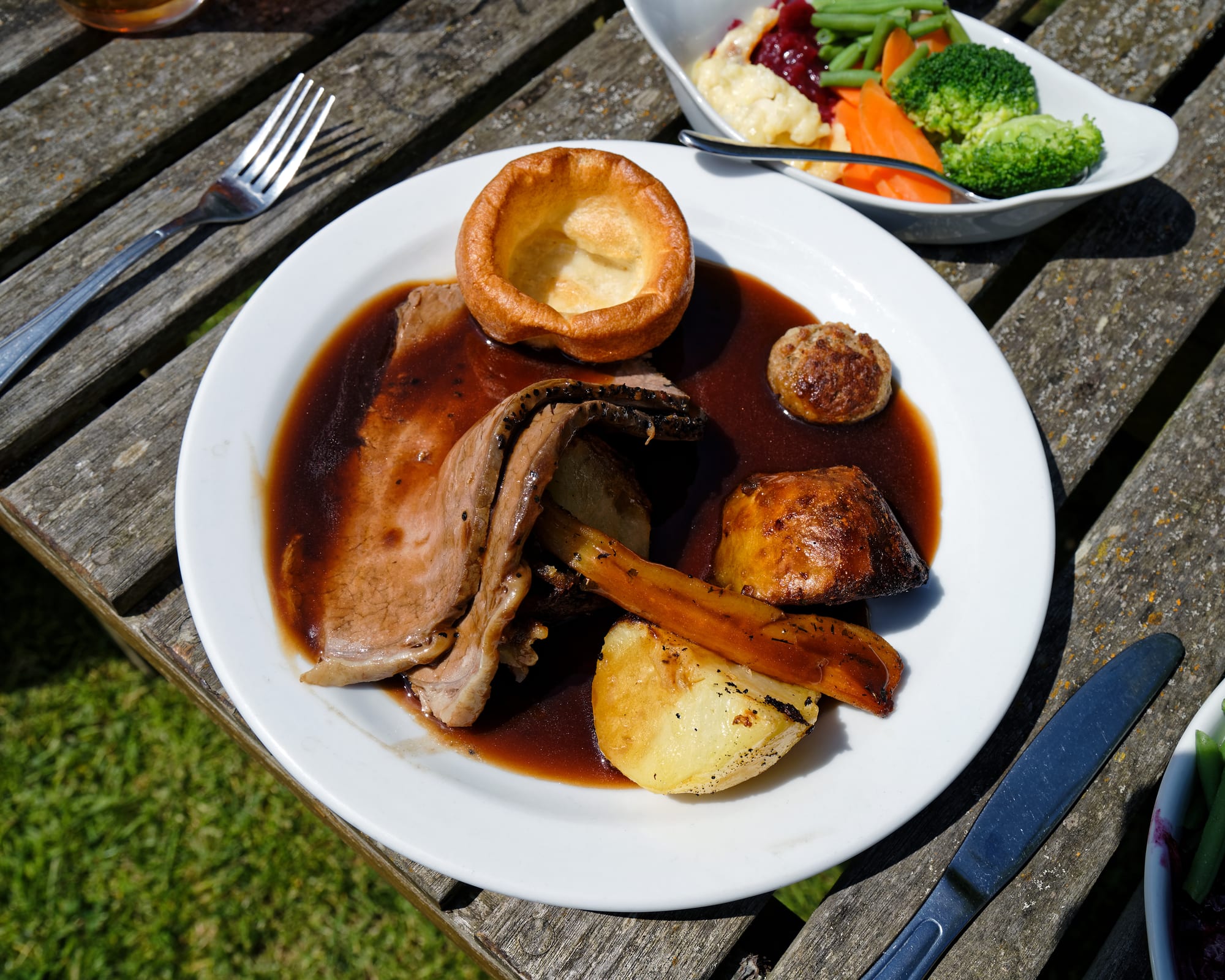
- Sunday roast — roasted meat, potatoes, vegetables and Yorkshire
pudding, a genuine weekly household tradition.
- Chicken tikka masala — chicken in a creamy, spiced tomato sauce,
widely and genuinely described by British commentators as one of the country's most popular modern dishes.
- Full English breakfast — eggs, bacon, sausage, beans and toast, a
substantial traditional morning meal.
- Shepherd's pie — minced lamb or mutton topped with mashed potato
and baked; made with beef it is usually called cottage pie.
- Cornish pasty — a pastry filled with beef, potato, swede and onion,
with Protected Geographical Indication status since 2011 tied to Cornwall.
Drinks
Tea, taken with milk and central to daily social ritual, remains the United Kingdom's most iconic drink. Beer, brewed in styles ranging from bitter to stout, and increasingly recognised English wine, mostly sparkling, from southern England's vineyards are also widely enjoyed.
Eating as a traveller
Vegetarians will find bean, vegetable and dairy-based dishes manageable, and most cities offer extensive South Asian, halal and international dining options. Tap water is safe to drink directly across the United Kingdom. Trying fish and chips wrapped up at a seaside chip shop is a genuine, low-key way to eat as generations of Britons have done.
What to take from the table
Fish and chips, born from railways and trawlers more than a century ago, remains the United Kingdom's most recognised dish, even as chicken tikka masala's genuine popularity shows just how much British food has grown since.