💰 Budget
Corrientes is one of the cheaper provincial capitals of the northeast, and costs are below those of Puerto Iguazú or the Iberá lodges. Rooms fill and prices rise during the chamamé festival in January and on carnival weekends. Prices in pesos change quickly, so any figure is a guide only.
- Daily Budget Midrange
- USD 85–160 (central hotel, restaurant dinners of river fish, taxis, festival tickets)
- Daily Budget Shoestring
- USD 35–60 (hostel or simple hotel, chipá and set-menu lunches, city buses)
Book early for the chamamé festival and carnival; the Costanera, the churches and the river beaches cost nothing.
📅 Best Time to Visit
March to May and August to November are the most comfortable months, and the lapachos flower along the Costanera at the end of winter. January and February bring the chamamé festival and the carnival, but also heavy heat, storms and mosquitoes. Winters are mild and frosts are rare.
⏳ Suggested Number of Days
One or two days covers the city itself. Allow three or four to include the twin city across the river and the river towns nearby, and more to combine the visit with the wetlands further inland. Festival dates fill the calendar quickly.
- First Visit
- 1–2 days
- With Surroundings
- 3–4 days
🚆 Transportation
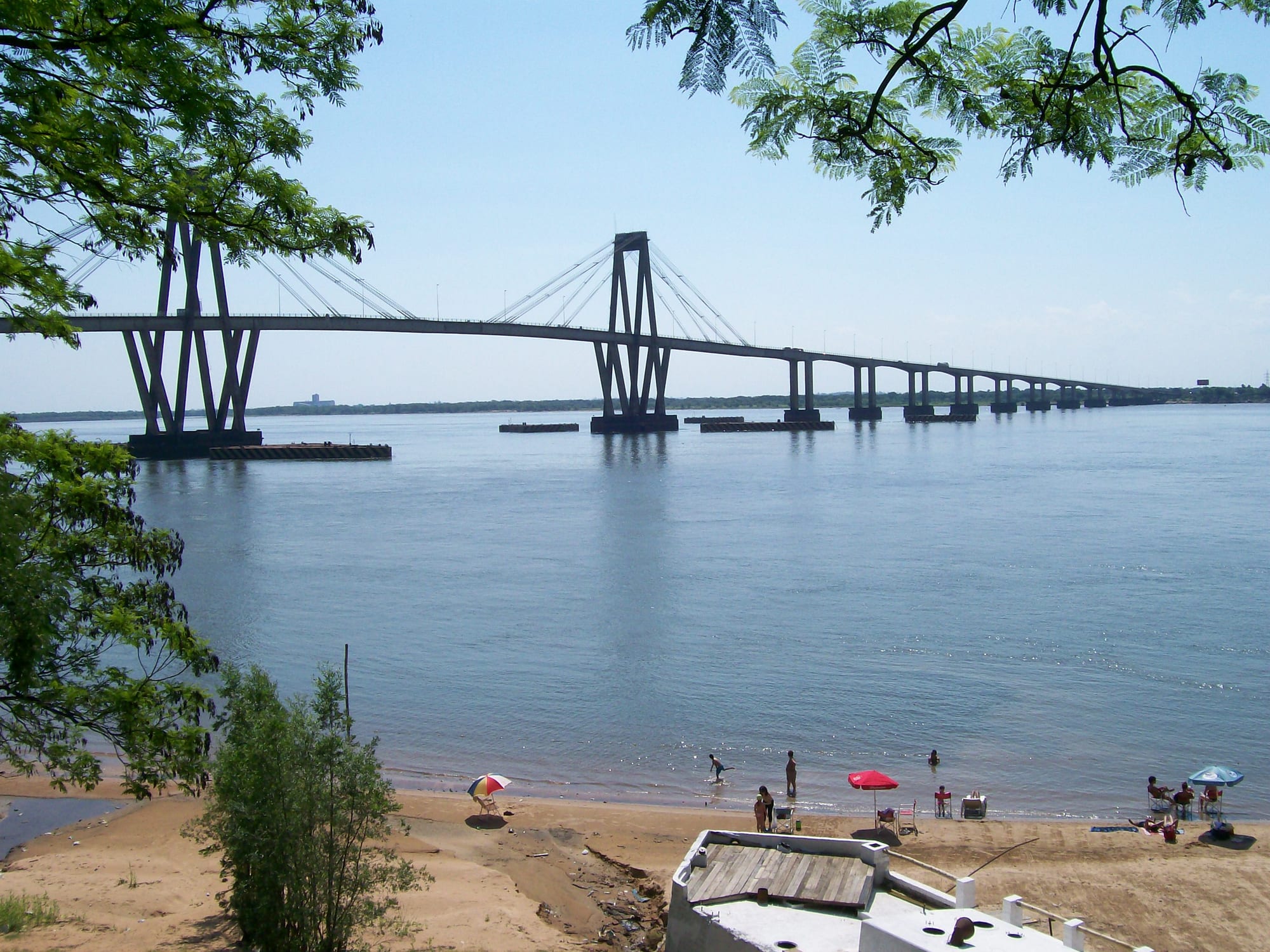
The centre and the Costanera are compact, and city buses cover the rest; fares are paid only with the SUBE card used in Buenos Aires and other Argentine cities, which can be bought and topped up at kiosks and the bus station. Taxis and remises are plentiful, with ranks around Plaza Cabral. Buses and taxis cross the bridge to Resistencia.
Get a SUBE card on arrival; city buses do not take cash.
🛬 Airport & Station Connections
Corrientes International Airport (Doctor Fernando Piragine Niveyro) lies about 5 km from the city, with flights to Buenos Aires; city buses run there from the centre in around half an hour. Resistencia's airport, 28 km west of it across the river, is an alternative. Long-distance buses arrive at the modern terminal on Avenida Maipú, and Buenos Aires is about 1,000 km away by road.
🚶 Walkability
The old town and the Costanera are flat and easy on foot, with shade from the street trees. The heat is the main obstacle: in summer, walks are best early or in the evening, when the riverside fills with people. The beaches at the southern end and the bus station are a bus or taxi ride from the centre.
🛡️ Safety
Argentina is relatively safe by regional standards, and violent crime against visitors is uncommon. In Corrientes the main urban risk is petty theft, and the streets empty during the afternoon siesta. Dengue has caused large outbreaks in the northeast in recent years, and summer heat is a real hazard.
Use insect repellent day and night, drink plenty of water in summer, keep phones out of sight in quiet streets, and swim only at beaches with services. Check current official travel advice before travelling.
🌦️ Climate
Humid subtropical, with an annual average of about 21°C and around 1,500 mm of rain. Summer is December to February: long, hot and stormy. Winters are mild, and frost is rare. The city set temperature records of over 43°C in September 2020.
- Summer
- hot and humid, often 30–35°C or more, with heavy thunderstorms
- Winter
- mild, around 15–22°C by day, cooler at night, with occasional cold spells
🤝 Local Customs
The day breaks for a long siesta, when most shops close and the streets go quiet, and life resumes in the evening on the Costanera. Tereré, cold mate, is shared constantly, and accepting the gourd is a friendly gesture. Guaraní words run through local speech. Chamamé is a matter of real pride, and the sapucai cry is part of the music, not a disturbance.
A tip of around 10 per cent is usual in restaurants. Dress modestly in churches, and ask before photographing processions or pilgrims.
💳 Common Payment Methods
The currency is the Argentine peso. Cards are widely accepted in hotels, restaurants and larger shops, while small bakeries, chipá vendors and market stalls prefer cash. ATMs are in the centre; the airport and bus station have no exchange offices, and inflation means prices change often.