💰 Budget
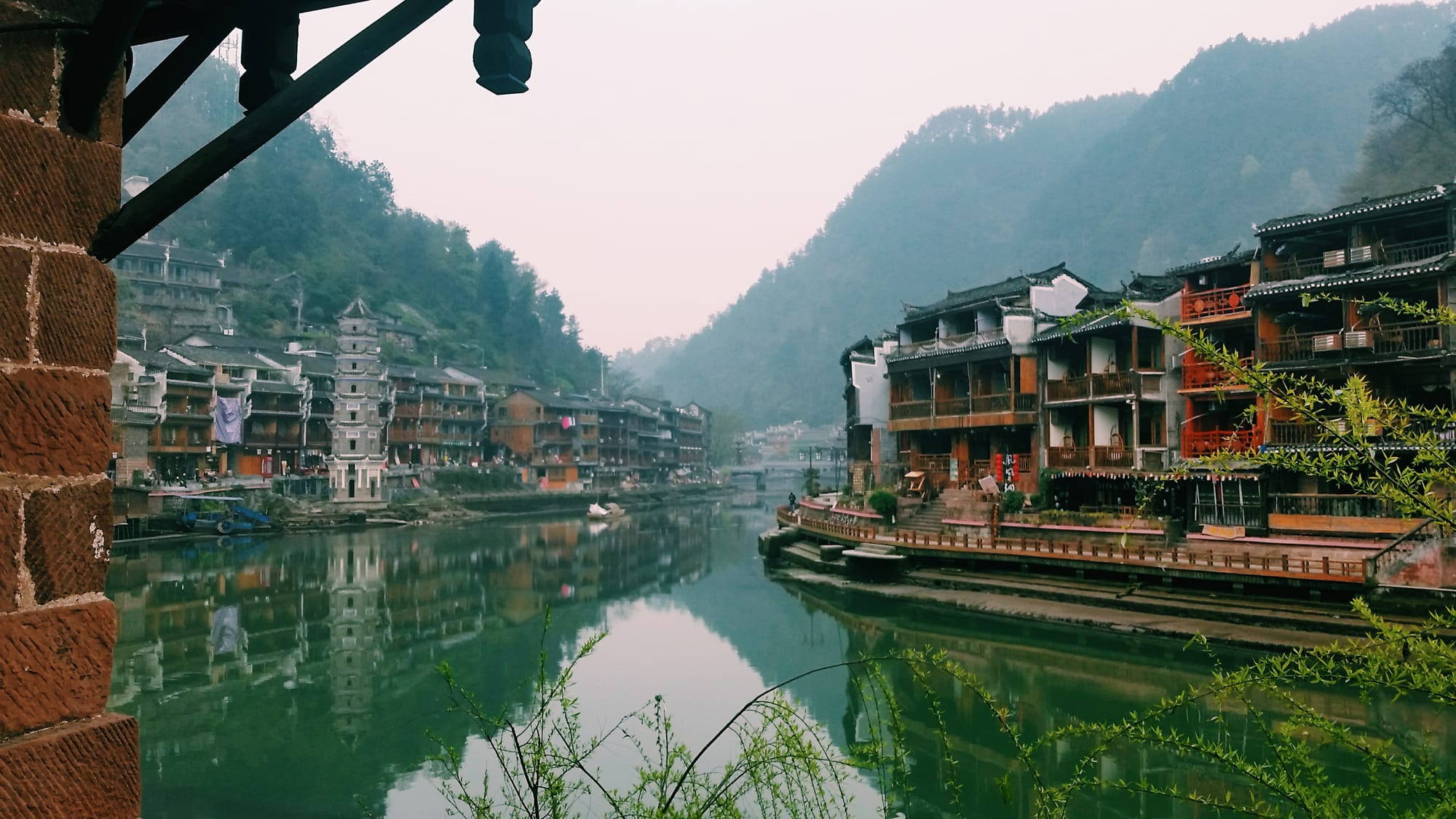
Fenghuang is cheap once the journey there is done. Guesthouse rooms in the old town are inexpensive outside holiday weeks, meals cost little, and walking the lanes and riverbanks is the main activity. The costs are the combined ticket for the old town's historic houses and museums, boat rides, and transport in and out of a remote county.
- Daily Budget Midrange
- USD 50–100 (riverside guesthouse or hotel, restaurant meals, sight tickets and a boat, taxis or a driver)
- Daily Budget Shoestring
- USD 25–45 (guesthouse room, noodle and snack stalls, walking, local buses)
Rooms facing the river cost more and are noisier; the north bank and the new town are cheaper and quieter, and the walls and lanes cost nothing to walk.
📅 Best Time to Visit
April to June and September to November are mildest, with mist on the river in the mornings and colour on the hills in autumn. Summer is hot, humid and the busiest season, and heavy rain can raise the river sharply. Winter is cold and damp but very quiet, and the old town is at its most atmospheric with few people in it.
⏳ Suggested Number of Days
A night or two is the usual stay, enough to see the old town both early in the morning and lit after dark, which are very different experiences. Three or four days allows for the walls, caves and villages in the surrounding hills, which need a bus or a hired driver.
- First Visit
- 1–2 days
- With Surroundings
- 3–4 days
🚆 Transportation
The old town is closed to cars and crossed on foot. Buses and taxis serve the new town, the bus station and the outlying sights, and a hired car with a driver is the practical way to reach the villages and the Ming wall. Small boats are poled along the river inside the town.
Luggage has to be wheeled or carried over flagstones and steps in the old town, so a bag that can be carried is easier than a large case.
🛬 Airport & Station Connections
Fenghuang is remote. Fenghuang Gucheng station, outside the town on the Zhangjiajie–Jishou–Huaihua high-speed railway, has been linked to the edge of the town since 2022 by a short maglev line, and buses and taxis also make the run; long-distance buses run from Jishou, Huaihua and Zhangjiajie. The nearest airport is Tongren Fenghuang, across the border in Guizhou, about 34 kilometres away.
🚶 Walkability
The old town is entirely walkable and nothing else works: lanes are narrow flagstone, there are steps and slopes throughout, and the crossings include stepping stones and a plank bridge over the river. Surfaces are slippery in rain and crowded in the evening. The new town uphill is steeper and built for traffic.
🛡️ Safety
Fenghuang is safe, with very little crime beyond occasional overcharging and pushy touting for boats, photography and costume hire. The real hazards are slippery stone lanes and river steps, the Tuo rising quickly after heavy rain in the hills, crushing crowds on the bridges at holiday peaks, and bar-street noise and drinking late at night.
Keep off the stepping stones and riverbanks when the water is high or rising, wear shoes with grip on wet flagstones, and agree prices for boats, costumes and photographs before accepting them. Check current official travel advice before travelling.
🌦️ Climate
Humid subtropical and tempered by the mountains, with a long wet season from April to August. River mist is common in the mornings through much of the year, and the hills are cooler than the valley floor.
- Summer
- hot and humid, typically 24–33°C, with heavy rain and thunderstorms
- Winter
- cold and damp, typically 2–10°C, with frost and occasional snow in the hills
🤝 Local Customs
Tipping is not expected. The county is largely Miao and Tujia, and embroidered costume, silver headdresses and folk songs are part of both the local culture and the visitor trade — women offering to plait hair or pose for photographs expect payment, so agree it first. Village life in the hills is not a display; ask before photographing people, houses or ancestral halls.
Ask before photographing residents in costume or at work, keep noise down in the lanes late at night, and accept the tea or rice wine offered by a host at least once.
💳 Common Payment Methods
The currency is the renminbi, counted in yuan. Guesthouses, stalls, boats and tickets are almost all paid by QR code through Alipay or WeChat Pay, which now let foreign visitors link an overseas card; setting this up before arrival is essential in a small town. Foreign cards are rarely accepted outside the larger hotels, and ATMs are in the new town rather than the old lanes.