💰 Budget
Wuhan is cheaper than Shanghai or Beijing, especially for food: breakfast from a street stall costs very little, and the metro is inexpensive. Hotel prices are moderate outside the cherry-blossom fortnight in late March and the national holiday weeks, when rooms near Wuhan University and East Lake fill first. Museum entry is often free, with tickets booked in advance through an app.
- Daily Budget Midrange
- USD 90–180 (mid-range hotel, restaurant meals, taxis or ride-hailing, entry tickets and river cruises)
- Daily Budget Shoestring
- USD 30–50 (hostel or budget hotel, noodle stalls and canteens, metro and buses)
Many of the city's museums require a free advance booking through an app or WeChat account, so reserve a day or two ahead.
📅 Best Time to Visit
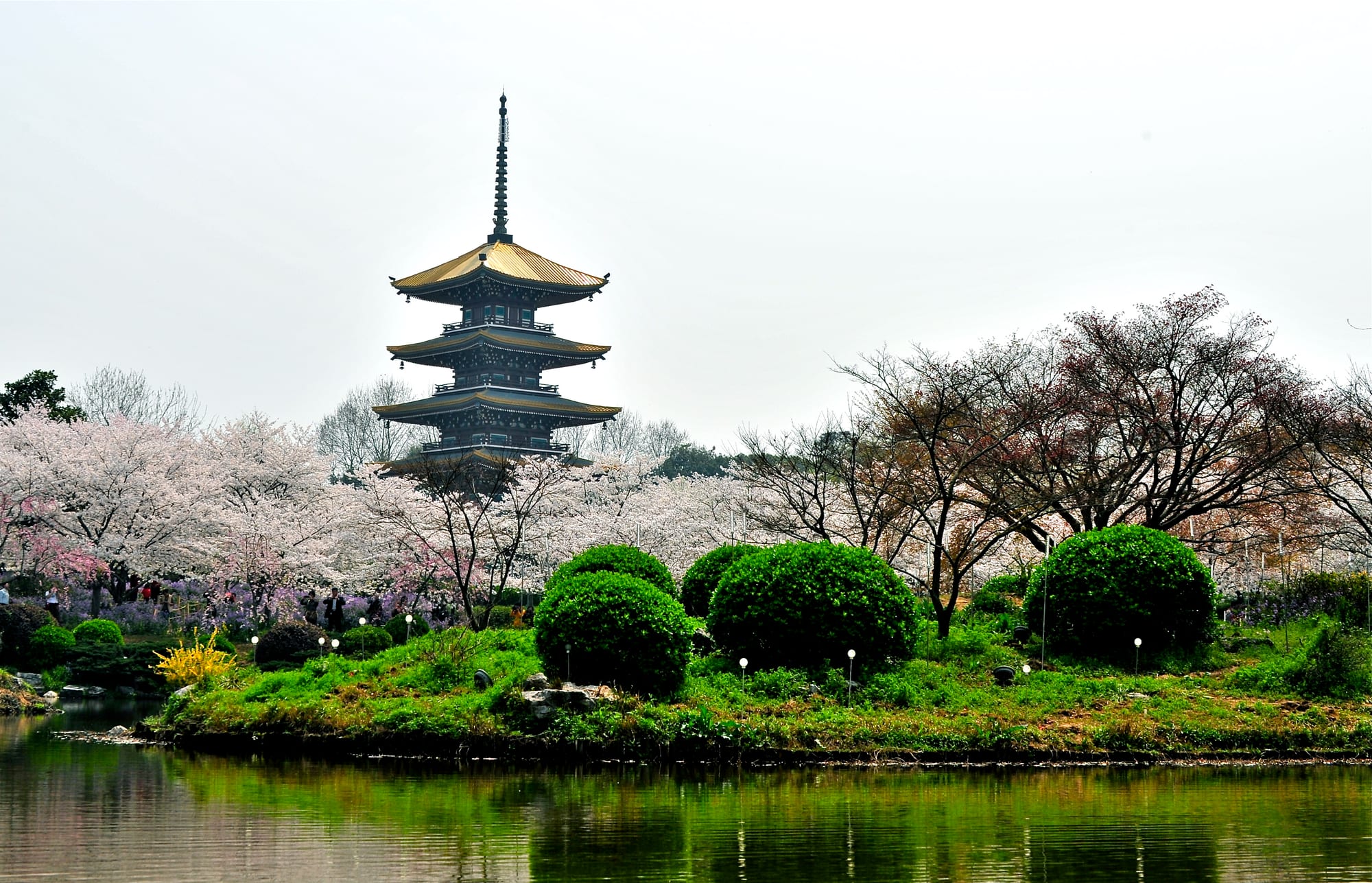
Late March to May and late September to November. Spring brings the cherry blossom and the plum gardens, autumn the clearest and most comfortable weather. Summer is genuinely difficult: Wuhan is one of the Yangtze cities traditionally called furnaces, with long spells above 35°C and high humidity. Winter is cold and damp rather than snowy, and much quieter.
⏳ Suggested Number of Days
Two or three days suits a first visit to a city whose sights sit on both sides of a very wide river. Four or five allow the outer lakes, hills and river trips as well. Crossing between the three towns eats into the day, so allow more time in heavy traffic.
- First Visit
- 2–3 days
- With Surroundings
- 4–5 days
🚆 Transportation
The metro is the practical way to move around, with many lines crossing under and over the Yangtze and reaching the airport, the main railway stations and Optics Valley. Ferries still cross the Yangtze between Wuchang and Hankou, a cheap and worthwhile trip in itself, and buses and Didi ride-hailing fill the gaps. Traffic on the bridges is heavy at peak times, so the metro is usually faster than a taxi.
Metro entry, buses, ferries and ride-hailing are all paid through QR codes in Alipay or WeChat Pay, so set an app up with a card before arriving.
🛬 Airport & Station Connections
Wuhan is one of the busiest rail junctions in China, on the Beijing–Guangzhou high-speed line, with direct high-speed services to Beijing, Guangzhou, Shanghai and Xi'an. Trains use three main stations — Wuhan, Hankou and Wuchang — which are far apart, so check which one a ticket uses. Wuhan Tianhe International Airport, about 26 km north of the centre in Huangpi District, has domestic and international flights and a metro connection to the centre.
🚶 Walkability
Individual districts walk well — the concession streets of Hankou, the lanes below Snake Hill, the East Lake greenway and the Wuhan University campus are all best on foot. The city as a whole is not walkable: the Yangtze and the Han divide it into three, distances between the towns run to several kilometres, and the main roads are wide and busy. Summer heat limits walking to the early morning and the evening.
🛡️ Safety
Wuhan is a safe city with little violent crime. The realistic risks are heat exhaustion in summer, crowds during cherry-blossom season and public holidays, traffic at large junctions where scooters move fast and quietly, and pickpocketing in crowded markets and stations.
Drink far more water than usual in summer, keep bags closed in busy stations and markets, and take care crossing roads used by electric scooters. Check current official travel advice before travelling.
🌦️ Climate
A humid subtropical climate with a strong monsoon influence. The rainy season runs from June into July, when the Yangtze and the lakes rise and flooding is a regular concern. Spring and autumn are short and pleasant.
- Summer
- very hot and humid, often 33–38°C in July and August, with heavy rain in the plum-rain season
- Winter
- cold and damp, typically 2–10°C, with grey skies and rare snow
🤝 Local Customs
Tipping is not customary. Breakfast is eaten out, often walking, and nobody minds eating noodles in the street. Temples such as Guiyuan are active places of worship: dress modestly, keep quiet in the halls and check whether photography is allowed before taking pictures of statues. Wuhan people have a reputation across China for speaking loudly and directly, which is not rudeness.
Politics, Taiwan, Tibet and Xinjiang are sensitive subjects; avoid photographing security forces or military sites.
💳 Common Payment Methods
The currency is the renminbi, counted in yuan. Almost everything is paid by QR code through Alipay or WeChat Pay, which now let foreign visitors link an overseas card; foreign cards work at some hotels and large stores but rarely at stalls and small restaurants. Keep a little cash for markets, and use bank ATMs for withdrawals.