💰 Budget
Bamberg costs less than Munich for rooms and meals. Brewery taverns and beer cellars keep eating and drinking good value. Rooms fill and prices rise during the Sandkerwa in August and in the Christmas season.
- Daily Budget Midrange
- USD 160–280 (mid-range hotel, restaurant meals, museum tickets, a day trip by regional train)
- Daily Budget Shoestring
- USD 75–125 (hostel or budget guesthouse, bakery and brewery-tavern meals, buses and walking)
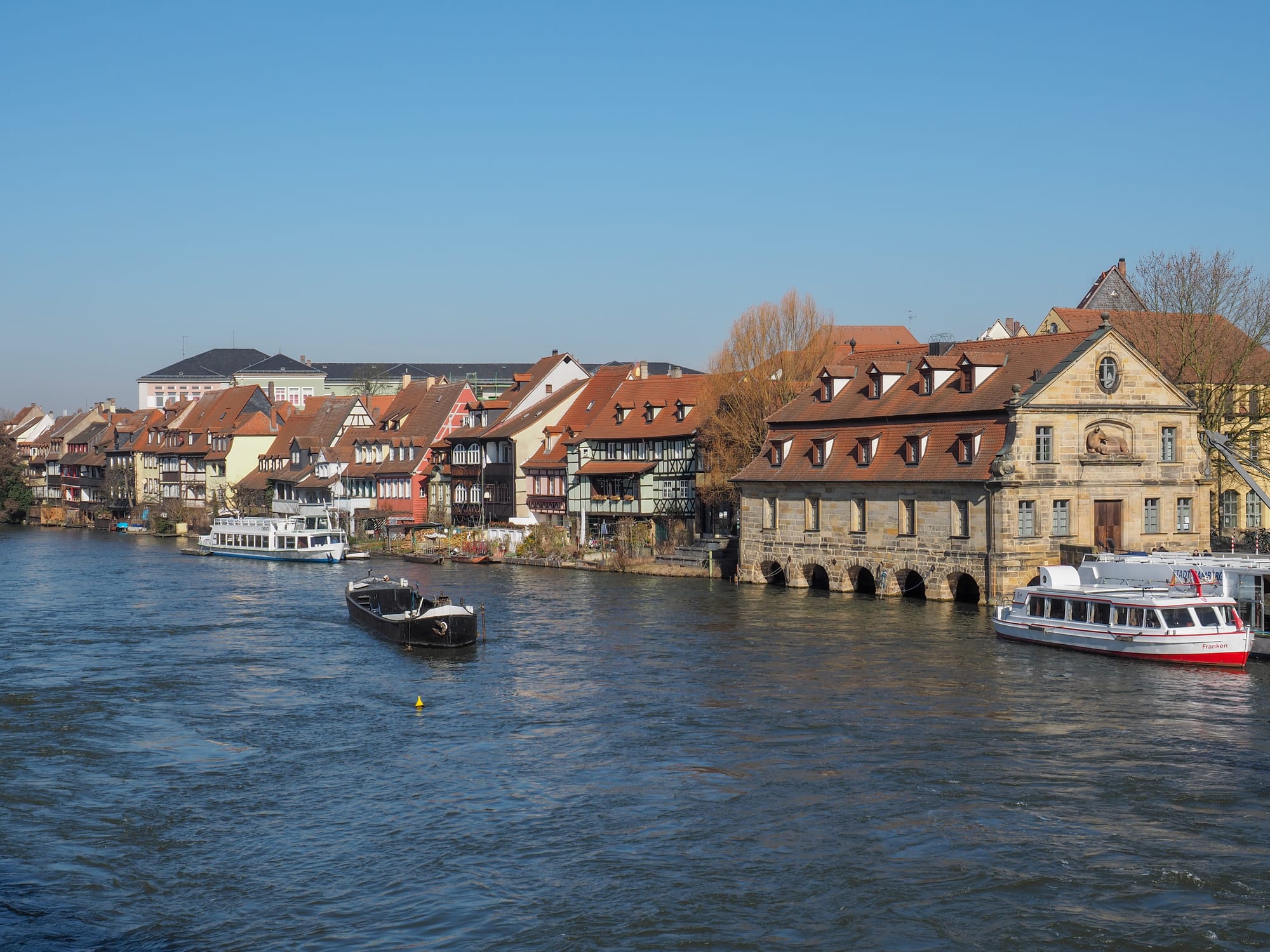
The old town is compact and best seen on foot, so there is little to spend on local transport; many of the main sights — the Domplatz, the bridges, Little Venice and the views from the hills — cost nothing.
📅 Best Time to Visit
May to September for long, warm days in the beer cellars and on the river, with the Sandkerwa filling the town at the end of August. October and early November bring quieter streets, and December the Christmas market and nativity scenes. Winters are cold and grey but uncrowded.
⏳ Suggested Number of Days
The old town is small enough for a first visit of one or two days. Allow three or four to take in the surrounding countryside and nearby cities as well; those trips take more time without a car.
- First Visit
- 1–2 days
- With Surroundings
- 3–4 days
🚆 Transportation
Local public transport in Bamberg runs entirely on buses: more than 20 routes link the outlying districts and nearby villages to the central bus station, with a few night lines. The compact centre, short distances and scarce parking make the bicycle an everyday way of getting around.
Parking in the old town is scarce; the city buses or a bicycle are easier ways into the centre.
🛬 Airport & Station Connections
Bamberg station, less than two kilometres north-east of the old town, is on the main line between Munich, Nuremberg, Leipzig and Berlin: Munich is less than two hours away by train and Berlin less than three. Nuremberg is 63 kilometres away by rail. The nearest major airport is Nuremberg, about 45 minutes by car or an hour by train and underground; many international visitors fly into Frankfurt or Munich instead.
🚶 Walkability
The old town is made for walking, and the three historic quarters lie close together. The island town is flat; the hill town means steep lanes and steps up to the cathedral, Michaelsberg and the Altenburg. From the station the walk into the centre takes under half an hour, and buses run the same way.
🛡️ Safety
Germany is a safe country with low levels of violent crime. Bamberg is a quiet university town, and the main things to watch are bags in the crowds of the Sandkerwa and the Christmas market, cyclists on narrow streets, and the steep, uneven lanes of the hill town.
Keep bags secure in festival crowds, stay out of marked cycle lanes on foot, and take care on the steep cobbled lanes in wet or icy weather. Check current official travel advice before travelling.
🌦️ Climate
A temperate climate with mild differences between highs and lows and adequate rain all year, with a continental touch: winter nights fall well below zero.
- Summer
- mild to warm — July averages about 19.5°C
- Winter
- cold — January averages about 1.7°C, with frosty nights
🤝 Local Customs
Bamberg is Franconian, and many Franconians do not like being lumped together with Bavarians. The town is the seat of a Catholic archdiocese, and the cathedral and churches are working places of worship. Tipping in restaurants and bars is usual but modest, rarely more than 10 per cent, and often just a rounding up of the bill, stated as the total when paying. Townspeople are nicknamed Zwiebeltreter, onion-treaders, after the old market gardeners.
Dress modestly and keep quiet in the cathedral during services; tell the server the total including the tip when paying.
💳 Common Payment Methods
Germany uses the euro. Many places still prefer cash — some bakeries, bars and smaller restaurants do not take cards at all — so carry some euros alongside a card for larger purchases. Cash machines are easy to find in the centre.