History
Rothenburg — "red castle above the Tauber" — takes its name from a castle the counts of Comburg-Rothenburg built on the hilltop in 1070. When their line died out, the lands passed to the Hohenstaufen; Konrad III built a new castle on the spur in 1142, and the town was founded around 1170, centred on the marketplace and St. James's Church. Walls and towers followed in the thirteenth century, and in 1274 Rudolf of Habsburg made Rothenburg a Free Imperial City. Fairs, a Holy Blood pilgrimage and a territory of some 390 square kilometres made it one of the larger cities of the Empire, with about 5,500 people inside the walls. The Jewish community produced Rabbi Meir ben Baruch, a jurist of European reputation who died in 1293. An earthquake destroyed the Staufer castle in 1356; only the chapel of St. Blaise remains.
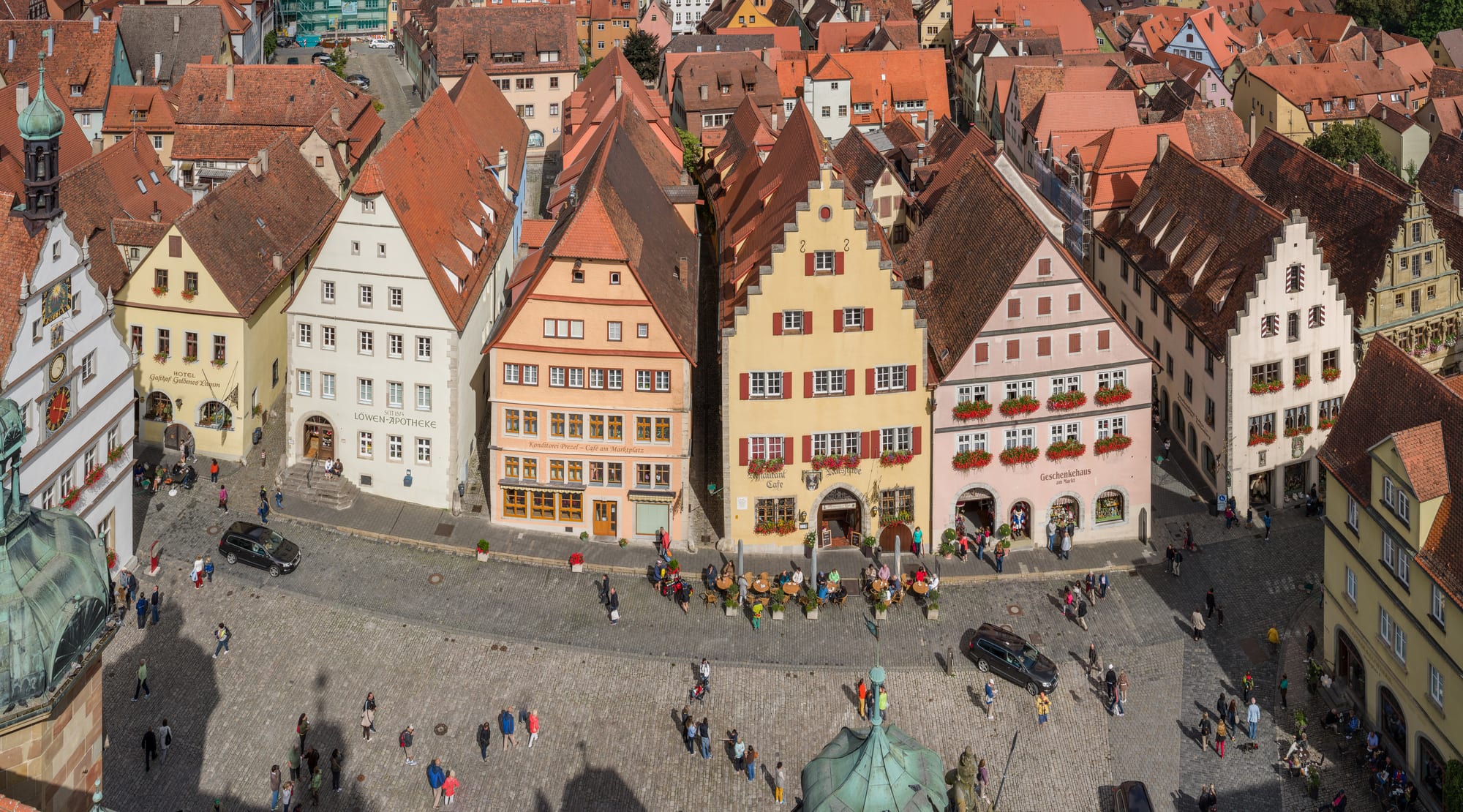
The Thirty Years' War ended Rothenburg's rise. In October 1631 the Catholic general Tilly took the Lutheran town; the legend that he spared it after the former mayor Georg Nusch drained 3¼ litres of wine in one draught first appears more than a century later. Plague followed in 1634, and the impoverished town stopped growing, preserving its seventeenth-century form. It passed to Bavaria in 1803. Painters such as Carl Spitzweg discovered it in the late nineteenth century, tourists followed, and laws were passed to prevent major changes.
The Nazis hailed it as "the most German of German towns" and expelled its Jewish citizens in October 1938. On 31 March 1945 bombing killed 37 people and destroyed about a third of the houses, mostly in the east. The US Assistant Secretary of War, John J. McCloy, had the army ordered not to use artillery; the local commander gave up the town, and US troops occupied it on 17 April. Donations from around the world paid to rebuild it.