💰 Budget
Hydra is one of the more expensive places in the Athens region, with boutique-priced rooms and harbourfront restaurant prices, and costs peak at summer weekends, when Athenians come over. Water taxis are the main extra expense for anyone going beyond walking distance; eating in Kamini or away from the quay keeps meals cheaper.
- Daily Budget Midrange
- USD 180–300 (guesthouse in a restored mansion, harbourside dinners, a water taxi or two, the hydrofoil from Piraeus)
- Daily Budget Shoestring
- USD 80–120 (simple room, bakery and taverna meals, walking everywhere, the ferry from Piraeus)
Come midweek or outside July and August for better prices, and walk to the beaches rather than taking water taxis.
📅 Best Time to Visit
May to early October, when the sea is warm enough for swimming and the ferries run often. July and August are hot and busy, especially at weekends. Late June brings the Miaoulia. In winter the island is quiet, sailings thin out sharply and many tavernas close.
⏳ Suggested Number of Days
Two or three days suit a first visit to the island; many come for a day from Athens, but staying overnight allows quiet evenings when the day boats have gone. Adding the neighbouring Saronic islands or the Peloponnese coast across the strait takes the stay to three or four.
- First Visit
- 2–3 days
- With Surroundings
- 3–4 days
🚆 Transportation
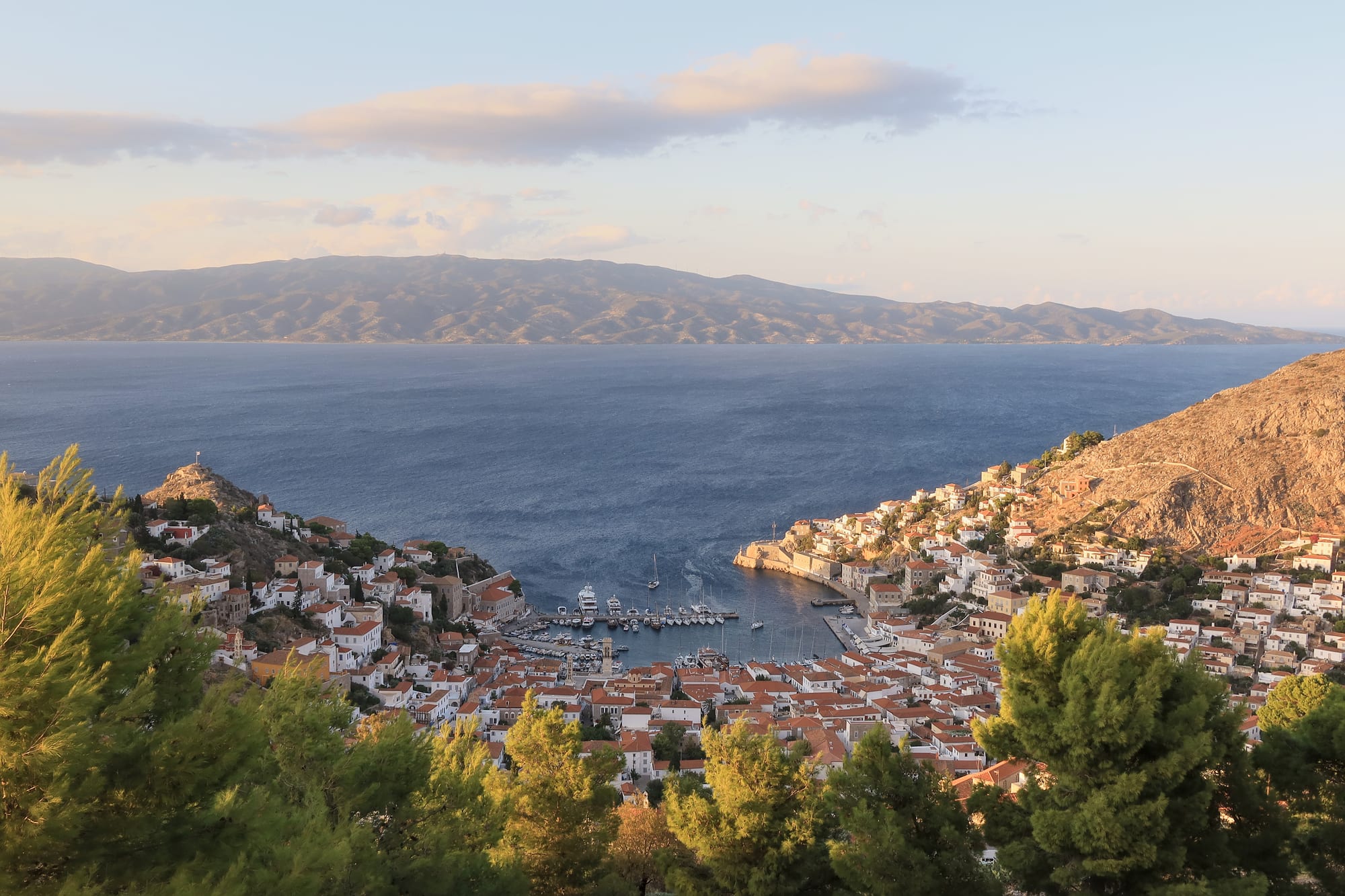
By law no wheeled vehicles are allowed on the island — no cars, motorcycles, scooters or even bicycles — and the only motor vehicles are the rubbish trucks. People walk; horses, mules and donkeys carry luggage and goods up the steps; and water taxis, which wait in the harbour, serve the beaches and villages.
Pack light: luggage goes up the stepped lanes by hand or by donkey, and water taxis charge fixed fares listed at the port.
🛬 Airport & Station Connections
High-speed hydrofoils and catamarans from Piraeus, about 69 km away by sea, stop first at Poros and go on to Spetses; the fast catamarans take about an hour and a half, and slow car ferries about three hours. Many Athenians drive to Metochi on the Peloponnese coast, leave the car and take the 20-minute passenger ferry across. The nearest major airport is Athens International.
🚶 Walkability
The town is entirely on foot, on marble-paved quays and steep stepped lanes that climb the hills around the harbour. The coast path west to Kamini and Vlychos is an easy walk; the climbs into the hills are steep and hot in summer.
🛡️ Safety
Greece is a safe country for visitors, with low levels of violent crime. Crime on the island is rare; the hazards are slippery marble steps, summer heat and wildfire — a fire in 2007 destroyed much of the pine forest east of the port, and in June 2024 fireworks from a yacht burned the island's only pine forest.
Wear shoes with grip on the polished steps, watch for sea urchins when climbing in and out of the water, and never light fires or fireworks. Check current official travel advice before travelling.
🌦️ Climate
A hot semi-arid climate, with an average annual temperature of about 20°C and less than 400 mm of rain a year. Summers are long, hot and dry, and winters are mild.
- Summer
- hot and dry — in Athens, across the Saronic Gulf, July days average about 35°C
- Winter
- mild and damp — in Athens, January averages about 9–10°C
🤝 Local Customs
Tipping is not obligatory in Greece. The island is small and traditional, Orthodox, and proud of its naval history; part of its population is of Arvanite descent. Covered shoulders and knees are expected in churches and monasteries.
Dress modestly in the cathedral and monasteries, keep beachwear for the swimming spots, and treat the working pack animals with care.
💳 Common Payment Methods
Greece uses the euro. Cards are accepted in most hotels, shops and restaurants around the harbour, and there are ATMs in town; water taxis, donkey porters and small tavernas may prefer cash.