💰 Budget
Naxos costs less than Santorini or Mykonos and sits close to the Greek island average; the town and the beach villages are busiest and dearest in July and August. Ferries are a significant cost, fast boats above all, and rooms are cheaper in May, June, September and October.
- Daily Budget Midrange
- USD 160–300 (mid-range hotel, taverna dinners, a hire car or quad for a day or two, fast ferries)
- Daily Budget Shoestring
- USD 70–110 (simple room or studio, gyros and bakery food, island buses, conventional ferries)
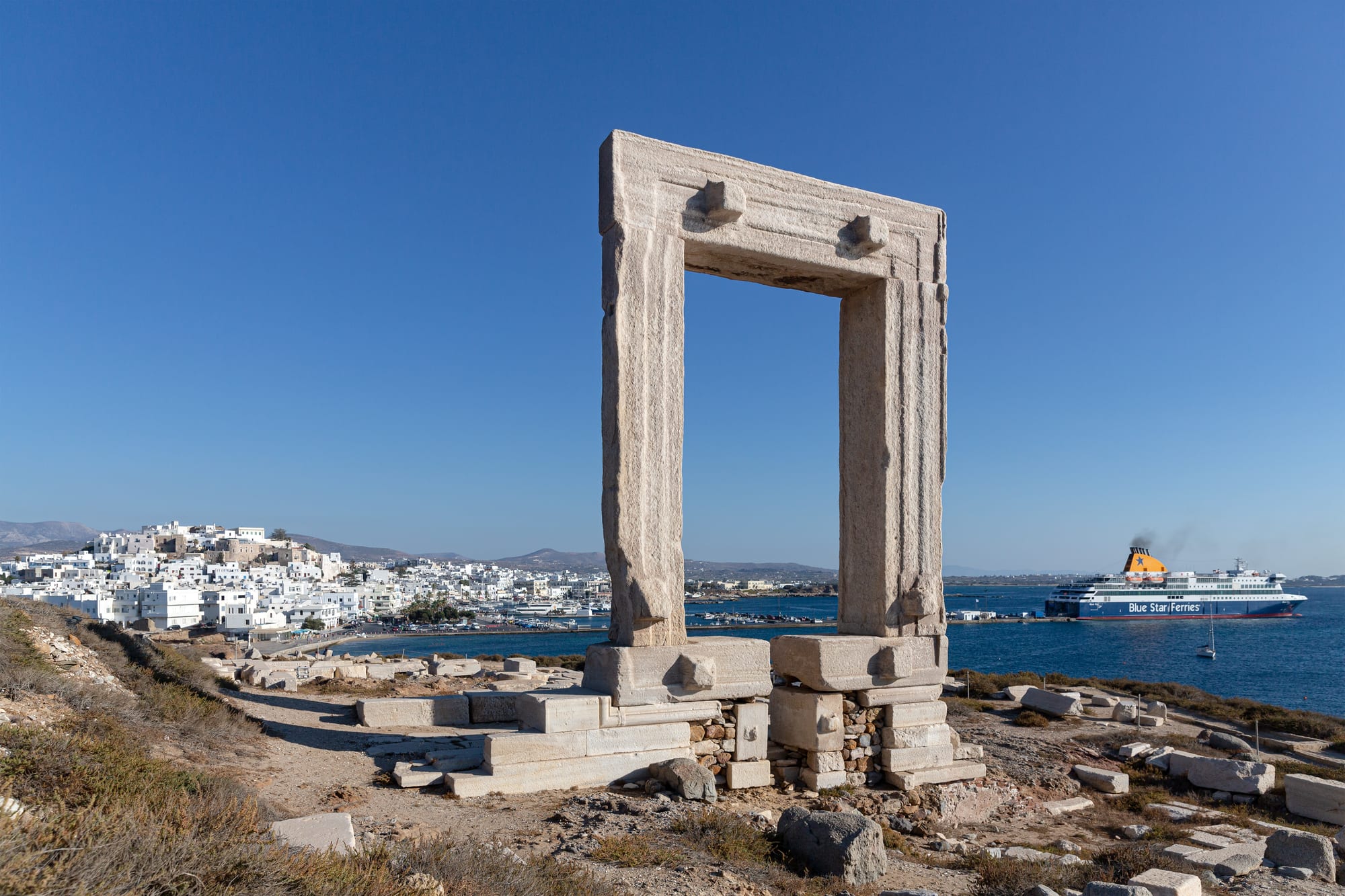
Walking the Kastro, the Portara at sunset and the town beach cost nothing, and local buses reach every village, if only a few times a day.
📅 Best Time to Visit
Late May, June and September bring a warm sea, open tavernas and fewer people; July and August are the busiest months, and the meltemi, the strong north wind of the Aegean, blows from about mid-May to mid-September. The mountains catch more cloud and rain than most of the Cyclades, so the island stays greener than its neighbours.
⏳ Suggested Number of Days
Two or three days are enough for the town and its beaches. The island is large and its villages, ancient quarries and mountain paths are spread out, so most visitors who want to see the interior stay close to a week, with a car or a lot of patience with the buses.
- First Visit
- 2–3 days
- With Surroundings
- 5–7 days
🚆 Transportation
Chora is the hub. Local KTEL buses run from the station by the ferry quay to every village, more often in summer, though some see only a few buses a day; tickets are bought before boarding. Taxis wait by the port, and hire cars, scooters and quads are common. Traffic jams and parking in the town have worsened in summer as ferries bring in more vehicles.
Buy bus tickets at the kiosk first, and expect the morning buses to be full.
🛬 Airport & Station Connections
Ferries from Piraeus take about five and a half hours, or three and a half to four hours by fast boat, with summer services from Rafina and Lavrio too; Santorini is about two hours away. The small airport, near Agios Prokopios about 3 km from the town, has daily flights from Athens of around half an hour.
🚶 Walkability
Much of Chora is pedestrianised, and the port, the Portara, the old quarters and Agios Georgios beach are all within easy walking distance. The Kastro and Bourgos lanes are steep, stepped and marble-paved, and slippery after rain. Footpaths cross the interior but are not always easy to follow.
🛡️ Safety
Greece is a safe country for visitors, with low levels of violent crime. On Naxos the main risks are scooter and quad accidents, fast drivers on country roads, heat on exposed paths and rough seas when the meltemi blows. The town has one hospital, and serious cases are taken to Athens by helicopter or ferry.
Wear a helmet, carry water on walks and avoid swimming in strong wind. Check current official travel advice before travelling.
🌦️ Climate
The climate varies across the island: the sheltered, flat west coast around the town is dry, with sea breezes, while the mountains of the centre are cooler and catch more rain. Summer rain is rare but can be very heavy.
- Summer
- hot and dry — up to about 30°C on the west coast, cooler in the mountain villages
- Winter
- mild and far cooler than the summer peaks of about 30°C, with the mountain villages of the interior much wetter and cooler
🤝 Local Customs
English and German are very common in Chora, and a little Greek goes a long way in the villages. The island is mainly Orthodox, and the Kastro keeps its Catholic churches. Meals start late, with meze in the early evening. Churches expect covered shoulders and knees.
Dress modestly in churches, ask before photographing people, and expect to order by pointing in village tavernas.
💳 Common Payment Methods
The currency is the euro. Cards are accepted almost everywhere in the town, though some tavernas, kiosks and village shops still prefer cash, so carry some when heading into the interior.