💰 Budget
Leh is more expensive than most of India. Almost everything is trucked or flown in, the season is short, and hotels, permits, hired jeeps and fuel all cost more than on the plains. Rooms range from family guesthouses to comfortable hotels, and the largest single expense for most visitors is transport to Nubra, Pangong or the western monasteries.
- Daily Budget Midrange
- USD 55–120 (mid-range hotel, restaurant meals, a share in a hired car with driver and permit fees)
- Daily Budget Shoestring
- USD 20–35 (guesthouse room, Ladakhi and Tibetan restaurants, shared jeeps and local buses)
Share a jeep and driver with other travellers for the long valley trips, and arrange permits for the border areas through an agency in Leh before setting out.
📅 Best Time to Visit
June to September is the main season, when the Manali and Srinagar roads are open, the passes are clear and the monasteries hold their summer festivals. May and early October are quieter and colder, with some routes still shut. Winter is severe and most tourist businesses close, though flights continue and a few visitors come for snow leopard tracking and the frozen river.
⏳ Suggested Number of Days
The first two days are needed simply to acclimatise to the altitude, so four or five is a realistic minimum. Longer stays make sense for the outlying valleys and high lakes, since each involves a long drive, and road conditions can add a day at any time.
- First Visit
- 4–5 days
- With Surroundings
- 8–12 days
🚆 Transportation
The town centre is walked. Everywhere else is reached by hired car and driver, shared jeep, taxi or the local buses that serve the Indus valley villages, and taxi fares are set by a union rate card. Motorcycles and bicycles are widely rented for the high passes. Road journeys are long, rough and affected by landslides, snow and river crossings.
Do not attempt strenuous cycling, riding or high passes in the first two days after flying in, and check whether a road is open before committing to a long drive.
🛬 Airport & Station Connections
Kushok Bakula Rimpochee Airport is about 4 kilometres from the centre, with daily flights from Delhi and seasonal services from other Indian cities; flights are mostly early in the morning and are cancelled in bad weather. Two mountain roads reach Leh in summer only, from Manali over a series of high passes and from Srinagar by way of Kargil, each taking about two days with an overnight stop.
🚶 Walkability
Leh is small enough to cross on foot in half an hour, and the bazaar, the old town, Changspa and the palace are all walkable. The altitude makes even gentle slopes hard work for the first days, and the climbs to the palace, Namgyal Tsemo and the Shanti Stupa are steep. Streets are dusty and unlit in places, and winter ice makes footing awkward.
🛡️ Safety
The main risk is altitude. Leh stands at about 3,500 metres and the passes and lakes reach far higher, so acute mountain sickness is common among those who fly in and move too quickly. Road accidents on narrow mountain roads, cold, strong sun and dehydration are the other hazards, and medical facilities beyond Leh are limited. Crime against visitors is rare, and the area around the town is calm.
Acclimatise slowly in Ladakh: rest for two or three days after flying in, drink plenty of water, avoid alcohol at first, and descend if headache, breathlessness or confusion worsen. Carry sun protection, warm layers for the evenings and any personal medication, and note that inner line permits are required for Nubra, Pangong and other border areas. Check current official travel advice before travelling.
🌦️ Climate
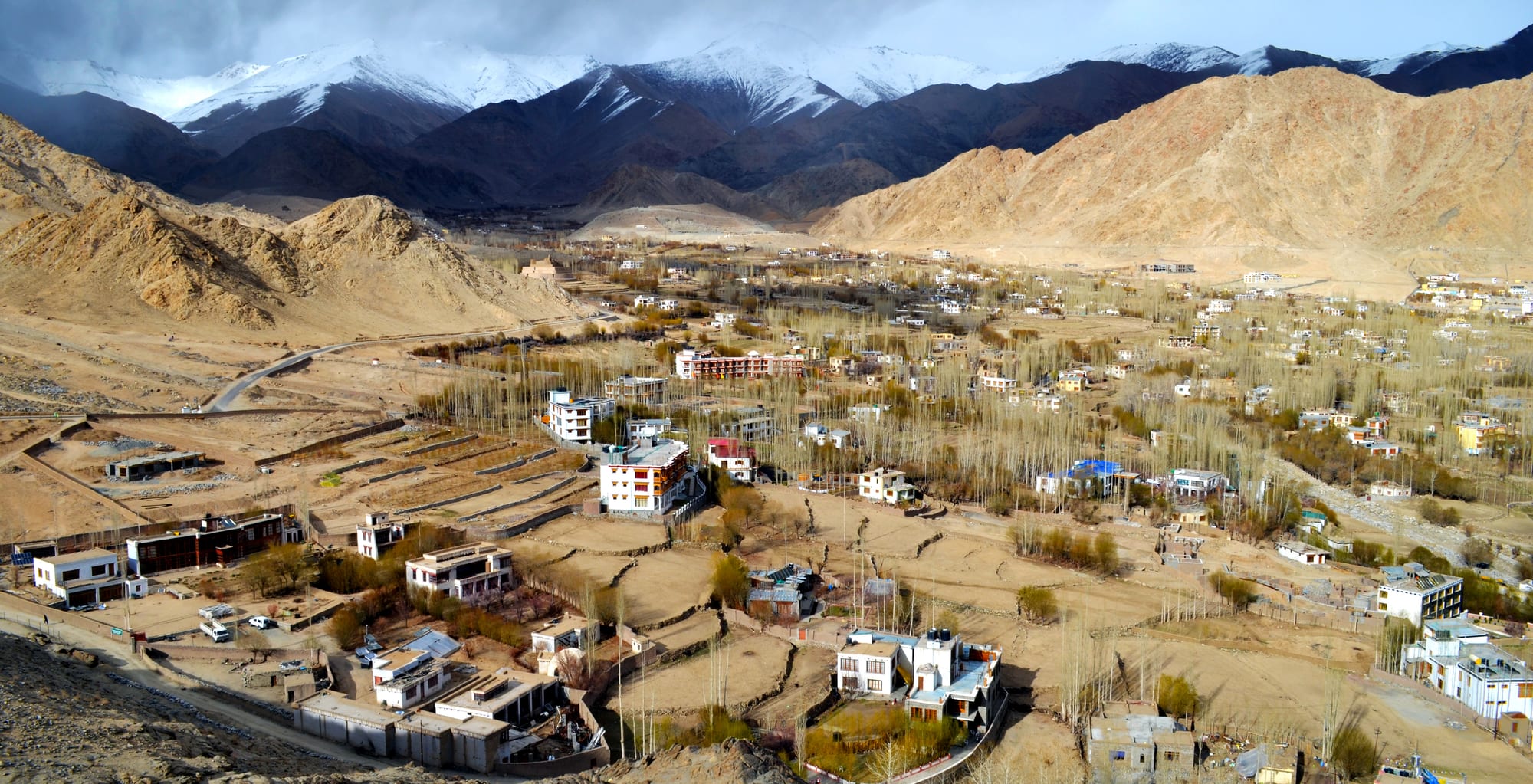
A cold high-altitude desert in the rain shadow of the Himalaya, with very little precipitation, thin dry air, intense sunshine and a large difference between day and night temperatures in every season.
- Summer
- warm days and cold nights — July days around 25°C, nights near 10°C, with occasional cloudbursts
- Winter
- severe — days rarely above 0°C and nights well below freezing for most of the winter, with occasional snow and frozen rivers
🤝 Local Customs
Ladakh is largely Tibetan Buddhist in the Leh area and Muslim in Kargil, and religious etiquette matters. Monasteries are entered with shoes removed and heads uncovered, chortens, mani walls and prayer wheels are passed on the left in a clockwise direction, and photography inside prayer halls may be restricted. Modest dress is expected, and 'julley' serves as greeting, farewell and thanks.
Ask before photographing monks, elders or interiors, do not point feet at altars or images, and carry rubbish out of the valleys, where waste disposal and water are both under strain.
💳 Common Payment Methods
The currency is the Indian rupee. Cards are accepted in hotels and larger shops in Leh, and mobile payments work when the network does, but cash is essential outside the town: there are few ATMs in Nubra, Pangong or the remoter valleys, and connections fail often. Withdrawing enough in Leh before a trip is standard practice.