💰 Budget
Shimla is inexpensive outside the peak weeks, when Indian family holidays and the winter new year push hotel prices up sharply. Beds range from backpacker rooms in the bazaar to restored colonial hotels on the ridge. The main extras are taxis, which are the only way to reach places such as Kufri or Chail, and porters, since many hotels can only be reached on foot.
- Daily Budget Midrange
- USD 50–130 (mid-range or heritage hotel, restaurant meals, a car and driver for day trips)
- Daily Budget Shoestring
- USD 15–30 (guesthouse room, dhaba and bazaar meals, buses and shared taxis)
Book well ahead for May and June and for the last week of December; rooms near the Ridge cost more but save a long climb.
📅 Best Time to Visit
March to June is the classic season, warm and clear, and also the busiest. September to November brings settled air and empty paths after the monsoon, which runs from July and can cause landslides on the roads. December to February is cold, with snow some years, and the town markets itself hard to visitors hoping to see it.
⏳ Suggested Number of Days
Two days suit most first visits on foot. Allow three or four to take in the surrounding hill villages, longer forest walks, or a slow arrival and departure by the narrow-gauge railway.
- First Visit
- 2 days
- With Surroundings
- 3–4 days
🚆 Transportation
The core of the town is closed to traffic, so walking is the main way around, helped by public lifts and a ropeway that spare some of the climbing. Taxis and shared jeeps run along the ring roads below and out to the villages, and state buses leave from the interstate bus terminal for Chandigarh, Delhi, Manali and Dharamshala.
Luggage usually has to be carried on foot or by porter for the last stretch to a hotel, so pack light and check how far a room is from the nearest road.
🛬 Airport & Station Connections
Most visitors come by road from Chandigarh, about 115 kilometres and three to four hours away, or from Delhi, roughly 350 kilometres and eight to ten hours. The narrow-gauge Kalka–Shimla railway takes about five hours from Kalka, where it meets broad-gauge trains from Delhi. Shimla's own airport at Jubbarhatti, about 20 kilometres out, has a limited service to Delhi, and Chandigarh is the nearest airport with regular service.
🚶 Walkability
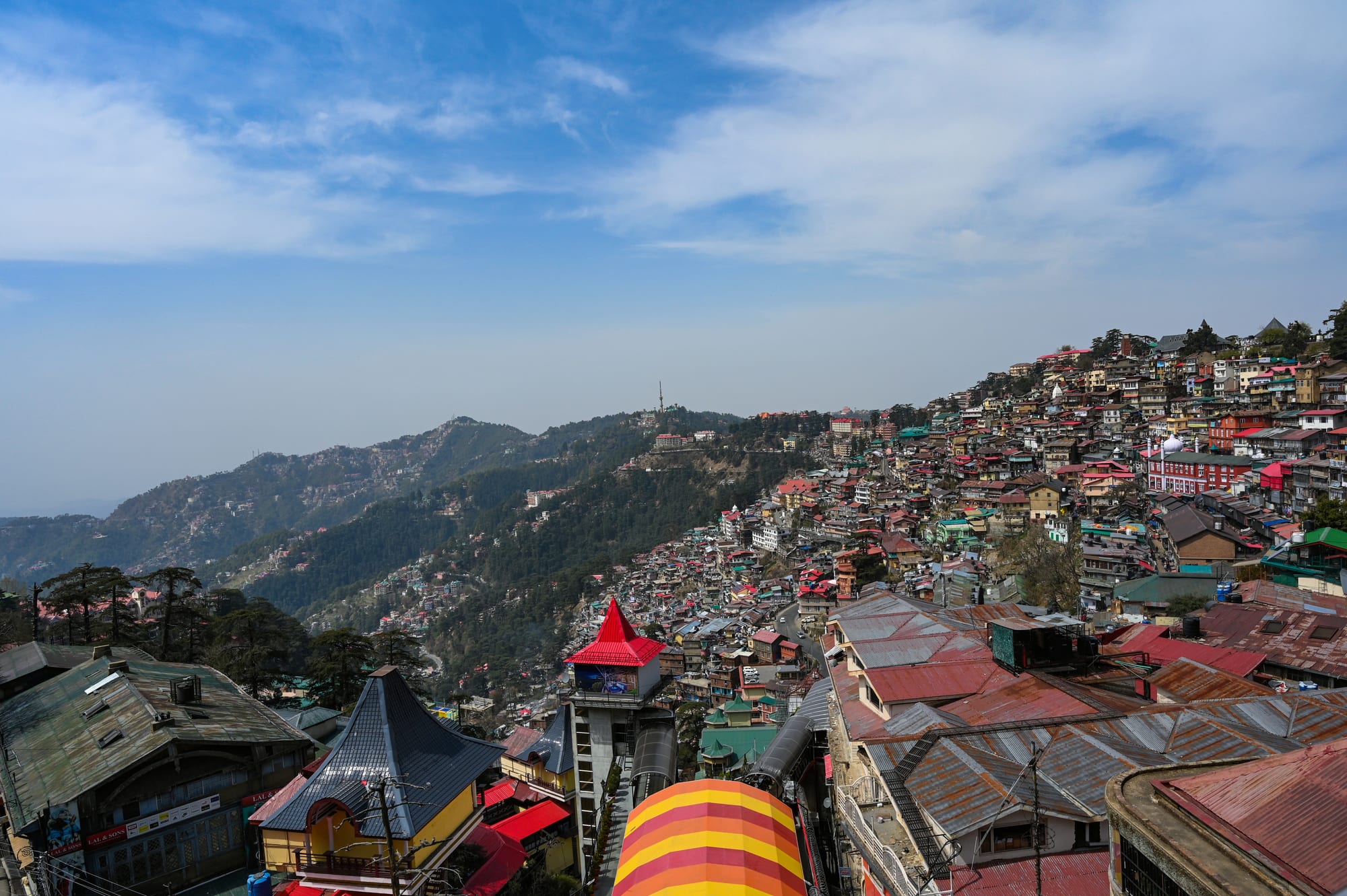
Shimla is walkable in the sense that it has to be walked: the Mall and the Ridge are level and pedestrianised, but everything below and above them is reached by steps and steep lanes, and the altitude makes the climbs harder than they look. Lifts, a ropeway and taxis on the lower roads help. It is difficult terrain for anyone with limited mobility or heavy bags.
🛡️ Safety
Shimla is a calm town with low levels of serious crime, and the usual risks are practical rather than criminal: slippery steps and paths, cold nights, and monkeys around Jakhoo and the Ridge that snatch food, spectacles and bags. Landslides and road blockages are common in the monsoon, and mountain driving is slow and exposed.
Carry nothing loose in the hand near the temple monkeys, take mountain roads seriously in heavy rain, and wear shoes with grip on wet or icy steps. Check current official travel advice before travelling.
🌦️ Climate
A temperate highland climate at around 2,200 metres, far cooler than the plains. Spring and early summer are mild and clear, the monsoon from July to September brings persistent cloud and heavy rain, and winter is cold with occasional snowfall between December and February.
- Summer
- mild — typically 16–25°C by day in May and June, cool after dark
- Winter
- cold — typically 3–11°C, with frost, fog and snow in some weeks between December and February
🤝 Local Customs
Himachal is conservative by habit and relaxed in manner. Shoes come off at temples, and photography inside shrines is often not allowed; the temples around Jakhoo and Tara Devi are working places of worship rather than sights. Modest dress is normal, and warm layers matter more than style for most of the year. Hindi and Pahari dialects are spoken, with English widely understood.
Ask before photographing people, especially in the bazaars, and do not feed the monkeys, which is discouraged by the authorities.
💳 Common Payment Methods
The currency is the Indian rupee. Cards are taken by hotels and larger restaurants, and mobile QR payments are used almost everywhere, including by stalls. ATMs cluster on the Mall and in Sanjauli. Small notes and some cash are worth carrying for buses, porters and village shops.