💰 Budget
Rishikesh is cheap outside its retreat centres. Ashram rooms and simple guesthouses cost very little, thalis are inexpensive, and the ghats, bridges and riverside walks are free. Costs rise for multi-week yoga teacher training courses, comfortable hotels in Tapovan and the resorts upstream, and for rafting and trekking packages.
- Daily Budget Midrange
- USD 40–100 (hotel or riverside resort, café and restaurant meals, a car with driver and a rafting trip)
- Daily Budget Shoestring
- USD 12–25 (ashram or guesthouse room, thali meals, shared jeeps and local buses)
Ashram accommodation is the cheapest option but usually comes with rules on timings, silence and attendance; longer yoga courses are quoted as a package including room and board.
📅 Best Time to Visit
September to April is the pleasant stretch, with clear skies, cool mornings and comfortable days; February and March add the yoga festival season. May and June are hot but busy with pilgrims heading north. The monsoon from July to September raises the river, suspends rafting and brings landslides on the mountain roads, though the town itself stays accessible.
⏳ Suggested Number of Days
Two or three days is enough to see the ghats, the bridges and the ashram district at an unhurried pace. Four to six suits those adding the national park, the valleys upstream or a day on the river. Yoga students commonly stay for several weeks.
- First Visit
- 2–3 days
- With Surroundings
- 4–6 days
🚆 Transportation
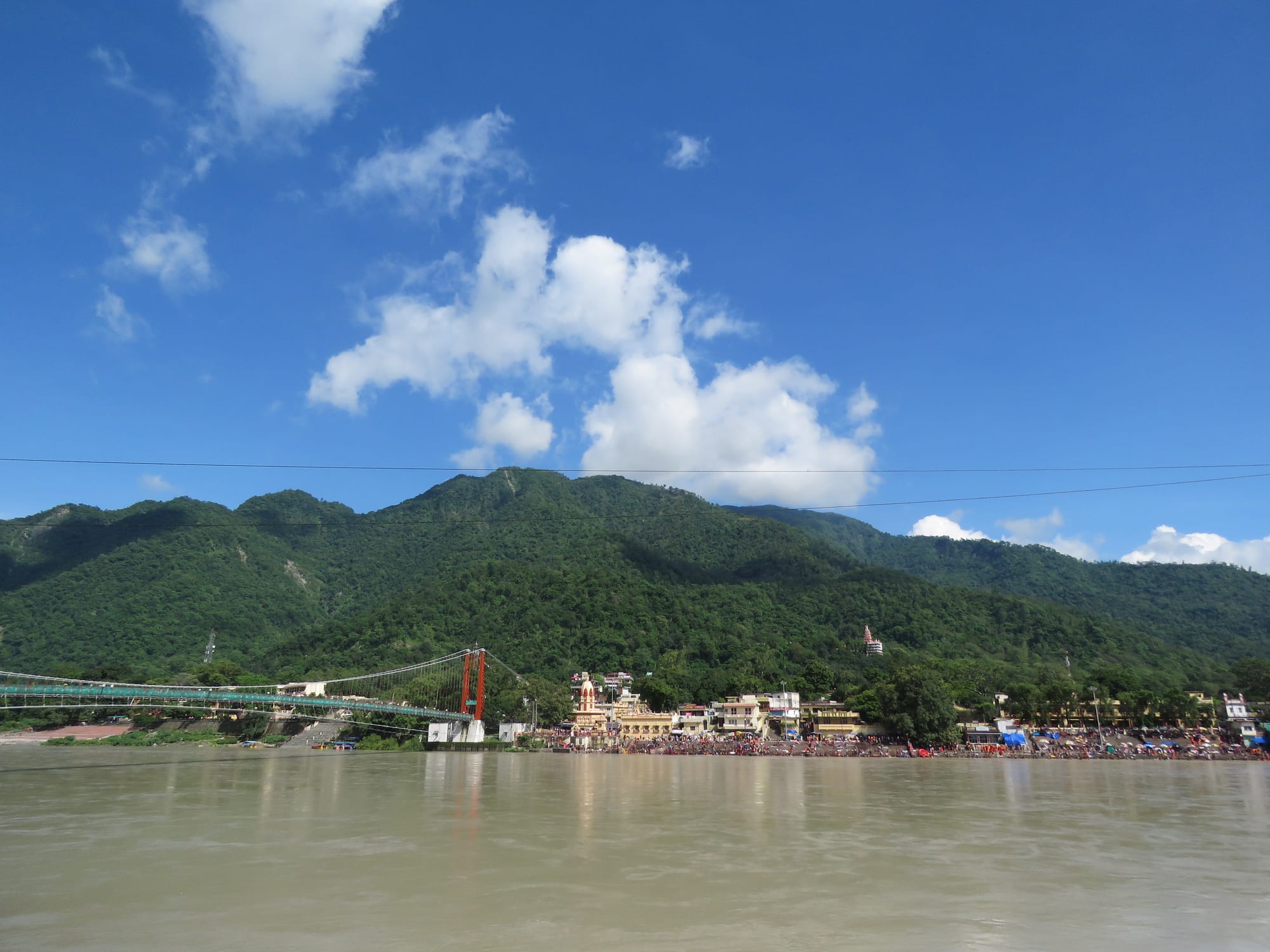
Most of the town is covered on foot and by the river crossings, with shared autorickshaws and vikram tempos running fixed routes between the bus stand, Muni Ki Reti and the bridges. The old Lakshman Jhula and Ram Jhula footbridges are closed, and the Janaki Setu, opened to the public in November 2020, carries pedestrians across; ferry boats also cross the river when water levels allow. Buses and shared jeeps leave for Haridwar, Dehradun and the mountain towns, and taxis can be hired for the day.
The ashram district on the east bank is closed to cars, so allow time to cross a footbridge on foot with luggage, and expect vehicles to be shared rather than private.
🛬 Airport & Station Connections
Jolly Grant Airport at Dehradun is about 20 kilometres away, with flights to Delhi and other Indian cities. Trains run to Rishikesh and, more frequently, to Haridwar 20 kilometres downstream, from where buses and taxis take under an hour. Buses from Delhi take roughly six to eight hours, and the town is the starting point for road travel up the Char Dham routes.
🚶 Walkability
The riverside is pleasant on foot: the ashram lanes, the ghats and the river crossings are all pedestrian, and Tapovan is a compact hillside. Distances between the town centre and the upstream bridges are two to four kilometres along roads with erratic pavements and heavy traffic, so many people take a shared autorickshaw one way. Steps and slopes are frequent, and monkeys on the bridges can be aggressive about food.
🛡️ Safety
The main hazards are the river and the roads. The Ganges here is cold and fast with strong undercurrents, and drownings occur every year among bathers who go beyond the chained bathing areas. Rafting is regulated but standards vary between operators. Monsoon landslides affect the mountain roads, monkeys snatch food and bags, and the usual petty theft and overcharging apply. Violent crime against visitors is rare.
Bathe only at the ghats with chains and steps and never beyond them, check that a rafting operator provides helmets, life jackets and trained guides, keep bags closed around monkeys, and treat claims by self-declared gurus and ashram recruiters with caution. Check current official travel advice before travelling.
🌦️ Climate
A humid subtropical climate at the foot of the Himalaya, with a hot pre-monsoon season, a wet and dramatic monsoon and mild, clear winters. The river keeps the valley a little cooler than the plains below.
- Summer
- hot — May and June days often near 40°C, with cooler nights than the plains
- Winter
- mild — December and January days around 18–22°C with nights close to 5°C and morning mist over the river
🤝 Local Customs
Rishikesh is a sacred town: the sale of meat, fish, eggs and alcohol is prohibited within the municipality, and smoking is frowned on in the ashram areas. Shoes are removed before entering temples and ashram halls, shoulders and knees should be covered, and bathing in the river is done clothed. Ashrams set their own rules on silence, gate times and attendance at prayers, and guests are expected to follow them.
Ask before photographing people bathing or praying and before filming an aarti, do not use drones over the ghats, and leave a small donation rather than a tip at ashrams and temples.
💳 Common Payment Methods
The currency is the Indian rupee. Cards are taken by hotels, larger cafés and yoga schools, and mobile payments are common, but cash is needed for autorickshaws, thali canteens, market stalls and ashram donations. ATMs are in the town centre and near the bridges, and can run empty during big pilgrimage weeks.