💰 Budget
Positano is expensive in summer. Rooms are scarce and costly, beach loungers and restaurant meals are priced for the international market, and parking is hard to find. Staying in Sorrento or Salerno and visiting by bus or boat keeps costs down; spring and autumn are cheaper than July and August.
- Daily Budget Midrange
- USD 250–450 (hotel in town, restaurant dinners, a beach lounger, ferries)
- Daily Budget Shoestring
- USD 90–150 (room in a guesthouse or in Montepertuso, pizzeria and bakery meals, SITA buses)
The free stretches of beach, the walk to Fornillo and the stairways through town cost nothing; the SITA bus is the cheapest way along the coast.
📅 Best Time to Visit
Late spring and early autumn, when the weather is warm and the crowds more manageable. In July and August the town, the beaches and the coast road are packed and prices peak. In winter the climate stays mild, but many hotels, restaurants and boat services close or run less often.
⏳ Suggested Number of Days
The town itself suits a day or two. Allow four or five to use it as a base for walks above the coast and boat trips along the shore. Bus queues and ferry schedules in high season can stretch the time needed.
- First Visit
- 1–2 days
- With Surroundings
- 4–5 days
🚆 Transportation
Positano has no railway. SITA buses run along the Amalfi Drive to Sorrento and Amalfi, stopping at the top of town, and an orange local bus winds down and up the single congested road through town; it does not accept UnicoCampania tickets. Ferries leave the main beach for Amalfi, Sorrento, Capri, Naples and Salerno.
Buy bus tickets at shops or agents before boarding, and expect long queues for buses back in high season.
🛬 Airport & Station Connections
The nearest airports, Naples Capodichino and Salerno-Pontecagnano, have shuttle buses to the Amalfi Coast. Most visitors arrive by SITA bus from Sorrento, about 40 minutes along the cliff road, or by ferry from Sorrento, Amalfi, Capri, Naples or Salerno. Drivers need a car park reservation, as parking is very scarce.
🚶 Walkability
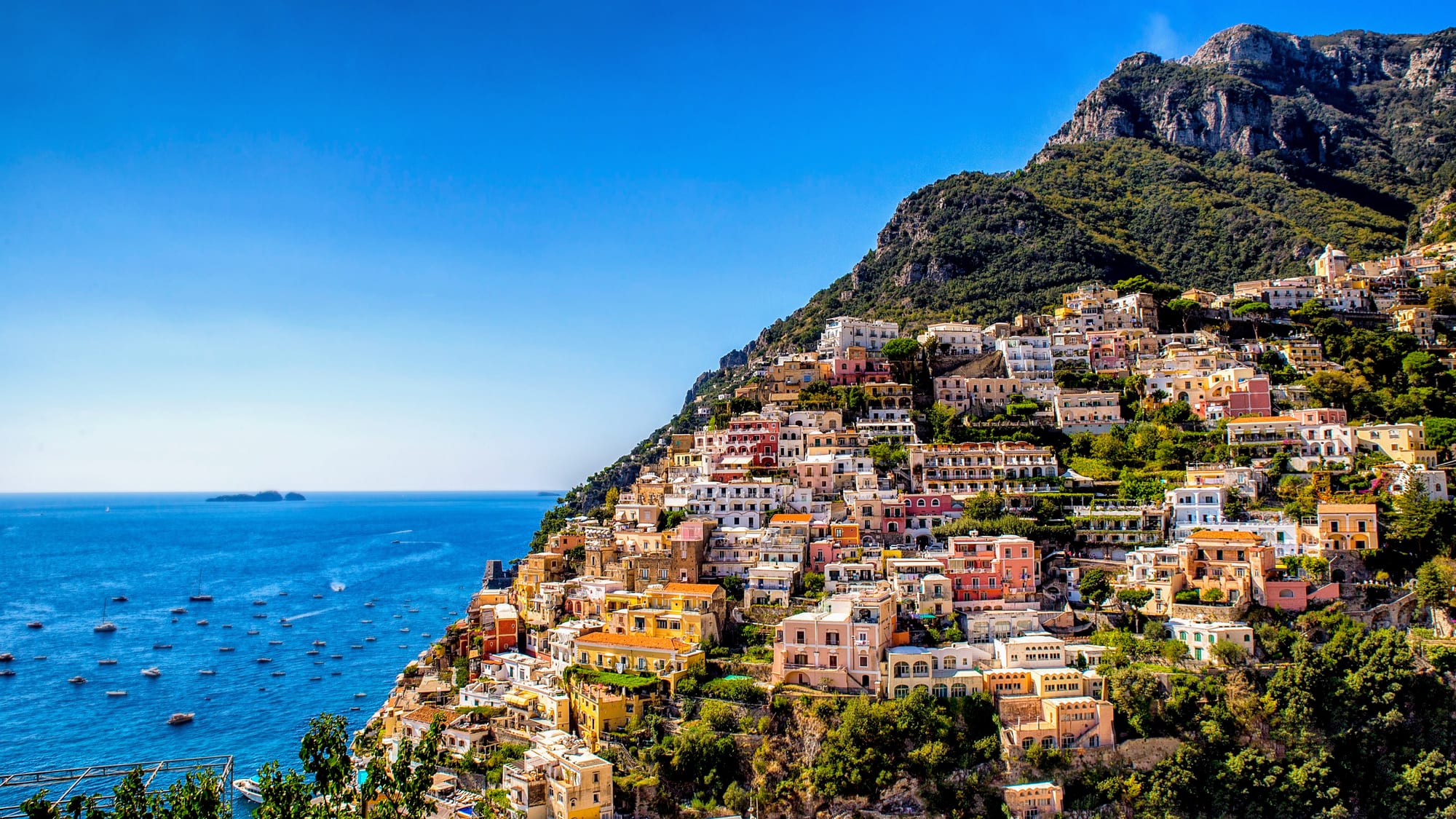
Positano is a "vertical town": the land rises from the sea to over 400 metres, and countless stairways link the upper streets with the beach. Everything is walkable, but nearly every walk is steep; the cliff path joins the main beach to Fornillo, and the stairway to Nocelle is long.
🛡️ Safety
Italy is generally safe, with low levels of violent crime against visitors. The persistent problem is pickpocketing and bag-snatching in the big tourist cities — Rome (around Termini and the metro), Florence, Milan, Naples, and Venice — along with taxi overcharging, ticket and "gladiator photo" scams, and distraction teams on public transport. In Positano the main risks are the steep stairways in the heat, crowded buses and the narrow coast road, which has little or no pavement.
Carry water on the stairways and trails in summer, take care walking along the coast road, and keep bags close on crowded buses. Check current official travel advice before travelling.
🌦️ Climate
A very mild Mediterranean climate. Winters are warm for the season and summers long, sunny and often refreshed by sea breezes, with lemon groves, olives and pines on the slopes. The mild climate has made the bay a holiday spot since Roman times.
- Summer
- long, warm and sunny, eased by sea breezes; across the peninsula, Naples recorded its highest temperature since 1946, 40.0°C, in August 1981
- Winter
- very mild — minimum temperatures almost never fall below 6°C
🤝 Local Customs
The black Madonna of Santa Maria Assunta is at the centre of local devotion, and the town's very name is said to come from her legend. Clothing shops fill the lanes alongside shops of lemon products.
Cover up away from the beach and in churches, and greet shopkeepers with 'buongiorno' or 'buonasera'.
💳 Common Payment Methods
The currency is the euro. Cards are widely accepted in hotels, shops and restaurants, but cash is useful for the local bus, small bars and beach services.