💰 Budget
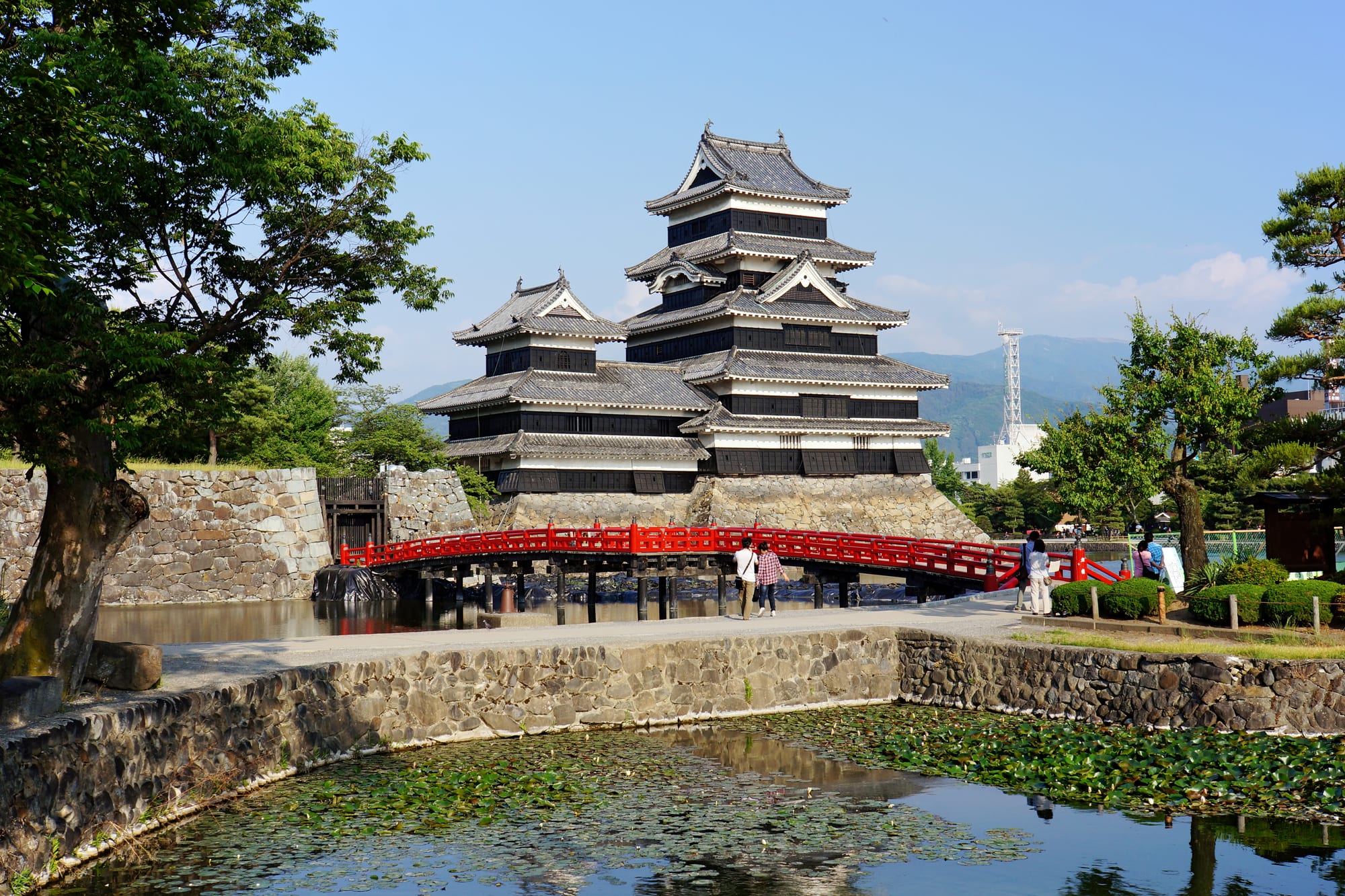
Matsumoto is a moderate-cost city: business hotels near the station are plentiful, soba and set lunches are cheap, and the castle is the only significant entry charge in the centre. Costs rise for a night in a hot-spring inn at Asama or in the mountains, for the bus and shuttle fares into Kamikochi, and in the ski season if a stay is combined with Hakuba.
- Daily Budget Midrange
- USD 110–200 (mid-range hotel or hot-spring inn, restaurant dinners, castle entry, a day in Kamikochi)
- Daily Budget Shoestring
- USD 50–80 (guesthouse or business hotel, soba and set lunches, walking and local buses)
Buses into Kamikochi and Norikura run only in season and take reservations on busy days; a room at blossom time or during the music festival should be arranged well ahead.
📅 Best Time to Visit
Late April and May, with blossom around the moats and fresh snow still on the Alps, and October, with autumn colour in Kamikochi and on Utsukushigahara, are the best times. Summer is warm in the basin but cool in the mountains and is the walking season. Winter is cold and mostly dry, with clear views of the ranges and skiing an hour away.
⏳ Suggested Number of Days
The castle, the old streets and a museum fill a day or two. Three or four days suit the mountain valleys, the wasabi plain and the post towns, and walkers heading into the Alps use the city as a base at either end of a trip.
- First Visit
- 1–2 days
- With Surroundings
- 3–4 days
🚆 Transportation
The centre is small enough to walk, and a loop bus and rental bicycles cover the rest. The Alpico Kamikochi line runs west from the station towards the mountains, and buses leave the terminal beside the station for Kamikochi, Norikura, Takayama, Nagano and Tokyo. Local trains on the JR Shinonoi and Oito lines serve Azumino, the Kiso valley and Hakuba. Cars are barred from Kamikochi, so drivers park and change to a bus.
Mountain bus routes and the Norikura road are seasonal and close for winter, so confirm the day's services before planning a trip into the valleys.
🛬 Airport & Station Connections
Limited-express Azusa trains run from Shinjuku in Tokyo in about two and a half hours, and trains from Nagoya take around two hours; from Nagano the journey is about an hour, connecting with the Hokuriku Shinkansen. Express buses serve Shinjuku, Nagoya and Osaka. Matsumoto Airport, the highest in Japan, has a few domestic flights, and most air travellers arrive through Tokyo or Nagoya.
🚶 Walkability
Very walkable. The station, Nakamachi, Nawate and the castle lie within about a kilometre and a half of one another on flat ground, linked by the Metoba river and its bridges. Pavements are good, and the old streets are partly pedestrianised. Asama Onsen and the museums on the edge of town need a bus, and winter ice is the main obstacle underfoot.
🛡️ Safety
Crime is very low and the city is safe at all hours. The risks are mountain and weather ones: the Northern Alps are serious terrain with sudden storms, snow lingering into summer and altitude, and rescues there are frequent. In the city, heat in midsummer, ice in winter and typhoon rain that can close mountain roads are the practical concerns, and earthquakes are possible anywhere in Japan.
Submit a climbing plan and carry proper gear for the Alps, treat Kamikochi's weather as mountain weather even on an easy walk, and check road and bus closures after storms. Check current official travel advice before travelling.
🌦️ Climate
A highland basin climate at about 600 metres, sheltered by mountains on both sides, so it is drier and sunnier than most of Japan with a large daily temperature range. The rainy season in June and early July is shorter here than on the coast.
- Summer
- warm days around 30°C with cool nights near 19°C, and low humidity by Japanese standards
- Winter
- cold and dry — January days around 4°C, nights well below freezing, with modest snowfall and clear mountain views
🤝 Local Customs
Tipping is not practised. Shoes come off at the door of inns, old buildings and the castle keep, whose stairs are very steep and are climbed in socks. Public baths at Asama and in the mountains follow the usual rules: wash and rinse thoroughly before entering the water, no swimwear, no towels in the bath, and tattoos are refused at some establishments. Drinking from the town's wells is normal and welcome.
Take rubbish away, keep noise down in residential lanes near the castle, and carry cash for small shops and shrine offerings.
💳 Common Payment Methods
The currency is the Japanese yen. Hotels, department stores and larger restaurants take cards and IC cards, while craft shops, soba houses, stalls and mountain huts are often cash only — huts in the Alps almost always are. Convenience-store and post office machines dispense yen to foreign cards.