💰 Budget
Takayama is dearer than most towns of its size because so much of its lodging is ryokan with dinner and breakfast included, and because Hida beef raises restaurant bills. Business hotels near the station are the cheaper option, and the markets, temple walks and old lanes cost nothing. Prices and occupancy peak sharply at the two festivals and through the autumn colour.
- Daily Budget Midrange
- USD 120–220 (ryokan with dinner or a mid-range hotel, Hida beef dinner, museum entries, a bus excursion)
- Daily Budget Shoestring
- USD 55–85 (guesthouse or business hotel, ramen and market food, walking everywhere)
Book rooms months ahead for the April and October festivals; buses to Shirakawa-go and the Alps take reservations and fill up in season.
📅 Best Time to Visit
April and October bring the float festivals and the town's best weather, and are also its most crowded days. Late spring and early autumn are mild and clear, with the maples turning from mid-October. Summer is warm but cooler than the lowlands and is the season for the high valleys. Winter is cold and snowy, quiet and atmospheric, and the time for sake and hot springs.
⏳ Suggested Number of Days
The old town, its markets and its museums fit comfortably into a day or two. Allow three or four to reach the surrounding valleys, the thatched villages and a hot-spring night. A festival visit needs an extra day for the crowds and the evening processions.
- First Visit
- 1–2 days
- With Surroundings
- 3–4 days
🚆 Transportation
The centre is walkable end to end, and most visitors cover it on foot or by rental bicycle. Local buses from the station serve Hida Folk Village and the outer hot springs, and the same terminal handles long-distance coaches to Shirakawa-go, Kanazawa, Nagoya, Matsumoto and Tokyo. Taxis are available but few. Streets in the old town are narrow and partly closed to cars in the daytime.
Buses to the mountain valleys run to a thin timetable and some routes shrink or stop in winter, so check the day's departures before setting out.
🛬 Airport & Station Connections
Limited-express trains on the Takayama Line run from Nagoya up the Hida river gorge in about two and a half hours, and from Toyama in about an hour and a half; from Tokyo the usual route is the Shinkansen to Nagoya or Toyama and a change. Express coaches link the town with Shinjuku in Tokyo, Matsumoto, Kanazawa and Osaka. The nearest airport is Chubu Centrair near Nagoya.
🚶 Walkability
Very walkable. Station to old town is about ten minutes on level ground, and the markets, Takayama Jin'ya and the Sanmachi lanes are all within a few hundred metres of each other. The temple district and the castle hill involve slopes and steps. Pavements can be icy and heaped with snow from December to March.
🛡️ Safety
Crime is very low, as in the rest of Japan, and the town feels safe at any hour. The real hazards are seasonal and natural: heavy snow and ice in winter, heat in midsummer, typhoon rain that can close mountain roads and the railway, and black bears in the forested hills around the basin. Earthquakes are possible anywhere in Japan.
Carry a torch and warm layers for winter evenings, make noise on wooded trails in bear country, and check road and rail notices after heavy rain or snow. Check current official travel advice before travelling.
🌦️ Climate
A highland basin climate at about 570 metres, with a wide gap between the seasons and between day and night. Spring and autumn are clear and cool, the rainy season falls in June and early July, and winter brings regular snow.
- Summer
- warm days around 28–31°C with cool nights, humid in the rainy season of June and early July
- Winter
- cold — January days hover around 2°C, nights fall well below freezing and snow lies in the streets
🤝 Local Customs
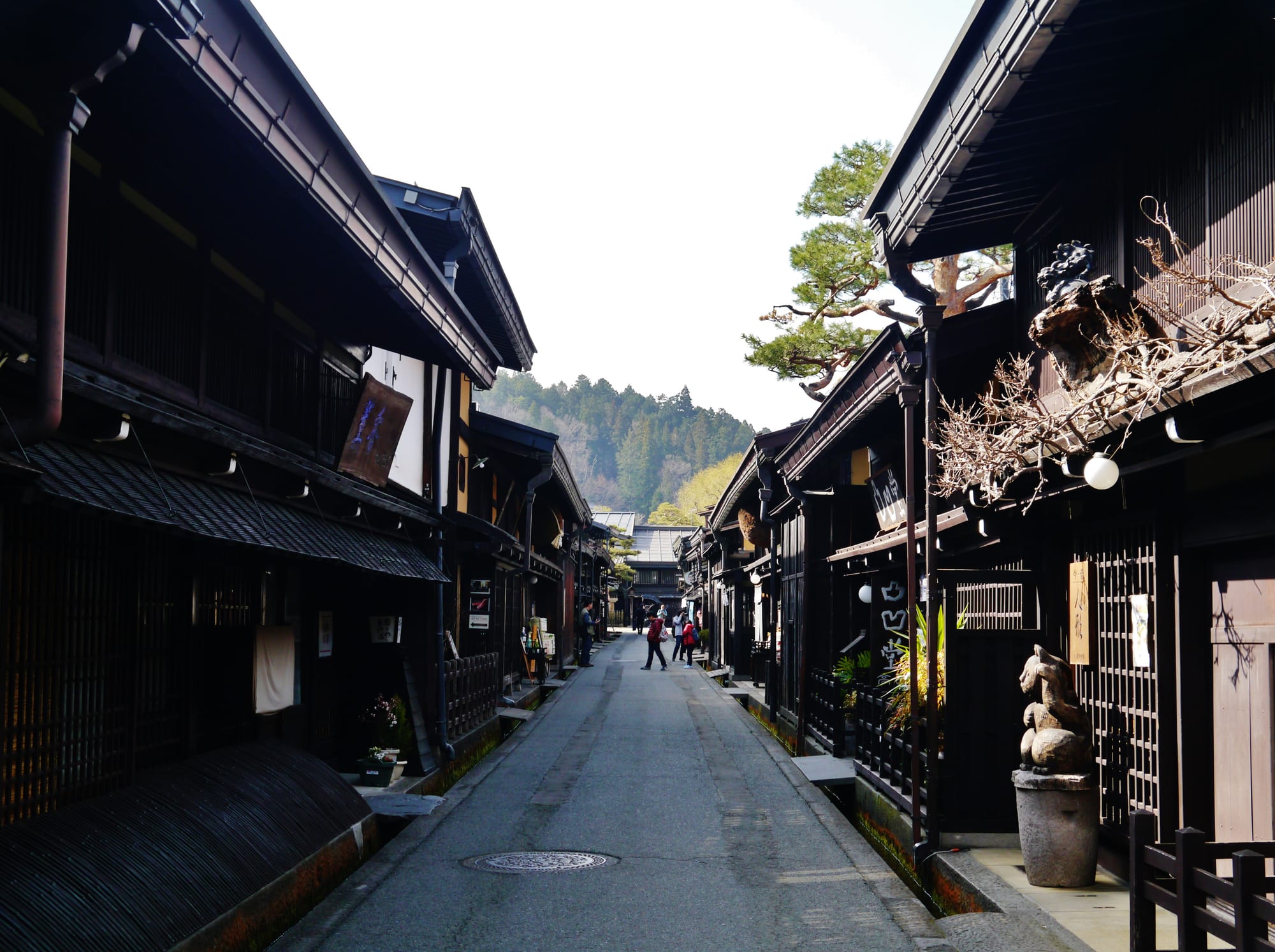
Tipping is not practised anywhere in Japan. Shoes come off at the door of ryokan, old houses and many restaurants, and the heritage houses and Takayama Jin'ya ask visitors to walk in socks. The old town is a living neighbourhood as well as a sight: people live and work behind the lattice fronts, so doorways, gardens and residents are not for photographing without asking. At the festivals the floats and their handlers have right of way.
Sort rubbish and carry it away, as public bins are scarce; eating while walking is discouraged on the Sanmachi lanes, and most stalls have a spot to stand and finish.
💳 Common Payment Methods
The currency is the Japanese yen. Hotels, larger restaurants and shops take cards and IC cards such as Suica, but market stalls, small kitchens and some temples are cash only. Post office and convenience-store cash machines accept foreign cards and are the reliable places to withdraw yen.