💰 Budget
A day visit costs little beyond the bus fare and the entry charges for the houses that are open as museums and the parking or shuttle to the viewpoint. Staying overnight is the expensive part: the handful of farmhouse inns take few guests, include two meals and are booked out months ahead, and the alternative is a hot-spring hotel in the outer hamlets or a bed in Takayama or Kanazawa.
- Daily Budget Midrange
- USD 130–230 (farmhouse or hot-spring lodging with dinner and breakfast, entries, bus fares)
- Daily Budget Shoestring
- USD 45–75 (day trip by bus from Takayama or Kanazawa, house entries, a set lunch)
Farmhouse stays and winter light-up places are arranged far in advance; day visitors should check the last bus back, which leaves earlier than most expect.
📅 Best Time to Visit
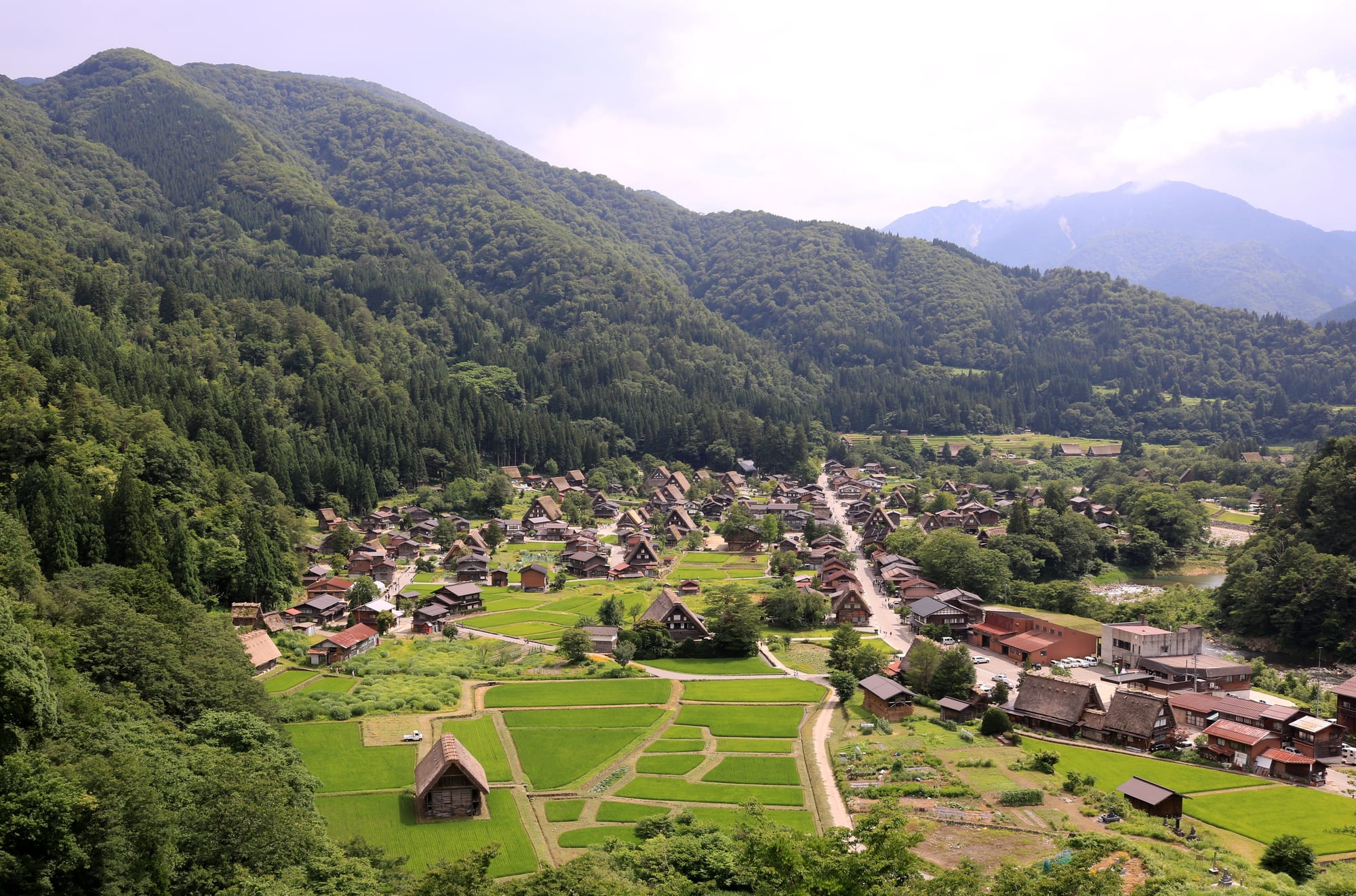
Late spring, when the paddies are flooded and reflect the roofs, and October, when the valley turns and the doburoku festival is held, are the most rewarding times. Summer is green and warm but crowded in the middle of the day. Deep snow from late December to March gives the village its best-known look, with limited winter access and controlled evening openings.
⏳ Suggested Number of Days
Most people come for a few hours between buses, which covers the village and the viewpoint. Staying overnight is a different experience, as the valley empties in the evening. Longer stays suit the neighbouring thatched hamlets and the mountains beyond.
- First Visit
- half a day
- With Surroundings
- 1–2 days
🚆 Transportation
There is no railway. Buses arrive at the terminal beside the village from Takayama, Kanazawa, Toyama and Nagoya, and cars use the Tokai-Hokuriku Expressway. Ogimachi itself is closed to through traffic and is covered on foot in half an hour; visitors park across the river and walk over a suspension bridge. A shuttle runs up to the viewpoint, which can also be climbed by a steep path.
Buses on the main routes take reservations and sell out at weekends and in the autumn; mountain roads west into Hakusan close for the winter.
🛬 Airport & Station Connections
The village lies on Route 156 in the upper Shokawa valley, roughly 50 kilometres from Takayama and 80 from Kanazawa. Express buses take about an hour from Takayama, an hour and a quarter from Kanazawa, and rather longer from Toyama or Nagoya. Rail travellers reach one of those cities first; the nearest airports are Komatsu near Kanazawa and Chubu Centrair near Nagoya.
🚶 Walkability
The village is small and flat and is walked end to end in about twenty minutes, with paths between paddies and along irrigation channels. The climb to the viewpoint is short but steep. Lanes are unpaved in places and slippery in rain, and in winter they are walled with cleared snow, so boots with grip matter more than distance.
🛡️ Safety
Crime is very low and the village is safe at any hour. The hazards are snow, ice and falling snow from the roofs in winter, mountain weather, and the traffic on the valley road where there is no footway. Fire is the serious risk to the thatched houses themselves, which is why the village keeps a ring of water cannon around the houses and tests them each year.
Keep to marked paths and away from private doorways and fields, never smoke or use a flame near thatch, and check bus and road conditions in winter. Check current official travel advice before travelling.
🌦️ Climate
A heavy-snow climate on the Sea of Japan side of the mountains, at about 500 metres. Winters are long and among the snowiest of any inhabited place in Japan; summers are warm and humid but cooler than the plains, with a rainy spell in June and early July.
- Summer
- warm and humid, daytime highs around 28–31°C, with cool nights and frequent mountain cloud
- Winter
- cold and very snowy — January days near 1°C, nights below freezing and metres of accumulated snow
🤝 Local Customs
The listed village is a working settlement of a few hundred residents, not an open-air museum: the houses are homes, the paddies are farmed, and gardens, doorways and windows are private. Photographing residents or entering land that is not marked as open causes real friction here. Shoes come off at the door of every house that visitors may enter, and tipping is not practised anywhere in Japan.
Take rubbish away, do not eat while walking through the lanes, keep drone flying and smoking out of the village entirely, and use the marked paths between fields.
💳 Common Payment Methods
The currency is the Japanese yen. Larger shops, the bus terminal and hotels take cards, but several house museums, small kitchens and stalls are cash only, and cash machines in the valley are few. Withdraw yen in Takayama or Kanazawa before coming.