💰 Budget
Tsumago is inexpensive by the standards of Japanese sightseeing towns: entry fees are small, the walk is free, and the main cost is a night in a family inn, usually quoted with dinner and breakfast. Prices firm up in the autumn-colour weeks and at cherry blossom, when the small number of rooms fills months ahead.
- Daily Budget Midrange
- USD 110–220 (minshuku or ryokan with two meals, limited-express trains, museum entry and baggage transfer)
- Daily Budget Shoestring
- USD 55–85 (guesthouse or dormitory in the valley, soba and konbini food, local trains and buses)
Book inns well ahead, since the village has few rooms; a baggage transfer service between Tsumago and Magome runs in the warmer months and saves carrying packs over the pass.
📅 Best Time to Visit
Late April and May, when the valley is green and the path dry, and late October into November for autumn colour, are the best walking seasons. Summer is humid and busy with day coaches, though mornings and evenings are quiet once they leave. Winter is cold and can bring snow and ice on the pass, but the street is at its emptiest and the inns at their warmest.
⏳ Suggested Number of Days
Half a day covers the street itself, and a full day allows the walk between the two post towns at an easy pace. Staying a night in an old inn is what most people add, and two or three days take in other towns along the valley.
- First Visit
- 1 day
- With Surroundings
- 2–3 days
🚆 Transportation
The post town is small enough to need nothing but shoes. Local buses link Nagiso Station with Tsumago and continue over the pass towards Magome and Nakatsugawa, running a handful of times a day, and taxis can be arranged through inns. Cars are kept out of the preserved street during the day, with car parks at each end.
Bus services are infrequent and thin out in winter, so check the return times before setting off on the walk.
🛬 Airport & Station Connections
Most visitors come by train to Nagiso Station on the JR Chuo Main Line, about four kilometres away, with a bus or taxi for the last stretch; limited-express trains from Nagoya stop at Nakatsugawa, and local trains continue from there. Nagoya is roughly two hours away in all, and buses from Nakatsugawa serve Magome for those walking from that side.
🚶 Walkability
The village is entirely walkable and largely traffic-free by day, though the street is unevenly surfaced and the side lanes are steep. The route to O-tsumago is a gentle uphill kilometre; the full path to Magome climbs a few hundred metres over the pass and is rough and slippery in rain.
🛡️ Safety
Crime is very rare. The risks here are rural ones: black bears live in the surrounding forest, which is why bells are hung along the path, and heavy rain can bring landslides or close the trail. Snow and ice make the pass difficult in midwinter.
Walk the pass in daylight, make noise on wooded stretches, carry water and a torch, and check trail and weather notices before setting out. Check current official travel advice before travelling.
🌦️ Climate
A cool inland mountain climate in a narrow valley about 400 metres above sea level. Days are warm in summer and nights cool; the rainy season falls in June and early July, typhoons can reach the valley in late summer, and winter is cold with snow on the ridges.
- Summer
- warm and humid by day, often 27–32°C, with cool evenings and frequent mountain rain
- Winter
- cold, with daytime highs around 3–7°C, hard frosts at night and periodic snow
🤝 Local Customs
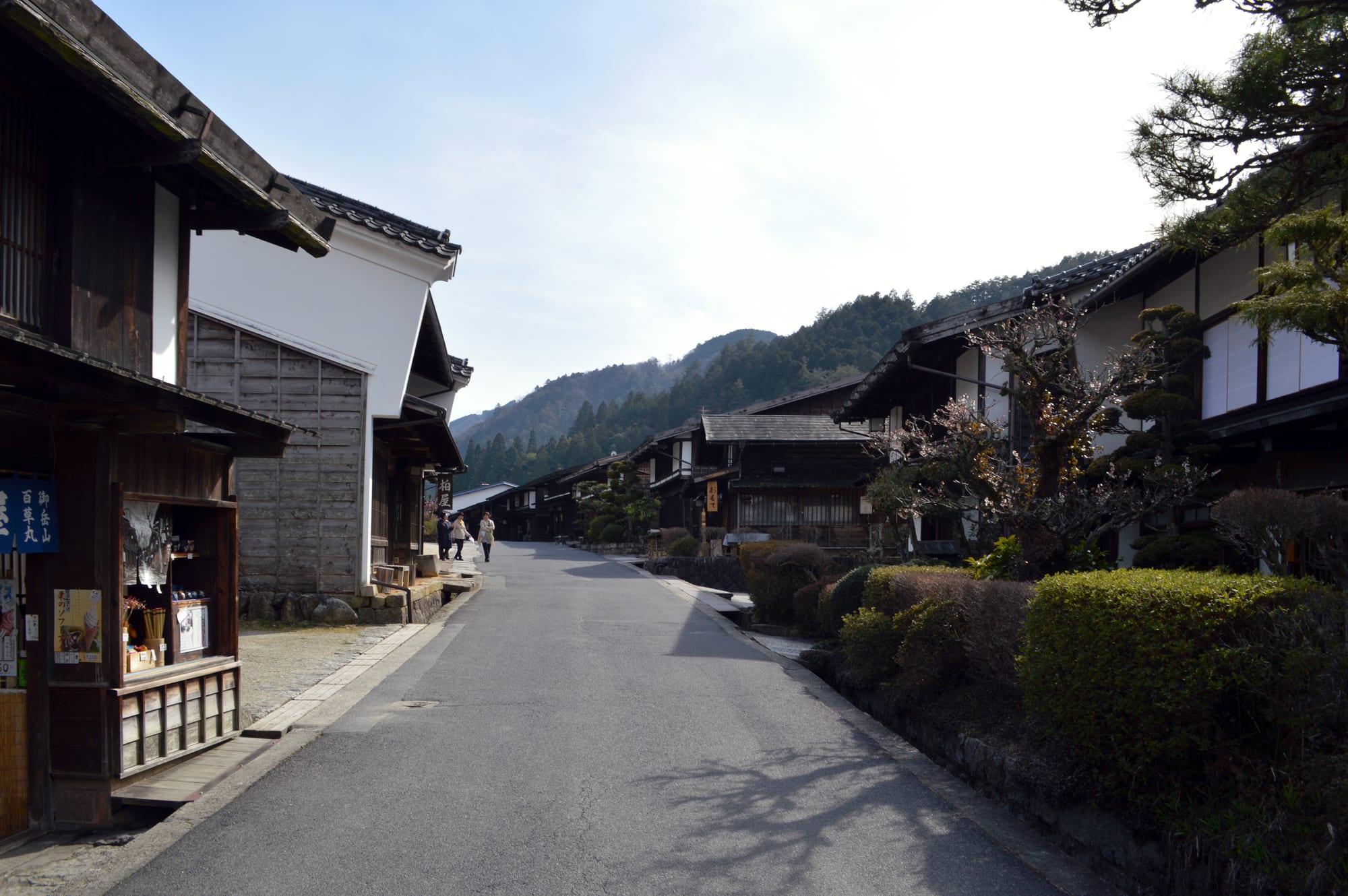
The preserved street is a working village, not an open-air museum: people live behind the lattice fronts, and residents ask that photographs are taken of buildings rather than through doorways and windows. Shoes come off at the entrance of inns and of the historic houses open to visitors, and most places quieten early in the evening.
Tipping is not practised. Voices stay low in the early morning and after dark, rubbish is carried out rather than left, and the private gardens and courtyards along the street are not open to visitors.
💳 Common Payment Methods
The currency is the Japanese yen. Card payment is accepted at museums and some shops, but small inns, tea houses and craft stalls in the valley often take cash only, and there are few cash machines — the post office and convenience stores in Nagiso are the reliable ones. Draw money before arriving.