💰 Budget
Zacatecas is one of the least expensive colonial cities in the region. Guesthouses and hotels in restored buildings are reasonably priced, and market meals, museums and the cable car cost little. Prices rise during the September fair and Holy Week.
- Daily Budget Midrange
- USD 70–150 (hotel in a restored building, restaurant meals, museums, mine tour and taxis)
- Daily Budget Shoestring
- USD 30–45 (hostel or simple hotel, market food, city buses)
Several of the best sights — the cathedral, the plazas and the views from La Bufa — cost nothing to see.
📅 Best Time to Visit
Spring and autumn are the most comfortable seasons. Most rain falls between June and September. Winter is dry but cold, and nights can be below freezing. Holy Week brings the cultural festival, late August the Morismas and September the state fair.
⏳ Suggested Number of Days
Two days are enough for a first look at the compact historic centre and the hills around it. Three or four allow time for the neighbouring town and the countryside, where a car or tour makes trips much easier.
- First Visit
- 2 days
- With Surroundings
- 3–4 days
🚆 Transportation
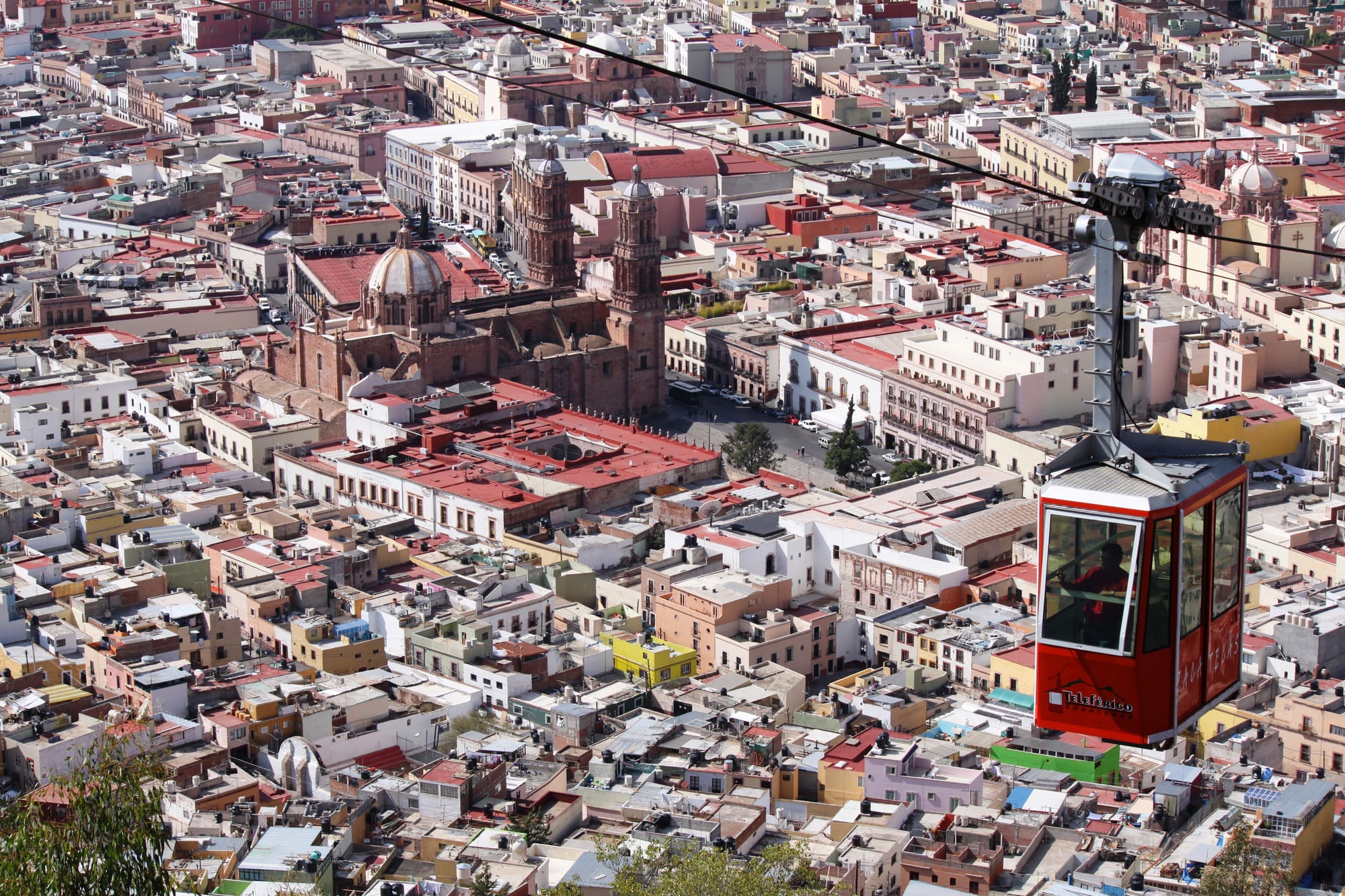
The historic centre is small enough to walk. Taxis are cheap and the easiest way to reach the bus station, Guadalupe and the airport. The cable car links Cerro del Grillo with La Bufa.
Travel between cities by day and on toll roads; the parent advisories single out rural highways in the state.
🛬 Airport & Station Connections
Zacatecas International Airport, officially General Leobardo C. Ruiz, lies in the municipality of Calera about 17 km north of the city centre, with flights within Mexico and to the United States. Long-distance buses link the city with the rest of the region and the north.
🚶 Walkability
Good but hilly. The centre stretches along a narrow valley, so the main sights lie along one axis, while alleys and stairways climb steeply to either side. The city is high on the plateau, and walking uphill is tiring at first.
🛡️ Safety
Safety varies enormously by state and even neighbourhood. Zacatecas state carries strict government advisories because of organised-crime violence, especially on rural highways. Visitors to the capital mostly keep to the historic centre, which is busy with residents and tourists.
Avoid rural highways at night, use registered taxis and keep to the centre after dark. Check current official travel advice before travelling.
🌦️ Climate
A cold semi-arid climate, with an average annual temperature of about 15.7°C. Most rain falls between June and September, and the winter is distinct. Zacatecas is the highest and coolest of the region's capitals.
- Summer
- no city figures are given; across the region's plateau, days are typically 24–30°C, with afternoon rain from June to September
- Winter
- dry and cold, with frost; in the winter of 2017–18 the municipality recorded −12°C
🤝 Local Customs
Zacatecas is a traditional, Catholic city with strong local pride in its mining history and in the 1914 battle. Greet people with a 'buenos días' or 'buenas tardes'. Tipping in restaurants is customary. Callejoneadas, walking parties through the alleys, are a local way of celebrating.
Dress modestly in churches and keep quiet during services. Drinking alcohol in the street is generally not allowed outside organised festivities.
💳 Common Payment Methods
The currency is the Mexican peso. Cards are accepted in hotels and most restaurants, and ATMs are common in the centre; cash is needed for markets, street food, taxis and tips.