💰 Budget
Staying in the village is inexpensive, with simple guesthouses and a few comfortable kasbah hotels, and meals cost little. The larger expense is getting here and moving on, since the village is most often part of a longer drive between Marrakesh and the desert, with a hire car, a driver or a place on an organised tour.
- Daily Budget Midrange
- USD 95–230 (kasbah hotel, restaurant meals with a view of the ksar, a hire car or driver, a local guide)
- Daily Budget Shoestring
- USD 25–50 (guesthouse room, café meals, shared taxis from Ouarzazate)
A local guide, hired at the entrance or through a guesthouse, is worth it for the history of the ksar; there is no cash machine in the village, so bring dirhams from Ouarzazate.
📅 Best Time to Visit
October to April brings warm days and cold nights, with the earth walls at their best in low winter light; spring adds blossom and green along the river. Summer is very hot in the exposed lanes, and the climb through the ksar is hard work by midday. Mornings and late afternoons are the quietest times in any season, since many visitors arrive in the middle of the day.
⏳ Suggested Number of Days
Many people see the ksar in a few hours while crossing between Marrakesh and the desert. Staying a night makes the village much quieter and allows the Ounila valley and the kasbahs north of it, which is about as much as two days will hold.
- First Visit
- Half a day to 1 day
- With Surroundings
- 2 days
🚆 Transportation
There is no public transport within the village and none is needed: the new village, the river crossing and the ksar are all within walking distance. Beyond it, shared taxis run to Ouarzazate, where coaches connect with Marrakesh, the Drâa valley and the east, and most visitors arrive with their own car or driver.
The road north up the Ounila valley towards Telouet is narrow and partly rough, and river crossings can be impassable after heavy rain.
🛬 Airport & Station Connections
The village lies about 30 km from Ouarzazate on a spur off the Marrakesh road, roughly half an hour by car and about four hours from Marrakesh over the Tizi n'Tichka pass. Shared taxis and minibuses connect it with Ouarzazate, whose coach station serves the wider south; the nearest airport is Ouarzazate, with a small number of scheduled and charter flights.
🚶 Walkability
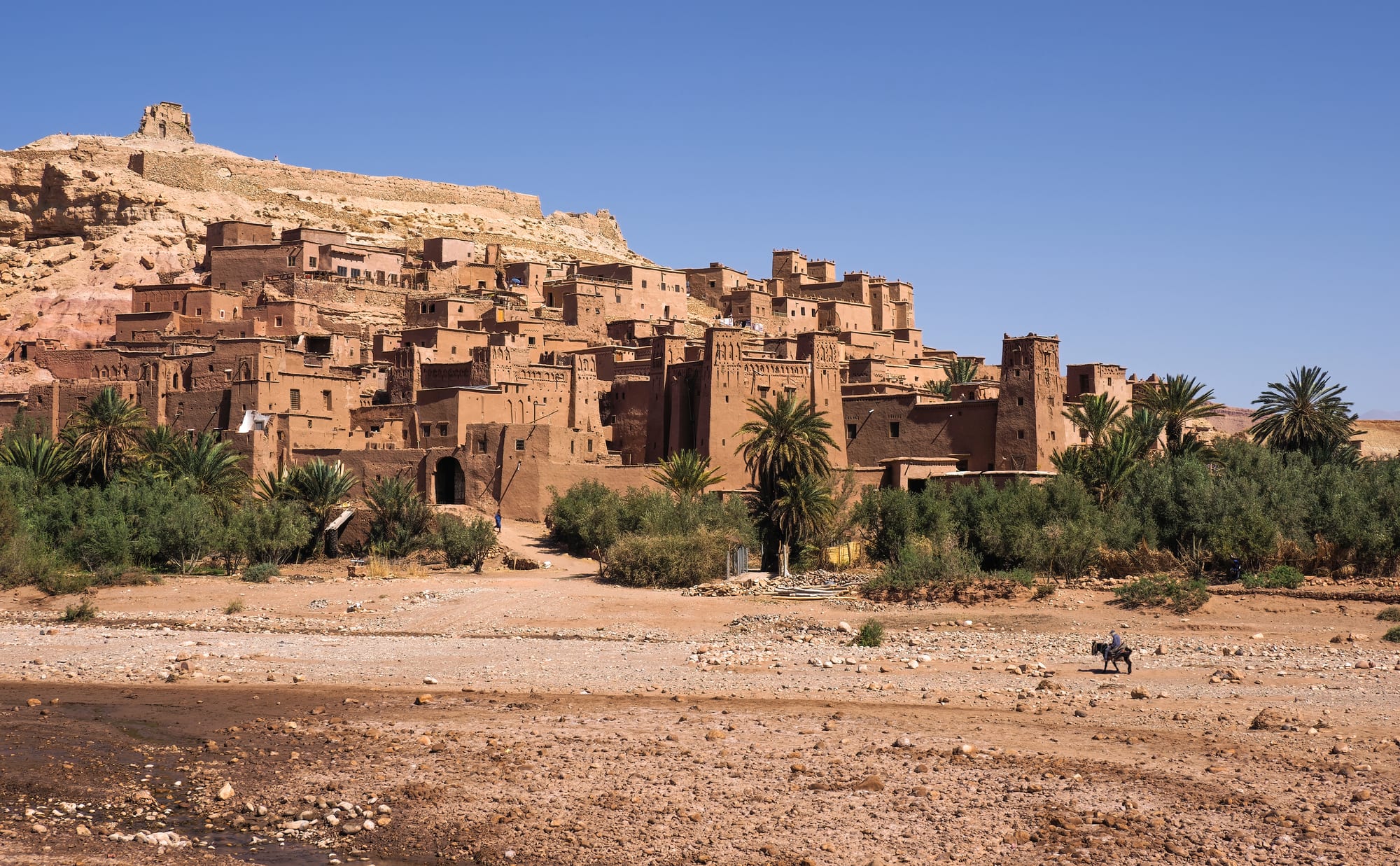
Everything is walkable, but the ground is uneven. A footbridge and stepping stones cross the Ounila, which is usually low or dry, and the climb from the riverbank to the granary at the top of the ksar is steep, sandy and unshaded, on stepped lanes with no handrails. Sturdy shoes, water and a hat make a real difference.
🛡️ Safety
The village is calm and crime is rare. The hazards are physical: steep uneven lanes, low doorways and crumbling edges inside the ksar, strong sun with almost no shade, and a riverbed that can fill quickly during storms in the mountains. Unofficial guides and sellers can be insistent around the crossing point.
Use official guides booked through a riad or a licensed agency, keep bags across the body in medinas, and avoid the cannabis-growing Ketama area of the Rif. Check current official travel advice before travelling.
🌦️ Climate
A dry pre-Saharan climate on the high ground south of the Atlas, with strong sun, low humidity and a large daily temperature range. Rain is rare and concentrated in short winter and spring storms that can cause flash floods in the valley.
- Summer
- hot and dry — days usually 35–40°C, cooling quickly after sunset
- Winter
- clear days of 15–20°C with nights around or below freezing
🤝 Local Customs
The ksar is a monument and a place where people live and work. Modest dress is expected, doorways into private houses should not be entered uninvited, and photographing residents needs permission first. Tamazight is the everyday language, with Arabic and some French and English in the guesthouses. Tea is offered readily and refusing everything is thought unfriendly.
Carry small notes for the guide, the crafts and the tea, expect alcohol only in the larger hotels, and during Ramadan avoid eating or drinking in public during daylight.
💳 Common Payment Methods
The Moroccan dirham is needed in cash here. Larger kasbah hotels take cards, but guesthouses, cafés, stalls and guides generally do not, and the nearest reliable cash machines are in Ouarzazate. Small notes are useful for entrance fees, crafts and tips.