💰 Budget
Cajamarca is good value. Hotels, menú lunches, combis and site entries cost little; prices rise sharply during carnival, when rooms fill and seats for the parades are sold. Guided trips to Cumbe Mayo and Kuntur Wasi and flights from Lima are the main extras.
- Daily Budget Midrange
- USD 70–150 (mid-range hotel, restaurant meals, group tours, a soak at the springs)
- Daily Budget Shoestring
- USD 25–45 (hostel, menú lunches, combis to the sights)
Book well ahead for carnival, and expect higher prices and soakings from water and paint throughout.
📅 Best Time to Visit
The dry season, roughly May to September, brings sunny days and clear views, though nights are cold. Carnival, in February or March, is the great event of the year but falls in the rainy season, when afternoons are often wet and the highland sites can be cold and muddy.
⏳ Suggested Number of Days
Two or three days cover the historic centre and the nearest springs and ruins. Four or five allow for the more distant sites and the countryside. Carnival needs its own extra days, and travellers coming up from the coast may want to start slowly because of the altitude.
- First Visit
- 2–3 days
- With Surroundings
- 4–5 days
🚆 Transportation
Most of the central sights can be reached on foot. Combis and microbuses are cheap and run to Baños del Inca, Otuzco and the suburbs, though they are often crowded; mototaxis and taxis are plentiful, and taxi fares should be agreed before setting off. Tours by minibus are the easiest way to reach Cumbe Mayo and the more distant sites.
Agree taxi fares in advance, and treat mototaxis with some caution in traffic.
🛬 Airport & Station Connections
Mayor General FAP Armando Revoredo Iglesias Airport is about 3 kilometres north-east of the main square, with daily flights from Lima. Buses from Lima take about 16 hours and from Trujillo about seven. A long mountain road continues by way of Celendín to Chachapoyas.
🚶 Walkability
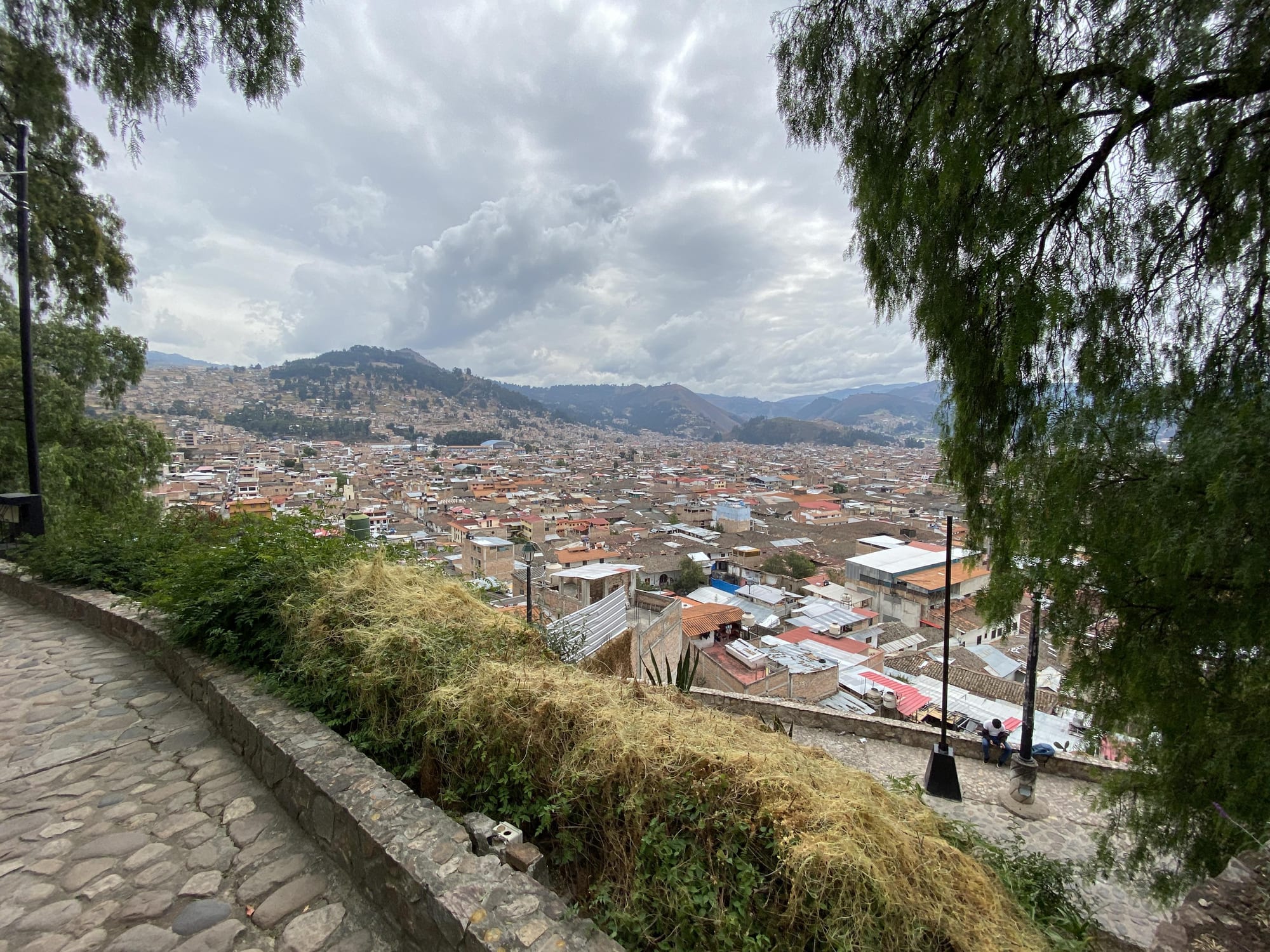
The historic centre is compact, with the cathedral, San Francisco, the Ransom Room and Belén within a few blocks of each other. The altitude of about 2,750 metres makes hills and stairs, such as the climb to Santa Apolonia, tiring for new arrivals, and the sun is strong at midday.
🛡️ Safety
Cajamarca, Chachapoyas, Tarapoto and Iquitos are generally calm, with petty theft the usual risk. Crowded combis and the carnival crowds call for care with bags and phones. Protests linked to mining occur in the region from time to time.
Rest on arrival to adjust to the altitude, keep valuables close during carnival, and check for road blockades before travelling in the region. Check current official travel advice before travelling.
🌦️ Climate
A mild highland climate with sunny days and cold nights. Daytime highs stay at about 21–22°C all year, while nights fall to around 7°C in January and 3°C in June and July. Rain falls mostly from October to April, with little or no rain the rest of the year.
- Summer
- December–February is the wet season, with highs around 22°C, lows around 7°C and frequent afternoon rain
- Winter
- June to August is dry and sunny, with highs around 21°C and cold nights near 3°C
🤝 Local Customs
Cajamarca is a Catholic, largely mestizo highland city, proud of its history, its cheese and its carnival. Modest dress is expected in churches. During carnival, getting soaked with water or paint is part of the custom, and nobody walking in the street is exempt.
Wear old clothes during carnival, ask before photographing people in the countryside, and do not touch the carved stone at Otuzco and other sites, which is fragile.
💳 Common Payment Methods
The currency is the Peruvian sol. Cards are accepted in the malls, larger hotels and many restaurants; markets, combis, mototaxis and entrance fees at the sites are cash, so small notes are useful.