💰 Budget
Pisac is cheaper than Cusco for rooms and meals, and local colectivos to Cusco and along the valley cost little. Entry to the archaeological park, taxis up to the top entrance and craft shopping are the main expenses; Machu Picchu costs are extra.
- Daily Budget Midrange
- USD 90–180 (mid-range lodge or hotel, restaurants, taxis, guided visits)
- Daily Budget Shoestring
- USD 30–55 (hostel or guesthouse, bakery and menú lunches, colectivos)
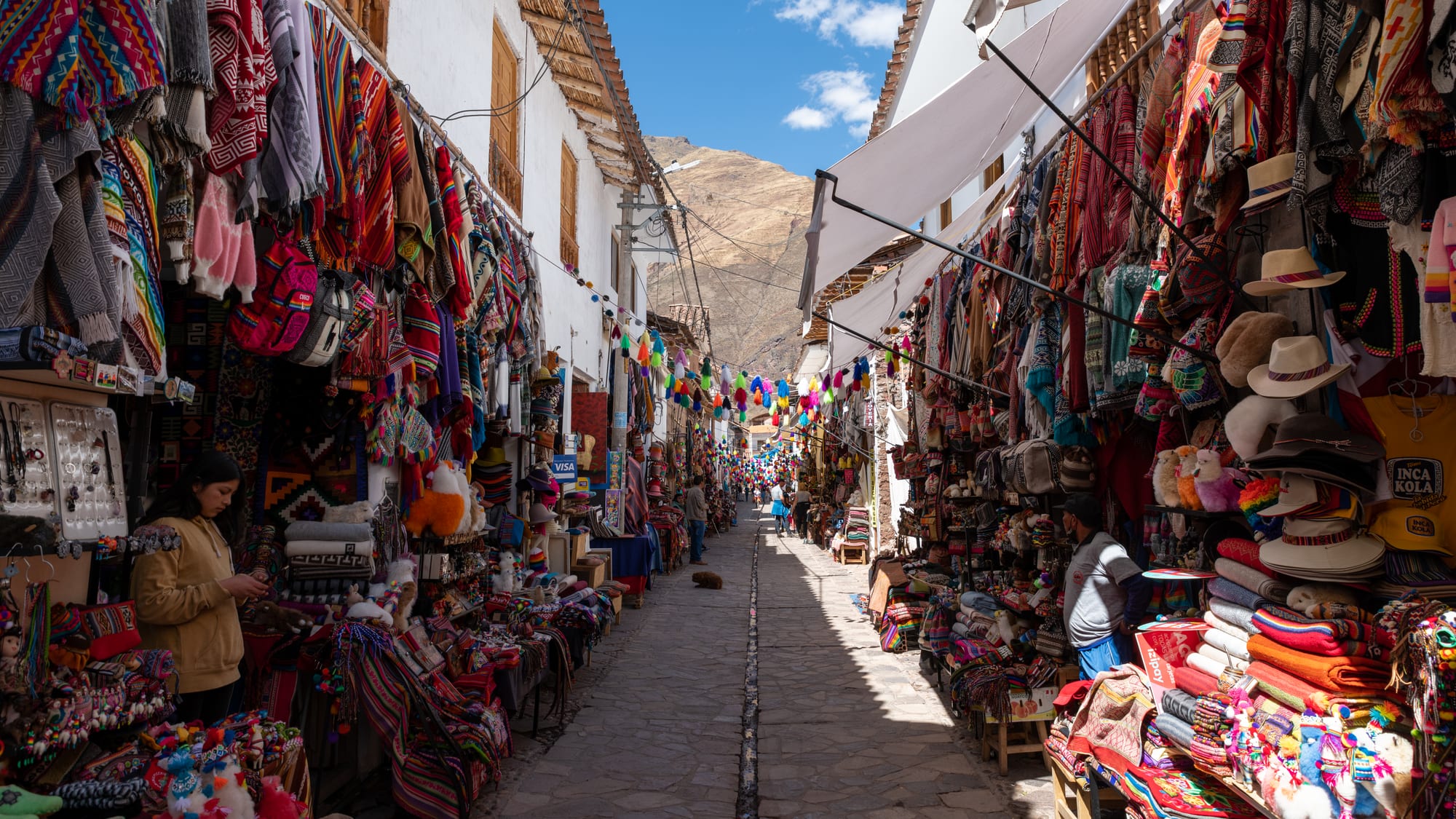
Prices at the craft stalls are open to bargaining, and stalls in the centre of the market tend to charge less than those on its edges.
📅 Best Time to Visit
May to September, the dry season, is clear and sunny with cold nights, and the ridge paths are at their best. The wet season, from about November to March, brings afternoon rain. Sunday, when the market is at its biggest, is the liveliest day of the week, and the Virgen del Carmen festival comes in July.
⏳ Suggested Number of Days
The ruins and the market fill a day or two. Allow three or four to use Pisac as a base for the rest of the Sacred Valley. Lying lower than Cusco, it is also a good place to spend the first nights while getting used to the altitude.
- First Visit
- 1–2 days
- With Surroundings
- 3–4 days
🚆 Transportation
The town is small enough to walk. Colectivos and buses stop by the bridge and on Avenida Amazonas, running to Cusco, Calca and Urubamba, with a change in Urubamba usually needed for Ollantaytambo. Taxis take visitors up the road to the upper entrance of the archaeological park.
Colectivos are generally safer, quicker and more comfortable than the old local buses; services thin out in the evening.
🛬 Airport & Station Connections
Pisac lies 32 km north-east of Cusco, whose Alejandro Velasco Astete International Airport is the nearest. Colectivos from Cusco take 45 minutes to an hour, and a taxi about 45 minutes. Many visitors also come on day tours from Cusco that combine the ruins and market with other Sacred Valley sites.
🚶 Walkability
The town centre is compact and flat, with cobbled streets. Walking up to the ruins is a different matter: the footpath climbs steeply from town, and walking down through the site from the upper entrance takes around an hour and a half. Being acclimatised first makes the climb easier.
🛡️ Safety
The standard tourist circuit — Lima's Miraflores and Barranco, Cusco, the Sacred Valley, Arequipa, Puno — is generally safe with urban precautions, but crime has risen. The local buses have had frequent accidents, and the market crowds suit pickpockets.
The standard tourist circuit — Lima's Miraflores and Barranco, Cusco, the Sacred Valley, Arequipa, Puno — is generally safe with urban precautions, but crime has risen. Prefer colectivos or taxis to the old local buses, keep valuables close in the market, and acclimatise before climbing to the ruins. Check current official travel advice before travelling.
🌦️ Climate
The Sacred Valley's climate is mild by Andean standards: monthly average temperatures vary only a few degrees through the year, and most of the rain falls between October and April.
- Summer
- the rainy season, with November the warmest month at an average of about 15°C
- Winter
- dry and clear, with July the coldest month at an average of about 12°C and cold nights
🤝 Local Customs
Pisac is a Quechua town, and the Sunday market is also where the farming communities of the district trade and shop for the week. Bargaining is expected at the craft stalls. Ask before photographing people, and respect the church as a place of worship.
Stay on marked paths in the archaeological park and do not climb on the terraces or into the tombs.
💳 Common Payment Methods
The currency is the sol (PEN). The market stalls, bakeries, colectivos and small restaurants take cash in soles, so it is wise to carry enough; cards are accepted in some hotels and restaurants aimed at visitors.