💰 Budget
Urubamba itself is cheap: menú restaurants, colectivos and the market cost little. Costs rise with the country hotels of the valley, taxis or tours to Moray, Maras and Chinchero, and the Machu Picchu train and ticket.
- Daily Budget Midrange
- USD 100–220 (valley hotel, restaurants, taxis and guided visits; Machu Picchu extra)
- Daily Budget Shoestring
- USD 30–55 (guesthouse, menú lunches and market food, colectivos)
Moray and Maras are usually visited together by taxi or on a tour; agree a taxi price for the round trip before setting off.
📅 Best Time to Visit
May to September, the dry season, brings clear, sunny days and cold nights. The wet season, from about October or November to April, brings most of the year's rain. The town is at its liveliest in early June, during the festival of El Señor de Torrechayoc.
⏳ Suggested Number of Days
The town needs a day at most. Its value is as a base: allow three to five days to explore the valley around it. Being lower than Cusco, it is also used for the first nights while getting used to the altitude.
- First Visit
- 1–2 days
- With Surroundings
- 3–5 days
🚆 Transportation
Urubamba is the valley's transport crossroads. In Cusco, colectivos to Urubamba leave from Pavitos Street when they have four passengers and buses from Grau Street; in the town, taxis and moto-taxis are easy to find. Changes for Pisac, Ollantaytambo and Cusco are made here.
Spend a night or two in the lower Sacred Valley before Cusco to acclimatise.
🛬 Airport & Station Connections
The nearest airport is Alejandro Velasco Astete International in Cusco, about 67 km away by the road through Chinchero, roughly an hour's drive. A new international airport has been under construction at Chinchero since 2019. Colectivos and buses run from Cusco and along the valley, and the trains to Machu Picchu leave from Ollantaytambo, further down the valley.
🚶 Walkability
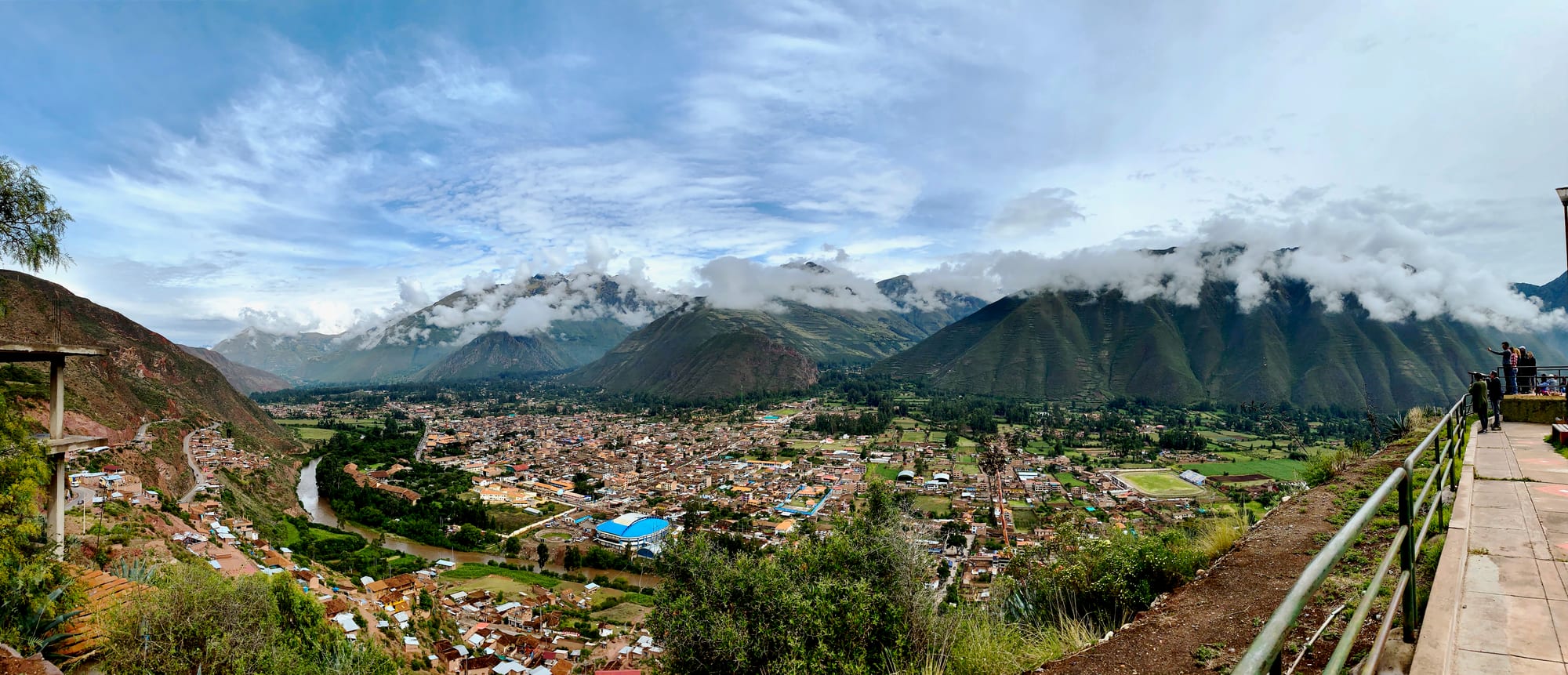
The centre, around the square, the market and the bus depot, is easy on foot. The town is spread out along the valley, though, and many hotels lie on the outskirts, so moto-taxis and taxis are the normal way to reach them, especially after dark.
🛡️ Safety
The standard tourist circuit — Lima's Miraflores and Barranco, Cusco, the Sacred Valley, Arequipa, Puno — is generally safe with urban precautions, but crime has risen. Protests and road blockades in the southern Andes have at times closed the valley roads and the railway.
The standard tourist circuit — Lima's Miraflores and Barranco, Cusco, the Sacred Valley, Arequipa, Puno — is generally safe with urban precautions, but crime has risen. Use registered taxis, keep valuables close in the market and terminals, and follow the news for strikes and blockades. Check current official travel advice before travelling.
🌦️ Climate
The Sacred Valley is lower and warmer than Cusco, which is why the Inca could grow maize here. Monthly average temperatures change only a few degrees through the year, and most of the rain falls between October and April.
- Summer
- the rainy season, with November the warmest month at an average of about 15°C
- Winter
- dry and clear, with July the coldest month at an average of about 12°C and cold nights
🤝 Local Customs
Urubamba is a Quechua and Spanish-speaking working town rather than a tourist one, and its market and restaurants serve local people first. A greeting before a question goes a long way, and it is courteous to ask before photographing people.
At the salt pans, stay on the paths and off the pond walls, which are worked by local families.
💳 Common Payment Methods
The currency is the sol (PEN). Cash in soles is needed for the market, menú restaurants, colectivos and moto-taxis; the valley hotels and some restaurants take cards.