💰 Budget
Banaue is one of the cheapest places to travel in Luzon. Lodges and homestays in the town and in Batad are simple and inexpensive, and meals cost little. The real expenses are transport — the overnight bus from Manila, tricycles or hired vans to the trailheads — and the guides that the local government requires for most walks into the terraces.
- Daily Budget Midrange
- USD 55–130 (better lodge or hotel, restaurant meals, a hired van, a private guide for the terrace walks)
- Daily Budget Shoestring
- USD 25–40 (homestay or inn, local eateries, jeepneys and shared vans, a shared guide)
Carry enough cash for the whole stay, since machines are few and unreliable in the mountains, and share the cost of guides and vehicles with other travellers where possible.
📅 Best Time to Visit
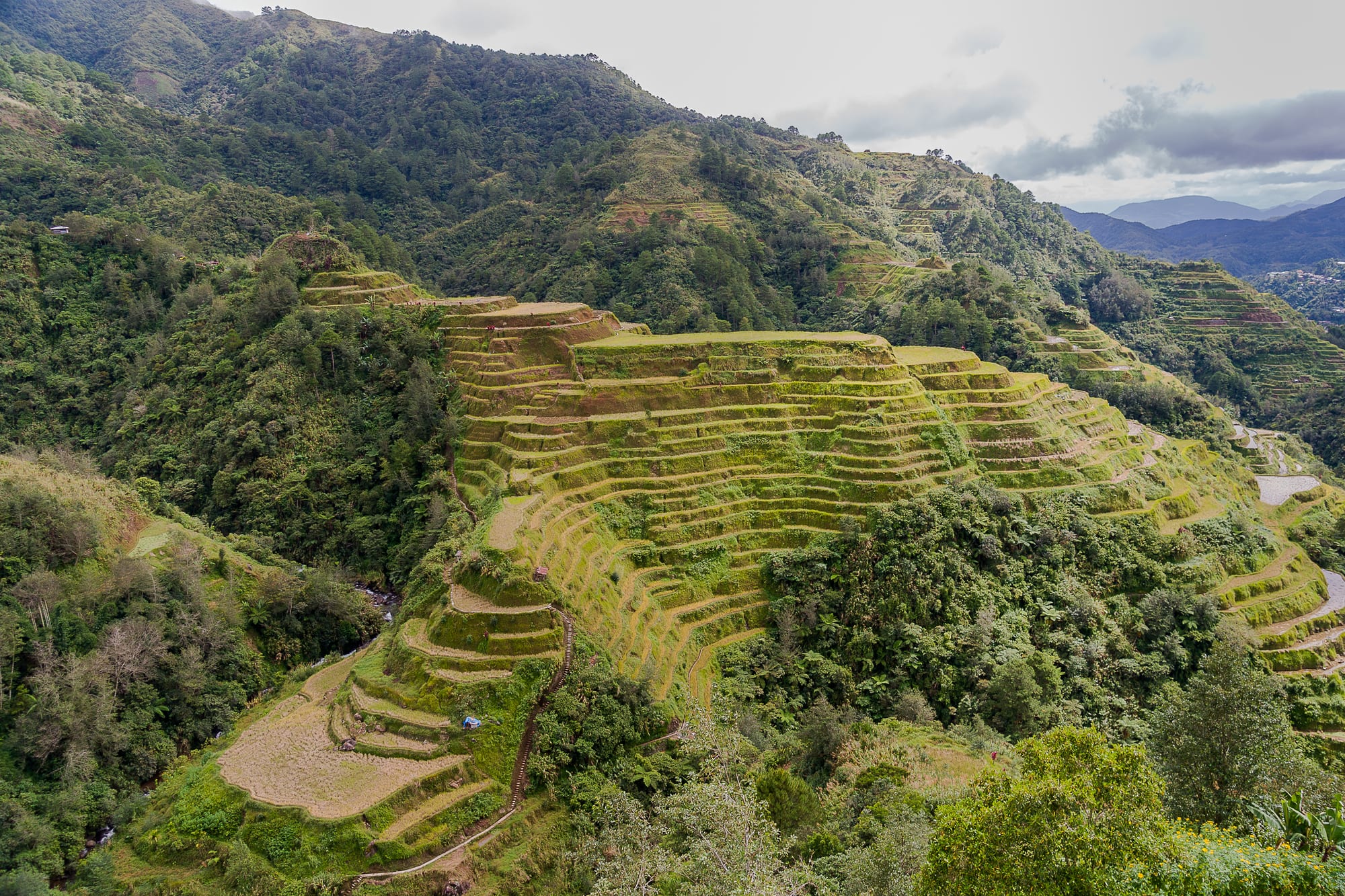
The terraces change through the year: flooded and mirror-like around planting from about December to February, deep green as the rice grows from March to May, and gold before the harvest around June and July. The dry months from December to May are best for walking. The rainy season from about June to October brings landslides and closed roads, and typhoons, most likely between June and November, can cut the town off.
⏳ Suggested Number of Days
Two days allows the town, the viewpoints and one terraced valley. Three to five suit walkers, an overnight in a village, and the slow roads onward through the Cordillera. Journeys here take much longer than the distances suggest.
- First Visit
- 2 days
- With Surroundings
- 3–5 days
🚆 Transportation
Jeepneys and shared vans leave the town terminal for the surrounding municipalities, usually in the morning and on their own schedules; tricycles cover the town and the nearer viewpoints, and vans and motorbikes with drivers can be hired by the day. Roads are steep, narrow and often under repair, and the last stretch into some villages is on foot.
Ask at the tourism office about vehicle departures the day before, and expect walking to be part of any trip to a terraced village.
🛬 Airport & Station Connections
Direct buses from Manila take roughly nine to ten hours, most of them travelling overnight, with a change at Solano an alternative by day. Onward vans and jeepneys link Banaue with Bontoc and Sagada in a few hours over mountain roads, and with Baguio by a longer route. The nearest airports are at Tuguegarao and Manila, and both are a long way off.
🚶 Walkability
The town centre is small and walked in minutes, though it is built on a slope and everything involves steps. Beyond it, walking is the main way to see the terraces, and the paths are demanding: narrow earth and stone walls, steep steps, no railings and surfaces that are slippery when wet. Sturdy shoes matter more here than anywhere else in the region.
🛡️ Safety
Crime against visitors is rare. The hazards are the mountains themselves: landslides and road closures in heavy rain, steep unguarded terrace walls and paths with long drops, river crossings that rise quickly, and cold nights for anyone unprepared. Medical facilities are limited and serious cases go to the lowlands. A long-running communist insurgency persists in parts of the uplands but rarely affects tourist areas.
Walk the terraces with a local guide, check road conditions before and after heavy rain, and bring warm and waterproof clothing. Monitor PAGASA for storms, keep away from volcanic danger zones, take dengue precautions year-round, and do not travel to the Sulu provinces or the Zamboanga peninsula. Check current official travel advice before travelling.
🌦️ Climate
Cool and often damp because of the altitude, with daytime temperatures generally between 18 and 28°C and nights that can fall into the low teens. Cloud and mist fill the valleys on many mornings and afternoons. The wettest months run from about June to October, when the monsoon and typhoons bring prolonged rain and landslides.
- Summer
- March–May is the warmest and driest, around 22–28°C, with clear mornings and green terraces
- Winter
- December–February is cool and dry, around 18–24°C by day with nights near 12°C and heavy morning mist
🤝 Local Customs
Banaue is an Ifugao town, and the terraces are private property and a working livelihood rather than a monument. Paths run along the walls between fields, so walking without a guide can mean trespassing or damaging them. Guides are hired through the tourism office, and villages set their own rules. Elders in traditional dress at the viewpoints expect a small payment for photographs. Rituals, burial sites and carved figures are treated with care.
Hire a local guide, ask before photographing people or houses and pay when a fee is asked at the viewpoints, stay on marked paths across the terraces, and dress warmly and modestly in the villages.
💳 Common Payment Methods
The currency is the Philippine peso. This is a cash economy: guides, homestays, jeepneys, market stalls and village inns all expect notes, and card payment is essentially unavailable outside a couple of hotels. Cash machines exist in town but run out and can be offline, so most travellers draw money in the lowlands before coming up.