💰 Budget
Vigan is inexpensive. Heritage-house hotels in the old quarter cost more than the guesthouses on the surrounding streets, but food is cheap, the historic centre is free to walk, and museums charge little. The main extras are a kalesa ride, souvenir pottery and weaving, and transport to the churches and coast outside the city. Rates rise sharply during the January fiesta, Holy Week and long weekends.
- Daily Budget Midrange
- USD 55–120 (heritage or business hotel, restaurant meals, museum entries, a hired van for the Ilocos churches)
- Daily Budget Shoestring
- USD 25–40 (guesthouse room, market and stall food, tricycles and jeepneys)
Book rooms in the old quarter well ahead for the fiesta and Holy Week, and carry cash for stalls, tricycles and the potteries.
📅 Best Time to Visit
November to April, the Ilocos dry season, is the reliable window, with clear skies over the plazas and dry cobbles. December to February is the coolest. March to May turns very hot, and the southwest monsoon from June to September brings heavy rain; the wider typhoon season runs roughly from June to November. The January fiesta and the May festival are the busiest weeks.
⏳ Suggested Number of Days
The historic core is small and a day or two covers it comfortably, with an evening in the old quarter when the street is closed to traffic. Three or four days suit a wider loop along the Ilocos coast. Travel time from Manila adds most of a day at each end.
- First Visit
- 1–2 days
- With Surroundings
- 3–4 days
🚆 Transportation
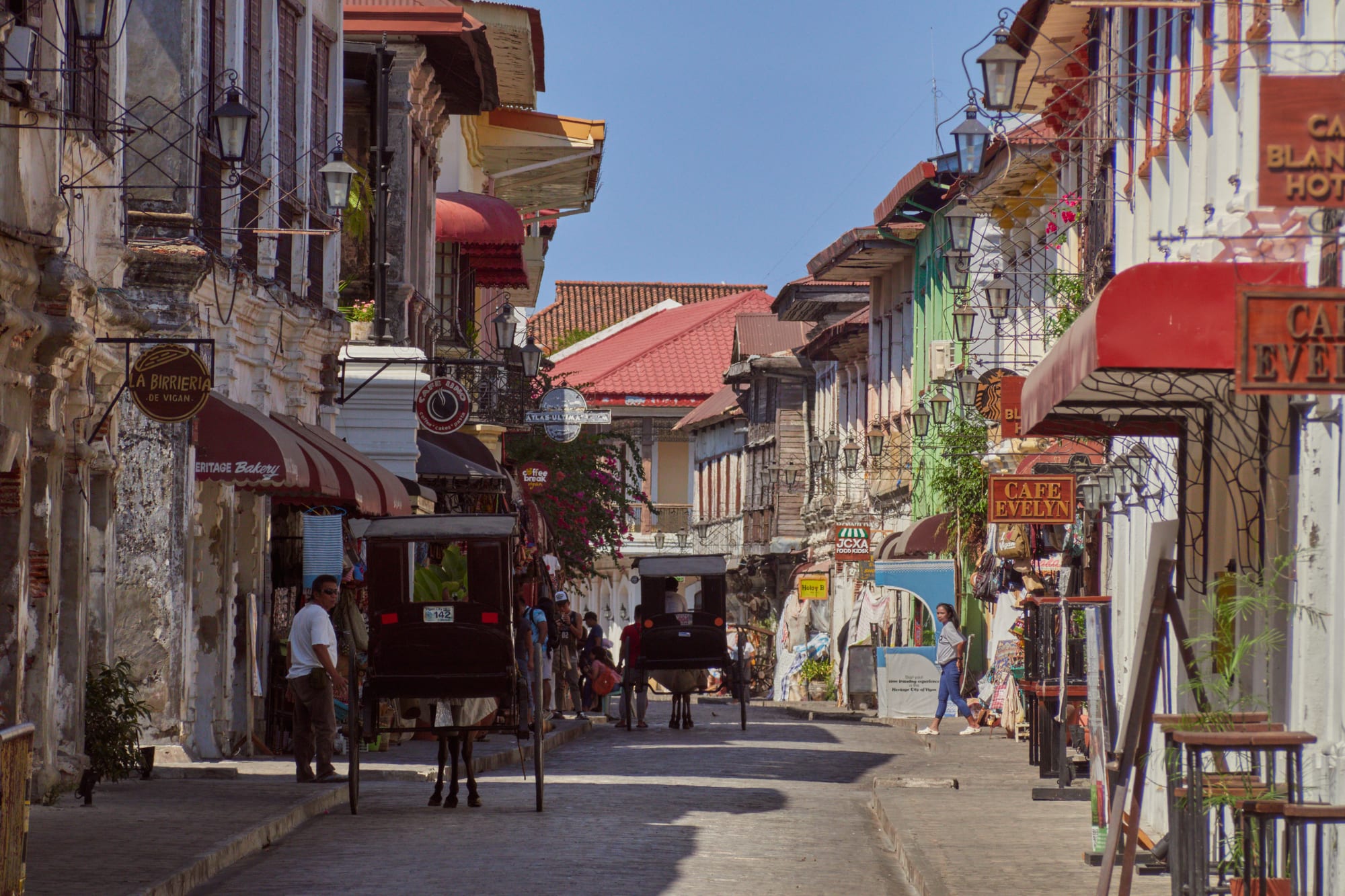
Almost everything in the centre is walkable. Tricycles are the standard local transport, cheap and everywhere, and jeepneys run to the surrounding towns from stands near the market. Kalesas, the horse-drawn carriages, work mainly as a tourist ride around the heritage streets. Buses along the coastal highway link the city with Laoag to the north and San Fernando and Manila to the south.
Agree the fare with a tricycle or kalesa driver before setting off, since neither uses a meter.
🛬 Airport & Station Connections
Most visitors arrive by road: buses from Manila take roughly eight to ten hours up the expressway and the coastal highway, and services run overnight as well as by day. Laoag International Airport, about 80 kilometres north, and San Fernando in La Union to the south are the usual air and bus connections, and vans run east over the mountains towards Abra and the Cordillera.
🚶 Walkability
One of the easiest Philippine cities to walk. The mestizo quarter, the two plazas, the cathedral and the market lie within about a kilometre of each other on flat ground, and Calle Crisologo is pedestrianised for part of the day. Cobbles are uneven underfoot, pavements elsewhere are narrow and shared with tricycles, and midday heat makes early mornings and evenings the comfortable hours.
🛡️ Safety
A calm provincial city where crime against visitors is uncommon; the usual care with bags and valuables in crowded markets and at festival time is enough. Traffic is the main daily hazard, with tricycles moving constantly through narrow streets. Typhoons and monsoon flooding affect the coast between June and November, and the region is earthquake-prone.
Monitor PAGASA for storms, keep away from volcanic danger zones, take dengue precautions year-round, and do not travel to the Sulu provinces or the Zamboanga peninsula. Check current official travel advice before travelling.
🌦️ Climate
Tropical with a pronounced dry season, typical of the Ilocos coast. Rain falls between May and October under the southwest monsoon, heaviest from June to September, and the months from November to April are dry and sunny. Heat is constant at sea level, with the hottest spell before the rains break.
- Summer
- hot and humid, generally 28–35°C, with heavy monsoon downpours from June to September
- Winter
- dry and pleasant, roughly 22–31°C from November to February, with cooler mornings
🤝 Local Customs
Ilocano is the everyday language, with Tagalog and English widely understood, and Ilocanos are known for thrift, directness and hospitality. Much of the old quarter is lived in: houses that look like museums are often private homes, and courtyards and doorways are not public space. Churches expect covered shoulders and knees, and Sunday mass and fiesta processions take priority over traffic.
Tipping is modest and not expected in small eateries; ask before photographing inside private houses, shops and potteries, and treat the kalesa horses' working hours with some consideration in the midday heat.
💳 Common Payment Methods
The currency is the Philippine peso. Hotels, larger restaurants and supermarkets take cards, and cash machines cluster around the plazas and the main streets, but stalls, tricycles, the market, potteries and most small shops are cash only. Small notes are useful for empanada stalls and short tricycle rides.