💰 Budget
Prices are lower than in Moscow, and most visitors come for the day by suburban train, which is cheap. Entry to the Lavra grounds is free; only its museum charges. As everywhere in Russia, most foreign cards no longer work, so money mostly has to be brought in as cash.
- Daily Budget Midrange
- USD 80–170 (hotel night, restaurant meals, museum tickets, taxis)
- Daily Budget Shoestring
- USD 30–60 (suburban train, canteen or bakery meals, free monastery entry)
Carry enough foreign cash for the whole stay; most foreign cards do not work in Russian shops or ATMs.
📅 Best Time to Visit
Late May to September is the easiest season, with long days for walking around the walls. Weekends and major church feasts bring large crowds of pilgrims, so weekdays are calmer. Winter, with snow on the domes, is cold but quiet.
⏳ Suggested Number of Days
Most visitors come for a day from Moscow. An overnight stay suits those who want the monastery's services or the town's museums at a slower pace, and two or three days allow the surrounding estates and the road north to the next Golden Ring towns.
- First Visit
- 1 day
- With Surroundings
- 2–3 days
🚆 Transportation
The centre is small and walkable, and the main sights are within a short walk of the station. Local buses and taxis reach the outlying monastery and estates; buses run north to Pereslavl-Zalessky and on to Yaroslavl, Kostroma and Rybinsk.
Carry passport, visa and migration card at all times.
🛬 Airport & Station Connections
Suburban trains run frequently from Moscow's Yaroslavsky station, taking about an hour and a half, with faster express trains a few times a day taking about an hour. Bus 388 runs from VDNKh in Moscow, but traffic on the Yaroslavl highway can be heavy; by road the town is about 70 km from the capital, roughly two hours with traffic.
🚶 Walkability
Good in the centre: the Lavra can be seen from the station and reached on foot in about ten minutes, and the museums and churches of the old centre are close by. Pavements can be icy in winter.
🛡️ Safety
Beyond the ordinary crime of a large European city, the decisive risks are political and legal: near-total loss of consular support, a real risk of arbitrary arrest and lengthy detention of foreigners on politically motivated charges (and their use in prisoner swaps), sweeping wartime censorship laws, and the possibility that men of certain ages, including dual nationals, face conscription or exit bans. In August 2023 a powerful explosion hit the town's optical-mechanical plant, part of a state-owned defence group; accounts of its cause differ.
Most governments advise against all travel to Russia and against any travel near the Ukrainian border. Do not photograph factories or other industrial and military sites. Check current official travel advice before travelling.
🌦️ Climate
Humid continental, with warm summers and long, cold, snowy winters that usually last from mid-November to the end of March in nearby Moscow.
- Summer
- warm — in nearby Moscow, heat waves between May and September often push daytime highs above 30°C
- Winter
- cold and snowy — in nearby Moscow January averages about −7°C, with colder spells below −20°C
🤝 Local Customs
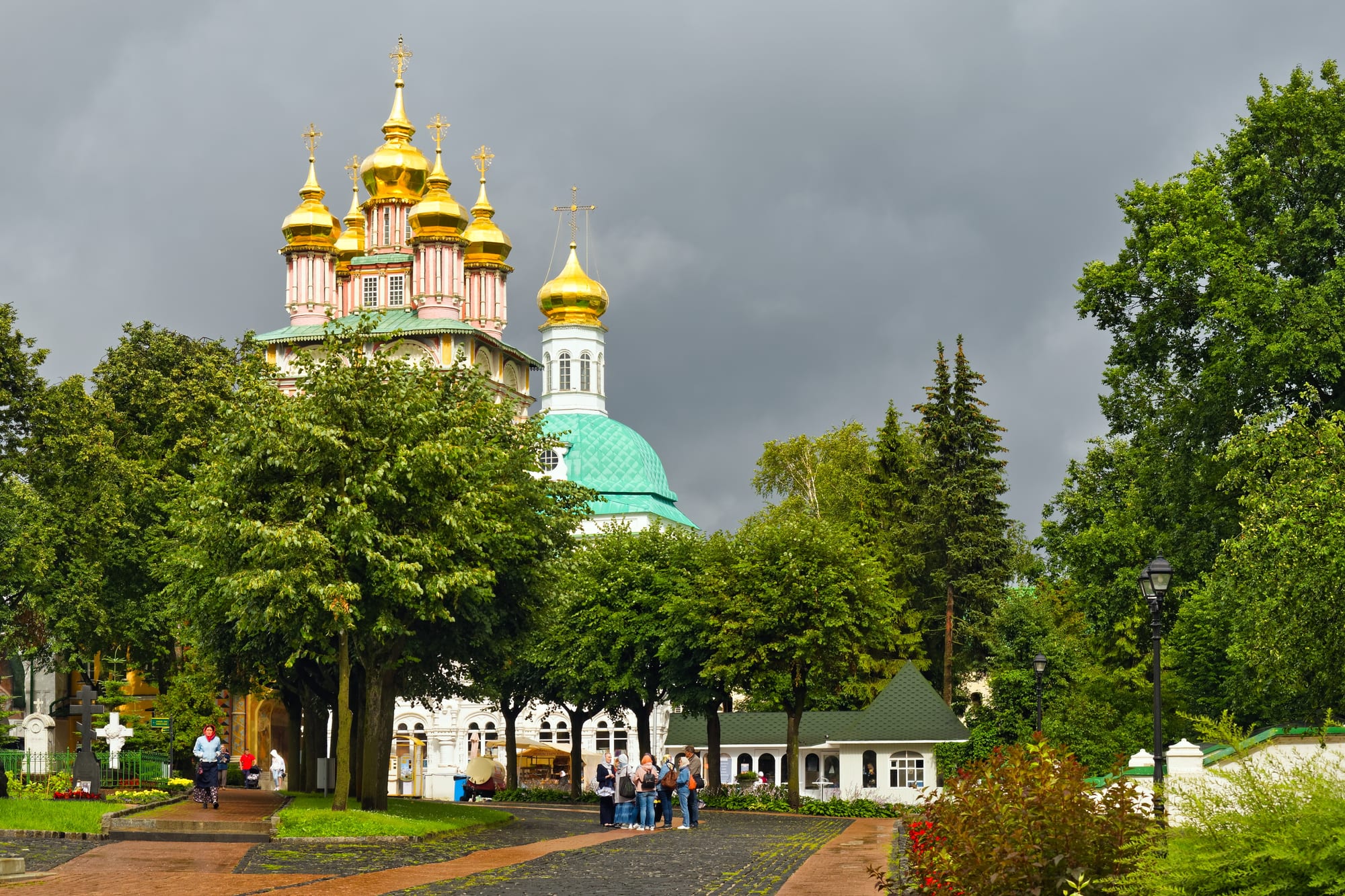
The Lavra is a working monastery and a place of pilgrimage: believers kiss the icons and pray for long periods, and visitors should keep quiet and not disturb services. Tipping in restaurants is not obligatory but expected; around 10 per cent is normal.
Ask before photographing monks or worshippers; photographing military or industrial sites can bring espionage charges.
💳 Common Payment Methods
The currency is the rouble (RUB). Most credit and debit cards issued abroad no longer work in Russia, and most cannot be used at Russian ATMs, so cash brought in and exchanged is the most reliable means of payment.