💰 Budget
Pretoria is cheaper than Johannesburg's northern suburbs for both rooms and restaurants, and its main sights charge modest entry fees. Guesthouses in the eastern suburbs are good value, and the Gautrain makes it possible to visit without hiring a car. Prices rise around big rugby matches and diplomatic and university events.
- Daily Budget Midrange
- USD 150–310 (guesthouse or rest-camp bungalow, car hire, park fees, guided drives)
- Daily Budget Shoestring
- USD 40–75 (backpacker lodge or guesthouse room, street food and takeaways, Gautrain and ride-hailing)
Visit in late October if the jacarandas matter, book ahead for those weeks, and use the Gautrain rather than a hire car if staying near Hatfield or Centurion.
📅 Best Time to Visit
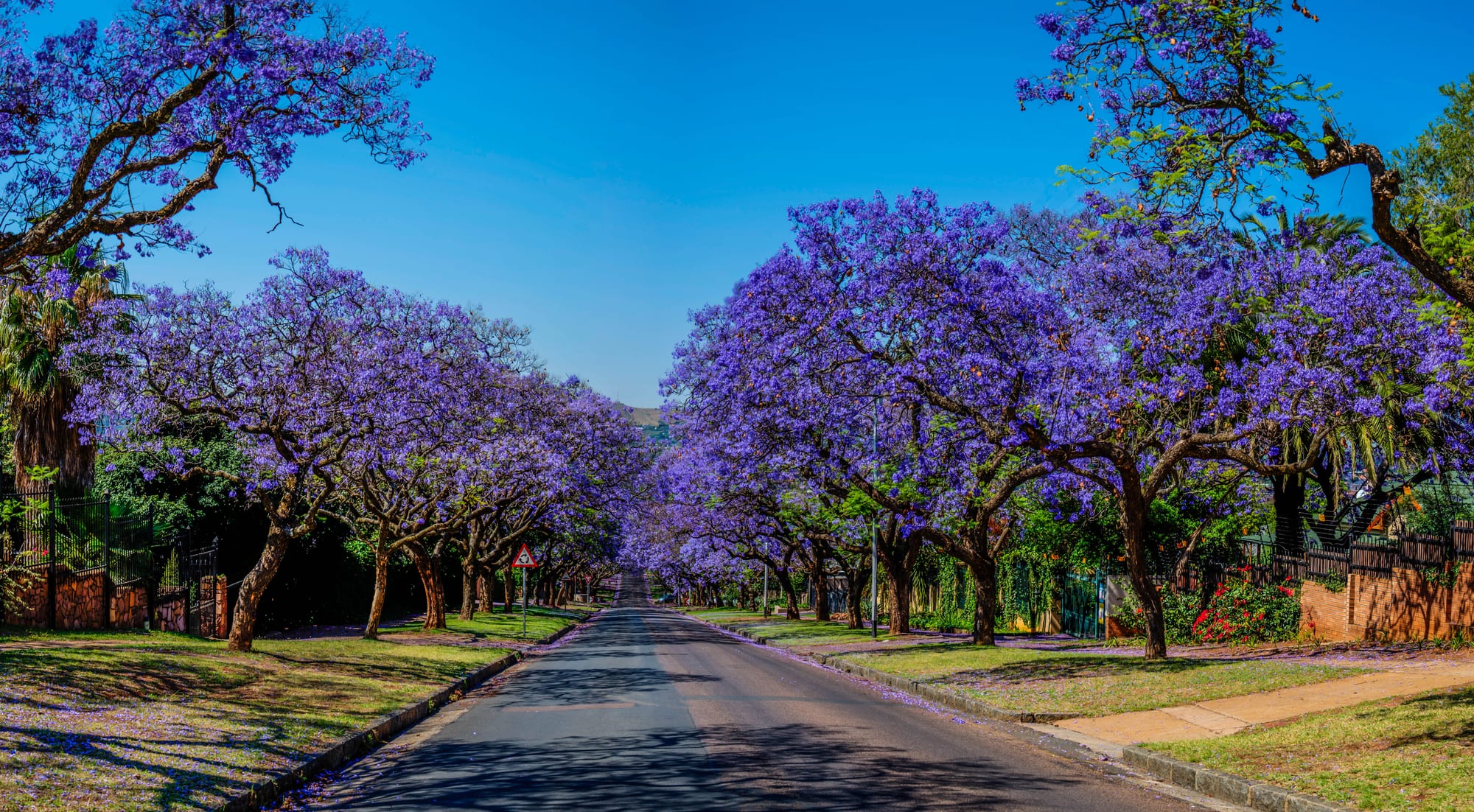
April, May, September and October are the best months: warm, dry, sunny days and clear light, with the jacarandas flowering in October and early November. Summer, from November to March, is hot with heavy afternoon thunderstorms; winter days are mild and pleasant but nights are cold and the air is dry and dusty.
⏳ Suggested Number of Days
A day or two covers the monuments, the central museums and the government quarter. Three or four take in the reserves, museum houses and mining towns outside the city, and the larger city an hour south. The sights are spread across ridges and suburbs, so transport decides how much fits into a day.
- First Visit
- 1–2 days
- With Surroundings
- 3–4 days
🚆 Transportation
Most residents drive, and traffic is heavy on the ring roads at peak times. The Gautrain runs from Hatfield and the central station through Centurion to Johannesburg and O. R. Tambo airport, with bus feeders, and the A Re Yeng bus rapid transit serves parts of the city. Ride-hailing apps are cheap and widely used, and minibus taxis carry most commuters.
Use the Gautrain for the trip to Johannesburg or the airport, keep car doors locked in traffic, and allow extra time for the morning and afternoon peaks on the N1 and N4.
🛬 Airport & Station Connections
O. R. Tambo International, about 50 kilometres south-east, is the main airport, reached on the Gautrain or by road; Lanseria, west of Johannesburg, is the other option. Long-distance coaches and trains use the station near the centre, and the N1 from Johannesburg, about 55 kilometres away, and the N4 from Mpumalanga meet at the city.
🚶 Walkability
Individual districts are walkable — the central grid around Church Square, Hatfield's student streets, the suburban shopping strips — but they sit several kilometres apart across ridges and motorways. The Union Buildings gardens, Freedom Park and the botanical garden are pleasant to walk in. Walking in the centre is normal by day and not advised after dark.
🛡️ Safety
Pretoria has the same pattern of crime as the rest of Gauteng, though at a lower level than central Johannesburg. Street robbery and phone snatching are the usual risks in the crowded central streets, around the station and in Sunnyside, and smash-and-grab at traffic lights and carjacking occur across the province. The embassy quarter, the eastern suburbs and the monuments are quiet and well patrolled.
Violent crime rates are high, but most of it is concentrated in areas visitors do not go. Keep car doors locked and bags out of sight in traffic, avoid walking in the centre and Sunnyside after dark, use ride-hailing at night, and draw cash inside shopping centres. Check current official travel advice before travelling.
🌦️ Climate
Warm and dry at about 1,300 metres, in a valley that traps heat and makes the city several degrees warmer than Johannesburg. Rain falls in the southern-hemisphere summer, from October to March, in short afternoon thunderstorms; winter is sunny, dry and cold at night.
- Summer
- hot and stormy from December to February, usually 28–32°C by day, with thunder most afternoons
- Winter
- dry and sunny from June to August, 19–22°C by day, with nights near freezing
🤝 Local Customs
Pretoria has a stronger Afrikaans character than Johannesburg, alongside Setswana, Sepedi, isiZulu and English, and it is a formal, government city where dress and manners are more conservative. Greetings are exchanged before business, tipping is around ten per cent in restaurants, and car guards in parking areas are given small change.
Photography is restricted at government buildings, courts and military sites, so ask before taking pictures near them; dress modestly for churches and memorials, and treat the Voortrekker Monument and Freedom Park as places where history is still argued over.
💳 Common Payment Methods
The currency is the South African rand. Cards and contactless payment work in shops, restaurants, hotels and museums, and ATMs are common in shopping centres. Cash is useful for street traders, markets, car guards and small stalls, and street-corner ATMs are best avoided.