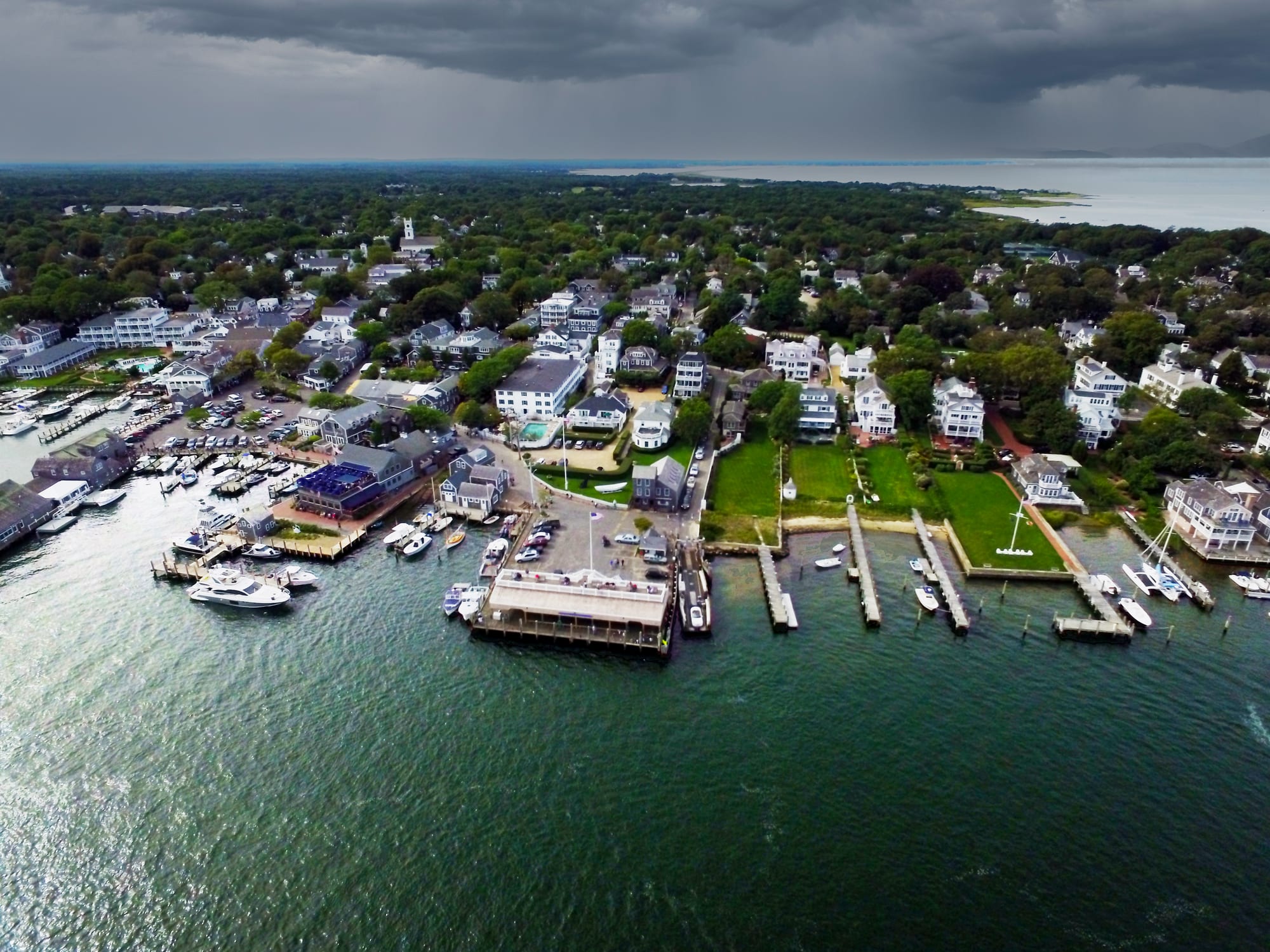
Aerial view of Edgartown's harbour, with boats at wooden piers, white houses among trees and a grey sky over the sea

New England, United States

Martha's Vineyard

Edgartown and its harbour from the air, on the eastern side of Martha's Vineyard. (Don Ramey Logan / Wikimedia Commons · CC BY-SA 4.0)

An island of about 96 square miles off the south coast of Cape Cod, Massachusetts, home to the Wampanoag for thousands of years, enriched by whaling and then turned into a summer colony. Six towns share it, from the gingerbread cottages of Oak Bluffs and the white captains' houses of Edgartown to the farms of West Tisbury and the clay cliffs of Aquinnah.

Neighbourhoods

  • Vineyard Haven
    • Ferry arrivals
    • Close to public transport

    The main village of the town of Tisbury and the island's principal port, where the year-round ferries from Woods Hole land people, cars and cargo. It has a working harbour, a shopping street and the Martha's Vineyard Museum.

    Open in Maps
  • Oak Bluffs
    • First-time visitors
    • Nightlife
    • Historic district

    The liveliest of the towns, known for the brightly painted gingerbread cottages of Wesleyan Grove, its open harbour and busy Circuit Avenue. It is a seasonal ferry port, and for more than a century some of its neighbourhoods have been summer communities for affluent African American families.

    Open in Maps
  • Edgartown
    • Historic district
    • Harbour walks
    • Beaches

    The island's first English settlement and its largest town, with streets of white houses built in the whaling era around a yacht-filled harbour. It also takes in Katama, with the surf of South Beach, and Chappaquiddick, a short ferry ride across the harbour.

    Open in Maps
  • Up-island: West Tisbury and Chilmark
    • Quiet and rural
    • Farms
    • Sunsets

    The western half of the island, called up-island, is largely rural, with farms and woods. West Tisbury is the agricultural centre and holds the island's fair; Chilmark has the hilliest ground and the fishing village of Menemsha, with sunsets over the water.

    Open in Maps
  • Aquinnah
    • Wampanoag culture
    • Cliffs and beaches

    The island's western tip, called Gay Head until 1997, is the home of the Wampanoag Tribe of Gay Head (Aquinnah) and of the multicoloured clay cliffs above Moshup Beach, with a lighthouse on top.

    Open in Maps

Things to do

Towns and landmarks

  • Wesleyan Grovelandmark

    A 34-acre National Historic Landmark District in Oak Bluffs, where Methodist camp meetings began in 1835 and tents gave way to ornate gingerbread cottages set around an open-sided iron Tabernacle.

    Open in Maps
  • Flying Horses Carouselattraction

    The oldest operating platform carousel in the United States, in Oak Bluffs.

    Open in Maps
  • Martha's Vineyard Museummuseum

    The island's historical and cultural museum in Vineyard Haven, founded in 1922, covering whaling, sailing, Wampanoag history and well-known islanders.

    Open in Maps
  • Edgartown Harbor Lightlandmark

    The lighthouse that marks the entrance to Edgartown Harbor and Katama Bay, a short walk from the town centre.

    Open in Maps
  • East Chop Lightlandmark

    A historic lighthouse on a bluff in Oak Bluffs, looking out over Vineyard Haven Harbor and Vineyard Sound.

    Open in Maps

Beaches, cliffs and nature

  • Aquinnah cliffs and Moshup Beachbeach

    Clay cliffs about 150 feet high, owned by the Wampanoag tribe and protected, rising above a beach named after Moshup, a figure of Wampanoag tradition.

    Open in Maps
  • Gay Head Lightlandmark

    The historic lighthouse at the island's westernmost point, standing above the Aquinnah cliffs.

    Open in Maps
  • Menemshaneighborhood

    A small fishing village in Chilmark, where much of Jaws was filmed in 1974, and one of the few places on the East Coast to watch the sun set over the sea.

    Open in Maps
  • Chappaquiddick Islandattraction

    A quiet island, at times joined to the main island as a peninsula, reached from Edgartown by a small ferry that carries pedestrians, cyclists and a few cars.

    Open in Maps
  • Manuel F. Correllus State Forestpark

    A 5,100-acre state forest in the middle of the island, used mainly for cycling and walking.

    Open in Maps
  • Polly Hill Arboretumpark

    An arboretum in West Tisbury that the horticulturist Polly Hill began in 1958, growing trees from seed, with cultivated grounds and native woodland.

    Open in Maps

Seasonal events

  • Martha's Vineyard Agricultural Fairlate August

    The island's agricultural fair in West Tisbury; its weekend is one of the busiest of the summer.

  • Grand Illuminationa Wednesday evening in summer

    Illumination Night in Wesleyan Grove, when a twilight sing-along in the Tabernacle is followed by the lighting of paper and silk lanterns across the gingerbread cottages — a tradition of about 150 years.

  • Fourth of Julyearly July

    Independence Day weekend is the most crowded of the year on the island.

Eat and drink

Long-standing places and food districts in Martha's Vineyard. Hours, ratings and directions come from your maps app, always current.

Island classics

  • Menemsha harbourneighborhood

    The fishing village where seafood is eaten by the harbour, often with the sunset; Chilmark is a dry town, and restaurants there let diners bring their own drink.

    Open in Maps
  • Circuit Avenueneighborhood

    Oak Bluffs' busy main street of restaurants, ice-cream counters and bars, the centre of the island's nightlife.

    Open in Maps

Harbour towns

  • Edgartownneighborhood

    Restaurants and seafood places in the old whaling town's centre and around the harbour.

    Open in Maps
  • Vineyard Havenneighborhood

    Cafés and restaurants near the main ferry terminal, the island's year-round commercial centre.

    Open in Maps

Experience Martha's Vineyard

History

The Wampanoag called the island Noepe, "land amid the streams", and have lived on it for thousands of years; at the time of English settlement they numbered around 3,000. Aquinnah, at the western end, was one of the earliest places where whales were hunted, by Wampanoag harpooners long before commercial whaling. The English name dates from Bartholomew Gosnold's expedition of 1602, and in 1642 Thomas Mayhew's son, also Thomas, founded the first English settlement at Great Harbor, later Edgartown. The Mayhews were known for good relations with the Wampanoag and for respecting their land rights.

In the 19th century the island, like nearby Nantucket, grew rich on whaling, and sea captains and merchants built the houses that still line Edgartown's streets. From 1835 Methodists gathered each summer for camp meetings in an oak grove that became Wesleyan Grove; their tents turned into small, brightly painted cottages, and the settlement around them broke away from Edgartown in 1880 as Cottage City, renamed Oak Bluffs in 1907. After the railway reached Woods Hole in 1872, summer houses spread across the island. Freed Black families who came to work in the fisheries were followed by others from the mainland, and parts of Oak Bluffs have been summer communities for African American families since the early 20th century. Edgartown Harbor was recognised in 2020 as a site of the Underground Railroad.

The island had for generations an unusually high rate of hereditary deafness, and hearing and deaf islanders alike used Martha's Vineyard Sign Language. In 1974 Steven Spielberg filmed Jaws here, largely in Menemsha and Chilmark. The town of Gay Head took the Wampanoag name Aquinnah in 1997, ten years after the tribe gained federal recognition.

Culture & Customs

Each town has its own character. Oak Bluffs keeps the gingerbread cottages, the carousel and the island's nightlife; Edgartown is formal and maritime; Vineyard Haven is the working port; and up-island, West Tisbury, Chilmark and Aquinnah are rural, with farms and a fishing harbour at Menemsha. Islanders talk of going "down-island" or "up-island", and draw a firm line between the year-round community and the summer visitors.

Wampanoag culture is centred on Aquinnah, where members of the federally recognised tribe make up about a third of the town's voters and the tribe owns the clay cliffs. Oak Bluffs has long been a summer gathering place for African American families, whose beach on the town's shore, once pejoratively called "the Inkwell", took the name back as a mark of pride; the writer Dorothy West set her novel The Wedding among them. Portuguese American families, present since the whaling and fishing era, and a large, more recent Brazilian community are part of island life.

The island has long drawn writers, artists, politicians and entertainers as summer residents, and presidents have holidayed here, from Ulysses Grant's visit in 1874 to Barack Obama, who bought a house on the Edgartown Great Pond in 2019. The summer calendar is marked by Illumination Night in Wesleyan Grove and the agricultural fair in West Tisbury.

Daily Life

The year-round population was 20,530 in a 2023 report by the Martha's Vineyard Commission, up from 16,460 in 2010, and in summer the number of people on the island swells to more than 200,000. About 56 per cent of the island's homes are occupied only seasonally. Edgartown is the largest town by population and area, and the island makes up most of Dukes County.

Tourism now drives the economy, where whaling, fishing and farming once did, and much work is in maintaining and serving the summer houses, shops and restaurants. Balancing that economy with the island's ecology, and with the pressures of development, is a recurring subject of local debate.

The rhythm of the year is sharply seasonal. In summer the ferries are full, the roads and bike paths busy and the beaches crowded; the most crowded weekend is the Fourth of July. In winter many places close, the island's own community takes over again, and children from all six towns go on from their local schools to the regional high school in Oak Bluffs.

Food

Seafood is the centre of island eating, as it is across coastal New England: clam chowder, the lobster roll, fried clams and fish landed in local harbours. Menemsha, the fishing village in Chilmark, is the classic place to eat seafood by the water and watch the sun go down over the sea.

West Tisbury's farms and the agricultural fair reflect a farming tradition that reaches back to colonial times, and summer brings local produce to island kitchens. Oak Bluffs' Circuit Avenue is the busiest strip for casual eating and ice cream, while Edgartown and Vineyard Haven have their own clusters of restaurants near the harbours.

Drinking rules vary by town. The three down-island towns allow all kinds of alcohol in restaurants and bars, but Chilmark is a dry town, where restaurants allow diners to bring their own wine or beer. Island life also mixes in other traditions: Portuguese American families have lived here since the whaling and fishing era, and a large Brazilian community has grown up more recently, while in summer the harbour towns fill with ice-cream counters and casual seafood places.

Planning tools

Budget

Martha's Vineyard is one of the most expensive places to stay in New England in summer, when accommodation fills and prices peak; the Fourth of July and the fair weekend in late August are the busiest. Bringing a car on the ferry costs far more than travelling on foot, and many visitors leave the car on the mainland and use buses and bicycles.

Daily Budget Midrange
USD 300–550 (mid-range room or rental, restaurant dinners with tax and tip, ferry tickets, bike or moped hire)
Daily Budget Shoestring
USD 140–220 (shared or budget room booked early, sandwiches and takeaway seafood, island buses and a hired bicycle)

Visiting in June or September brings lower rates and quieter beaches; much of the island's free pleasure — beaches, harbour walks, the gingerbread cottages, bike paths — costs nothing.

Best Time to Visit

June to September is the season, when the ferries, beaches and seasonal services are in full swing and July and August are the busiest months. Late May, June and September are calmer and still warm enough for the beaches. Winter is quiet, with a much smaller year-round community and many seasonal places closed.

Suggested Number of Days

Two or three days give time to see the down-island towns and reach the western end of the island. Four or five suit a slower beach holiday or a combined trip with Cape Cod. Time spent waiting for ferries, and travelling without a car, adds to the number.

First Visit
2–3 days
With Surroundings
4–5 days

Transportation

The island bus network runs between all the towns, and most of the main roads have bike paths alongside them; the island is largely flat and cycling is one of the usual ways to get around. Bicycles, mopeds and cars can be hired in Vineyard Haven, Oak Bluffs and Edgartown. A small ferry carries pedestrians, cyclists and up to three cars across to Chappaquiddick from Edgartown.

Islanders divide the island into 'down-island' (Vineyard Haven, Oak Bluffs and Edgartown) and 'up-island' (West Tisbury, Chilmark and Aquinnah) — terms that refer to longitude, not north and south.

Airport & Station Connections

Most visitors arrive by ferry. The Steamship Authority runs year-round from Woods Hole, at the south-western corner of Cape Cod, to Vineyard Haven, with summer sailings to Oak Bluffs, and it is the only service that carries vehicles. Seasonal passenger ferries run from Falmouth, Hyannis and New Bedford in Massachusetts and from North Kingstown, Rhode Island. Martha's Vineyard Airport lies in the middle of the island, about 3 miles south of Vineyard Haven, with flights from Boston and seasonal flights from New York and other cities.

Walkability

Vineyard Haven, Oak Bluffs and Edgartown each have compact centres that are easy to explore on foot, and the ferry docks are in or beside town. The distances between the towns, and to the beaches and the up-island villages, call for a bus, a bicycle or a car.

Safety

For most visitors the US is safe, with the main risks being petty theft and car break-ins in tourist areas of some cities, road accidents over long distances, extreme weather, and the hazards of the outdoors. On the island the practical concerns are summer traffic on narrow roads shared with cyclists and mopeds, surf on the south-facing beaches, and ticks in long grass and woodland.

Check for ticks after walks in grass or woods, take care cycling on busy summer roads, and stay off the Aquinnah cliffs, which are protected. Check current official travel advice before travelling.

Climate

The surrounding Atlantic moderates the weather: winters are a few degrees milder and summers a little cooler than inland New England. The island's climate is classed as humid subtropical over most of its area and oceanic in the far north.

Summer
warm and humid — July and August average around 72°F, and only one or two days a year reach 90°F
Winter
cool to cold — January averages just above 32°F, most winter days rise above freezing, and temperatures below 5°F are rare

Local Customs

Tipping of roughly 18–22 per cent is expected in restaurants, as elsewhere in the United States. The down-island towns allow alcohol in restaurants and bars, while Chilmark is a dry town where restaurants let diners bring their own. The Aquinnah cliffs belong to the Wampanoag Tribe of Gay Head (Aquinnah), whose rangers explain their importance to visitors. Some private beaches are reserved for town residents in summer.

Respect the closures on the Aquinnah cliffs and any signs marking tribal land, and check whether a beach is public before settling in. Identification is asked for when buying alcohol (the legal age is 21).

Common Payment Methods

The currency is the US dollar. Cards and contactless payment are widely accepted in the towns; ATMs are found in the down-island town centres. A little cash is useful for small purchases and tips.