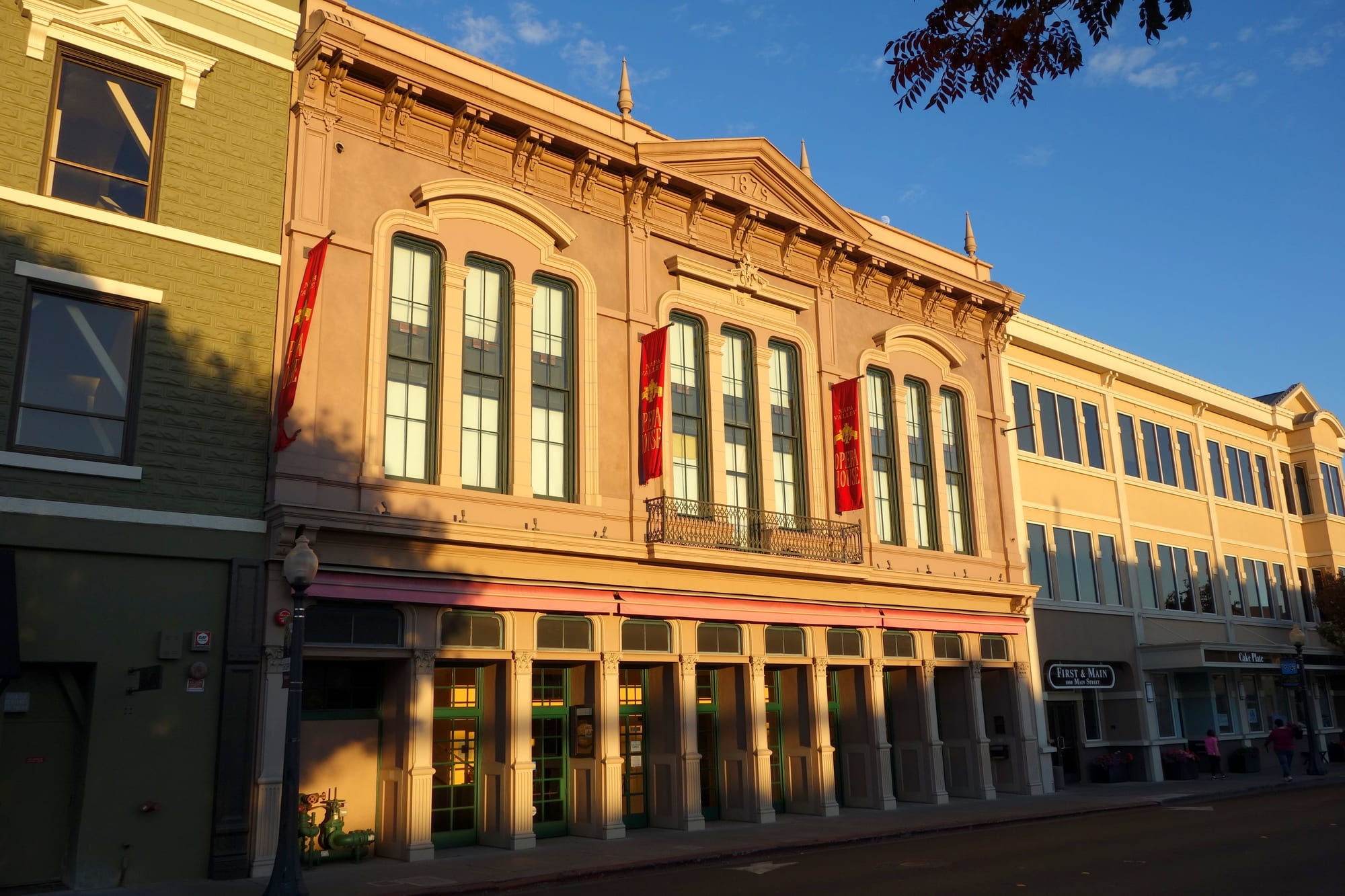
The ornate pink Italianate facade of the Napa Valley Opera House on Main Street, lit by low evening sun, with red banners

California, United States

Napa

The Napa Valley Opera House on Main Street in downtown Napa. (Daderot / Wikimedia Commons · CC0)

The largest city and county seat of Napa County, on the Napa River at the southern end of the Napa Valley, about 50 miles north of the San Francisco and Oakland airports. A 19th-century river port of tanneries, mills and mines, it has become the gateway town to one of the world's best-known wine regions, with a restored riverside downtown, a food hall and tasting rooms.

Neighbourhoods

  • Downtown and the riverfront
    • First-time visitors
    • Best for food
    • Walkable

    The historic centre along Main and First streets beside the Napa River, with the Opera House of 1880, restaurants, tasting rooms and hotels. Long held back by floods, it revived from the 2000s as the flood project reshaped the river and the old mill buildings on the riverfront were redeveloped.

    Open in Maps
  • The Oxbow District
    • Food halls
    • Cookery
    • Close to downtown

    A small district on First Street inside a loop of the Napa River, just east of downtown, built up around the former Copia centre — now the Culinary Institute of America at Copia — and the Oxbow Public Market food hall.

    Open in Maps
  • Carneros
    • Vineyards
    • Quiet countryside

    The rolling vineyard country south-west of the city towards San Pablo Bay, shared with Sonoma County. Fog and breezes from the bay make it cooler than the valley to the north, and its wineries lie among open fields rather than in town.

    Open in Maps

Things to do

Downtown Napa

  • Napa Valley Opera Houselandmark

    A historic theatre on Main Street that opened in 1880 with HMS Pinafore, closed for many years and was revived from the 1980s; it now holds a jazz club and a ballroom.

    Open in Maps
  • Oxbow Public Marketmarket

    A food hall in the Oxbow District, built beside the former Copia centre to draw visitors into downtown Napa, with stalls selling local food and drink.

    Open in Maps
  • The Culinary Institute of America at Copiaattraction

    The cookery school's downtown campus, opened in 2016 in the building of the former Copia wine and food museum, offering food and wine courses to visitors.

    Open in Maps

Wine country around the city

  • Napa Valley Wine Trainattraction

    An excursion train that runs from Napa up the valley to St. Helena, past Yountville, Oakville and Rutherford and the vineyards along Highway 29.

    Open in Maps
  • Los Carnerosattraction

    The cool, bay-side wine district south-west of the city, shared by Napa and Sonoma counties and established as an appellation in 1983.

    Open in Maps
  • Silverado Trailviewpoint

    A scenic road running 29 miles along the eastern edge of the Napa Valley, a quieter alternative to Highway 29 past vineyards and wineries.

    Open in Maps
  • di Rosa Center for Contemporary Artmuseum

    An art centre in the Carneros countryside with a collection of about 1,600 works by Northern California artists.

    Open in Maps

Trails and parks

  • Napa Valley Vine Trailtrail

    A 47-mile paved walking and cycling path from the Vallejo ferry terminal through Napa to Calistoga.

    Open in Maps
  • Skyline Wilderness Parkpark

    A park on the city's south-eastern edge with hiking, mountain-biking and riding trails, campsites and a native plant garden.

    Open in Maps

Short trips up the valley

  • Yountvilleattraction

    A small town up the valley, known for its wineries and celebrated restaurants.

    Open in Maps
  • St. Helenaattraction

    A town in the heart of the valley with more than 400 vineyards in its appellation and the Culinary Institute of America's Greystone campus.

    Open in Maps
  • Calistogaattraction

    The town at the head of the valley, founded in 1868 as a hot-springs resort, still known for its hot springs and mud baths.

    Open in Maps
  • Sonomaattraction

    The neighbouring wine town over the hills to the west, which grew from Mission San Francisco Solano, founded in 1823, and where the Bear Flag Revolt took place in 1846.

    Open in Maps

Seasonal events

  • BottleRock Napa ValleyUsually Memorial Day weekend, late May

    A large music festival at the Napa Valley Expo, with food and wine from the valley alongside the stages.

  • Festival Napa ValleySummer

    An annual summer festival of music, arts and wine, with concerts at venues around the valley, including free and low-cost events.

  • The harvest, or crushSeptember and October

    The busiest season in the wine country, when the grapes are picked and pressed and visitors fill the valley.

Eat and drink

Long-standing places and food districts in Napa. Hours, ratings and directions come from your maps app, always current.

Food districts and markets

  • Oxbow Public Marketmarket

    Downtown's food hall on First Street, with stalls for local produce, cheese, coffee, baked goods and wine, beside the Culinary Institute of America at Copia.

    Open in Maps
  • Downtown First and Main streetsneighborhood

    The restaurants, wine bars and tasting rooms of the revived downtown, many of them along the river.

    Open in Maps

Wine country dining

  • Yountville's restaurantsneighborhood

    A small town up the valley known far beyond California for its fine dining, including the Michelin-starred French Laundry.

    Open in Maps

Experience Napa

History

The valley was the home of Native peoples long before Europeans arrived; the name Napa is of Native American origin, most plausibly from the Patwin word napo, "house". The first recorded expedition into the valley, in 1823, was led by Padre José Altimira, founder of the mission at Sonoma; Mexican soldiers attacked and dispersed many of the inhabitants, and after Americans arrived from the 1830s, war broke out in 1850 and soldiers massacred those they could find. By 1870 only a few Native laborers and servants remained.

Nathan Coombs laid out the town in 1847 on land from the Mexican Rancho Entre Napa, beside the Napa River, and the first passenger steamship was running on the river by 1850. The town grew as a river port, shipping out timber from the valley's sawmills, while quicksilver mines operated in the hills, and Chinese labourers established a settlement in the 1860s that reached more than 300 people. John Patchett opened the county's first commercial winery in 1859. Napa leather was invented at the Sawyer tannery in 1875, the Opera House opened in 1880, and in 1915 two local inventors built the first moving-coil loudspeaker in a Napa workshop.

In the 20th century the city became the commercial centre of an increasingly famous wine valley, especially after Napa wines won the Judgement of Paris tasting in 1976. Floods repeatedly swamped downtown; after the flood of 1986 residents backed a "living river" plan, approved a sales tax for it in 1998, and the reshaped riverfront helped downtown revive in the 2000s. The South Napa earthquake of August 2014, the largest in the Bay Area since 1989, damaged many older buildings, and the October 2017 wildfires burned parts of the county.

Culture & Customs

Wine shapes the town's identity. The Napa Valley became the country's second American Viticultural Area in 1981 and is internationally known as one of the world's great wine regions, and the city sits at its southern gateway. Its culture follows the year of the vineyards: bud break in spring, the summer season of festivals and visitors, and the harvest, or crush, of September and October, the busiest time of all.

The city has built a cultural life on that fame. The Napa Valley Opera House, revived after decades of closure, holds jazz and concerts; BottleRock fills the Napa Valley Expo with a large music festival, usually over Memorial Day weekend; Festival Napa Valley brings music and arts to the valley each summer; and the di Rosa centre shows Northern California art. Food is treated as culture too: the Culinary Institute of America teaches visitors at Copia downtown and at Greystone in St. Helena, and Yountville's restaurants are known far beyond the state.

Behind the visitor economy the city also carries a harder history: mid-20th-century racially restrictive covenants in some subdivisions, which led historians to list it as a probable sundown town.

Daily Life

The city had about 77,000 people in a July 2024 estimate. It is the county seat and the commercial centre of the valley, while the smaller towns up the valley are given over more to vineyards and visitors.

A large share of jobs relate to wineries, restaurants, hotels and other hospitality businesses, and Napa State Hospital stands in Imola, just outside the city limits. Light industry, banking and retail grew up in the city as the vineyards spread north of it.

Daily life follows the seasons of the wine trade and the risks of the place. Summer and autumn weekends bring heavy traffic on Highway 29, the rainy season occasionally brings floods, and residents have lived through the 2014 earthquake and the wildfires of 2017. The Napa River Flood Project, under way since the late 1990s, still shapes the riverbanks along about six miles of the river through town, and the Napa Valley Register, founded in 1863, remains the local paper. Downtown is busiest in the evenings and at weekends, when visitors and locals fill the restaurants along the river.

Food

The Napa Valley's food culture grew alongside its wine. The area is known for fine dining — above all in Yountville, home of the Michelin-starred French Laundry — as well as for gourmet sandwiches and picnics bought at small grocery stores and eaten among the vines.

In the city itself, the Oxbow Public Market on First Street gathers local producers, bakers, cheesemakers and coffee roasters in one food hall, and the Culinary Institute of America's Copia campus next door runs food and wine courses for visitors. Downtown's riverside restaurants, wine bars and tasting rooms mean that many visitors taste without driving out to the vineyards.

Wine is the main event, and Cabernet Sauvignon and Chardonnay stand out among the Napa Valley's wines. Some wineries welcome picnics, though only by reservation, and many smaller wineries pour only by appointment, and some still have the owner leading the tasting.

Planning tools

Budget

Napa is one of the most expensive places to visit in California. Hotel prices peak in summer and during the harvest in September and October, and wine tastings, often by appointment, can cost as much as a meal. Staying in the city of Napa is usually cheaper than up the valley, and weekdays and the winter months are noticeably cheaper than weekends in high season.

Daily Budget Midrange
USD 280–520 (mid-range hotel, restaurants with tax and tips, two or three winery tastings, a hire car or driver)
Daily Budget Shoestring
USD 130–200 (budget motel, food-hall and market meals, VINE buses and cycling on the Vine Trail)

Plan who is driving before setting out: a tour, a driver, the bus or a bike on the Vine Trail all avoid driving after tastings.

Best Time to Visit

Late spring and autumn are the most pleasant seasons. The harvest, or crush, in September and October is the most popular time, along with the summer months, when days are dry and can pass 100°F in heat waves. The rainy season runs from about October to April, and winter is quieter and cheaper, though occasionally wet enough to flood.

Suggested Number of Days

Two or three days cover the city and a few wineries nearby. Four or five allow time for the smaller towns further up the valley and over the hills. Because tastings are best kept to a few a day, a longer stay is more relaxed than a crowded short one.

First Visit
2–3 days
With Surroundings
4–5 days

Transportation

VINE Transit buses serve the city and run up the valley as far as Calistoga and south to Vallejo and its ferry terminal. Most visitors drive or use tours and drivers: Highway 29 runs up the west side of the valley and the Silverado Trail up the east. The Napa Valley Vine Trail is a paved cycling and walking route, and bike tours and hire are easy to find. The Wine Train is a sightseeing excursion rather than transport.

California's drink-driving laws are strict, and Highway 29 is busy with accidents in the early evening when wineries close.

Airport & Station Connections

Most visitors fly into San Francisco or Oakland, both about 50 miles to the south, and continue by hire car or airport shuttle bus; Sacramento's airport is about 65 miles north-east and the Sonoma County airport about 30 miles north-west. Napa County Airport, five miles south of the city, is a small public airport. Amtrak's Thruway buses stop at the Soscol Gateway Transit Center, and VINE buses connect with the San Francisco ferry at Vallejo.

Walkability

Downtown Napa is compact and flat, and the riverfront, Main Street and the Oxbow District are all within a few minutes' walk of each other. The wineries are not: they lie outside town along the highways, and reaching them on foot is impractical, though the Vine Trail makes cycling between some of them possible.

Safety

For most visitors the US is safe, with the main risks being petty theft and car break-ins in tourist areas of some cities, road accidents over long distances, extreme weather, and the hazards of the outdoors. In Napa the realistic risks are drink-driving accidents on the valley roads, summer heat and wildfire — the Atlas Fire burned parts of the county in October 2017 — and earthquakes: the South Napa earthquake of 24 August 2014, magnitude 6.0, killed one person, injured about 200 and damaged many older buildings.

Never drive after tasting; follow fire and evacuation orders at once, and learn the drop, cover and hold on routine for earthquakes. Check current official travel advice before travelling.

Climate

A Mediterranean climate: cool, damp winters and warm, dry summers, when rain is rare. Heat waves can push temperatures above 100°F — the record is 114°F, set in September 2022 — and wildfire is a summer risk. Nights occasionally fall below freezing in winter, but snow is rare.

Summer
warm to hot and dry, with occasional heat waves above 100°F and wildfire smoke possible
Winter
cool and wet, with the rainy season running roughly October to April and nights that occasionally drop below 32°F

Local Customs

Tipping of roughly 18–22 per cent in restaurants is expected, and sales tax is added at the till. Many smaller wineries offer tastings only by appointment, sometimes hosted by the owner, and some charge a fee that is waived with the purchase of a bottle. Dress is smart-casual.

The legal drinking age is 21, and identification is asked for at tasting rooms and when buying alcohol.

Common Payment Methods

The currency is the US dollar. Cards and contactless payment are accepted almost everywhere, including at wineries and market stalls, and ATMs are easy to find downtown. Keep a little cash for tips for drivers and tour guides.