💰 Budget
Savannah is moderately priced for the South. Inns and hotels in the historic district cost the most, especially in spring and around St. Patrick's Day, when rooms book up and prices peak. Walking the squares, Forsyth Park and River Street costs nothing; house museums and tours charge admission, and the free downtown buses and ferry keep transport costs low.
- Daily Budget Midrange
- USD 210–400 (historic-district inn or hotel, sit-down dinners with tax and tip, house museums and tours, taxis)
- Daily Budget Shoestring
- USD 100–160 (motel outside the historic district, Southern lunches and casual seafood, free downtown buses)
Book months ahead for St. Patrick's Day, and look at weekday stays in spring, when weekends are busiest.
📅 Best Time to Visit
Spring and autumn are the most pleasant, with mild temperatures and the squares at their greenest. Summer is long, hot and humid, and the hurricane season brings risk in late summer and autumn — Matthew in 2016 and Debby and Helene in 2024 all affected the city. Winters are mild and often sunny.
⏳ Suggested Number of Days
Two or three days suit most first visits to the historic district. Allow four or five to add the beach, the forts and the marshland islands. St. Patrick's Day crowds and summer heat change the pace more than the sights.
- First Visit
- 2–3 days
- With Surroundings
- 4–5 days
🚆 Transportation
Chatham Area Transit runs 17 bus routes, plus the fare-free dot service of downtown loops around the historic district and Forsyth Park and a free ferry across the river to Hutchinson Island. Taxis and ride-hailing cover the rest; a car is useful for the beaches, forts and plantations.
Use the free dot buses or walk downtown — parking near the squares is limited.
🛬 Airport & Station Connections
Savannah/Hilton Head International Airport lies off Interstate 95, west of the city. Amtrak's Palmetto and Silver Service trains between New York and Miami stop at the city's station. Drivers arrive on I-95, which runs just west of the city, and I-16, which leads into the centre.
🚶 Walkability
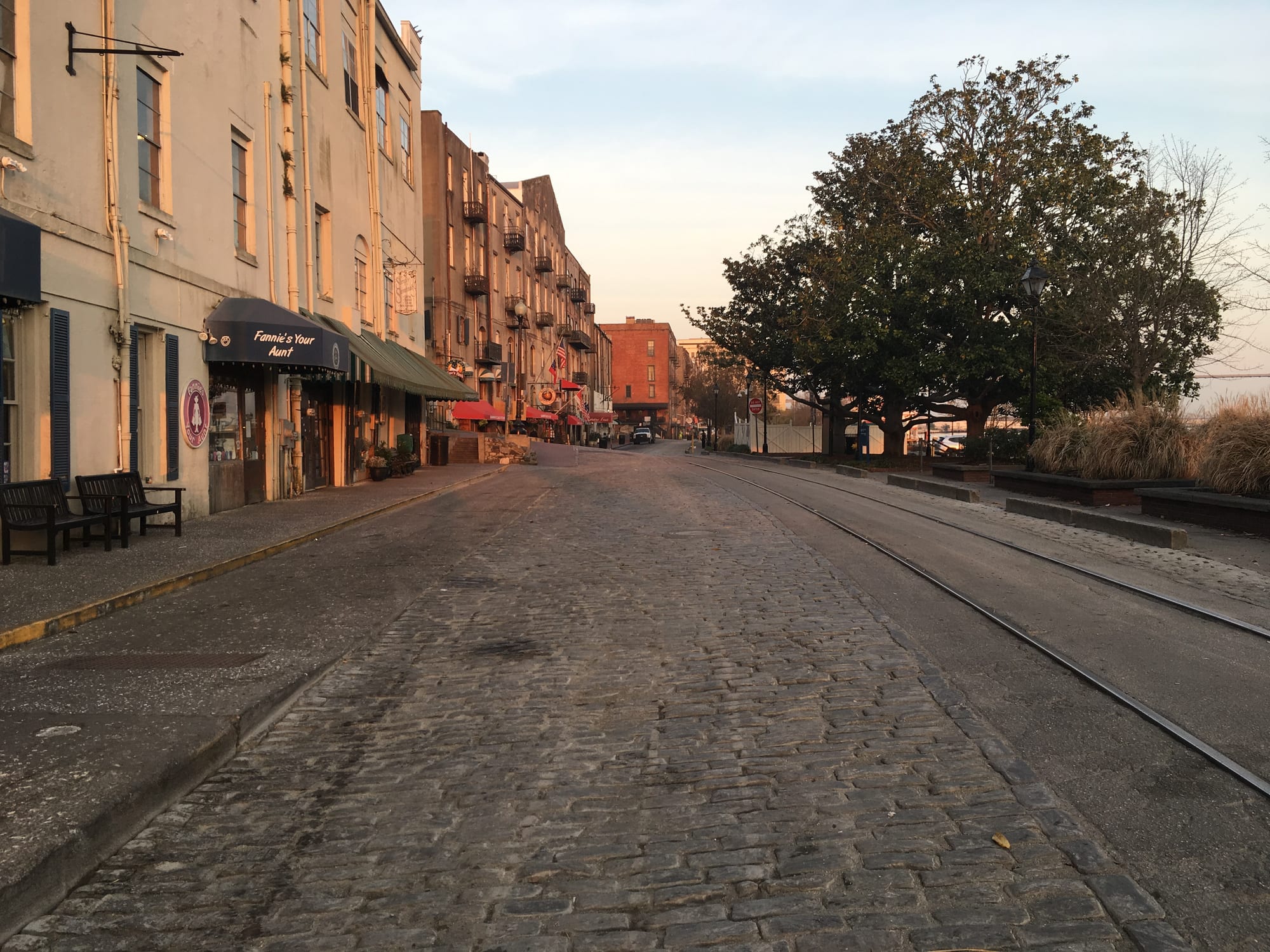
The historic district is one of the most walkable places in the South: a flat grid where a square appears every few blocks, from the river to Forsyth Park. River Street, below the bluff, is cobbled. Summer heat and humidity make midday walking tiring.
🛡️ Safety
For most visitors the US is safe, with the main risks being petty theft and car break-ins in tourist areas of some cities, road accidents over long distances, extreme weather, and the hazards of the outdoors. Savannah's historic district is busy and well used, but violent crime exists in parts of the city and rose sharply in 2015. Flooding and hurricanes are the main natural hazards: the city sits just above sea level.
Keep to busy streets or use ride-hailing late at night, leave nothing in parked cars, and follow evacuation orders in hurricane season. Check current official travel advice before travelling.
🌦️ Climate
A humid subtropical climate with long, hot, humid summers and mild, sunny winters. The city is at risk from hurricanes, especially at the height of the season, though it was seldom hit in the 20th century.
- Summer
- hot and very humid, with high dewpoints and afternoon storms; the record high is 105°F
- Winter
- mild and sunny — January highs average about 61°F, with around 21 nights below freezing a year
🤝 Local Customs
Tipping of roughly 18–22 per cent in restaurants is expected. Southern hospitality is part of the city's identity — it still calls itself the Hostess City of the South — and greetings, 'sir' and 'ma'am' are normal. Gullah Geechee culture and long-established Black churches are part of Savannah's heritage.
Churches and synagogues facing the squares are active places of worship; many historic houses are private homes. Bonaventure is a working cemetery — keep to the paths and respect burials.
💳 Common Payment Methods
The currency is the US dollar. Cards and contactless payment are accepted almost everywhere; small bills are useful for tips and tours.