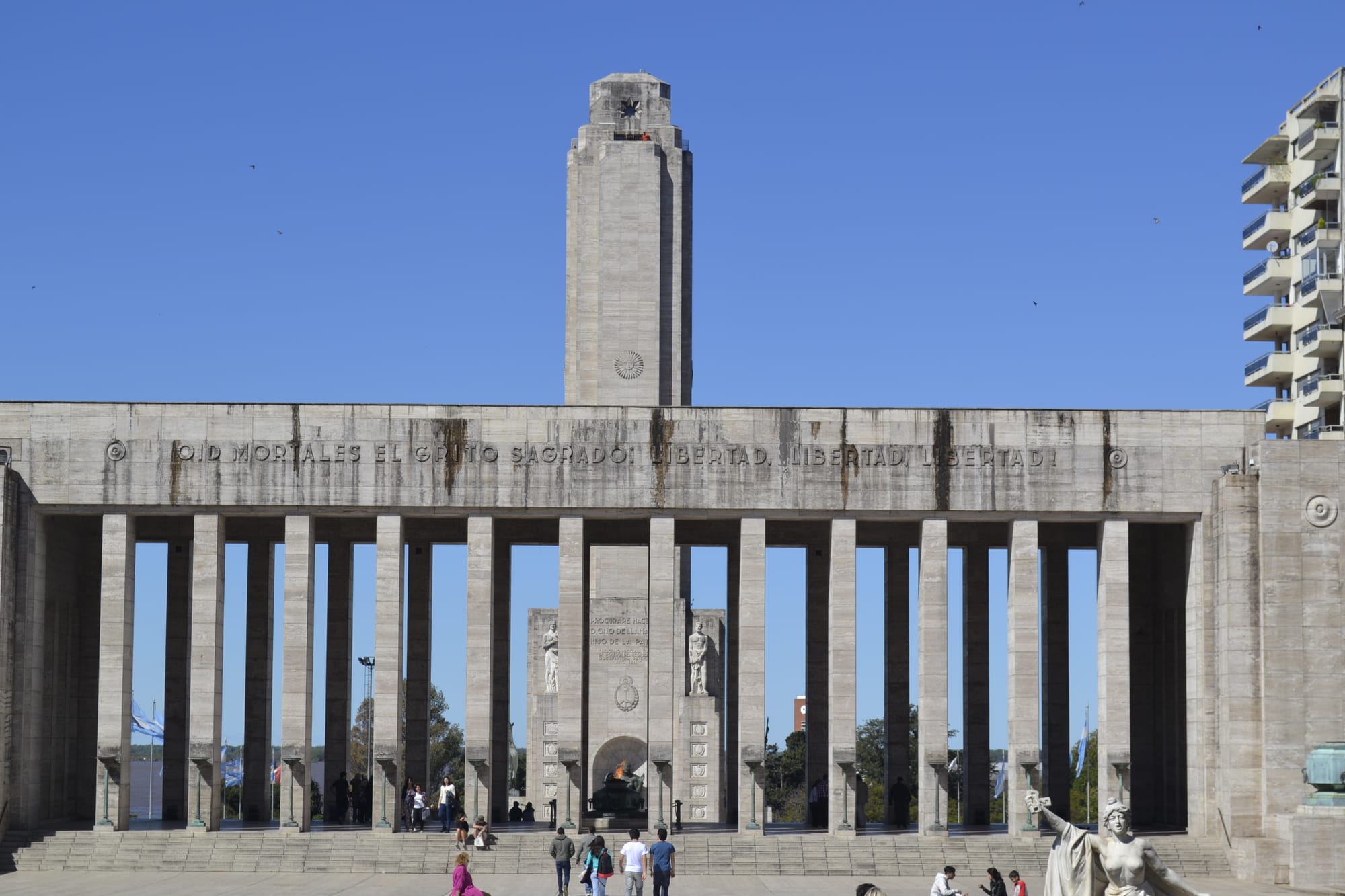
A long stone colonnade inscribed with the national anthem and a tall tower behind it under a clear blue sky

Argentina

Córdoba & the Pampas

The National Flag Memorial on the bank of the Paraná in Rosario, Santa Fe Province. (Cristian imagine / Wikimedia Commons · CC BY-SA 4.0)

The farming heartland of central Argentina, taking in the provinces of Córdoba, Santa Fe, Entre Ríos and La Pampa — the colonial university city of Córdoba and its Jesuit estancias, the Sierras de Córdoba, the river port of Rosario, the islands and palm groves of Entre Ríos and the open cattle plains of La Pampa.

Explore Córdoba & the Pampas

History

The Comechingones and Sanavirones lived in the hills and valleys of Córdoba when the Spanish arrived, and the plains to the south were the lands of mobile hunting peoples, later the Ranqueles. Jerónimo Luis de Cabrera founded Córdoba in 1573, the same year Juan de Garay founded Santa Fe. The Jesuits made Córdoba their provincial headquarters: their college became the university in 1613, the oldest in Argentina, and a chain of estancias worked by enslaved and Indigenous labour paid for it until the order's expulsion in 1767.

After independence, the Litoral provinces were at the heart of the civil wars. Manuel Belgrano raised the first flag on the banks of the Paraná at Rosario in 1812. Justo José de Urquiza, the caudillo of Entre Ríos, defeated Rosas at Caseros in 1852, the national constitution was drafted in Santa Fe in 1853, and the city of Paraná served as capital of the Argentine Confederation until 1861.

From the 1850s agricultural colonies of Swiss, Italian, German, Volga German and, in Entre Ríos, Jewish settlers turned the plains into wheat fields, and Rosario grew into the grain port of the Pampas. The army's campaigns of the 1870s ended Ranquel independence and opened La Pampa, which became a province in 1951. In the 20th century Córdoba led the University Reform of 1918 and became a centre of car and aircraft manufacturing, and the Cordobazo, the worker and student uprising of 1969, helped bring down the military government of the time.

Culture & Customs

The four provinces feel different from Buenos Aires and from one another. Cordobeses are famous across Argentina for their sing-song accent, which stretches the syllable before the stress, and for a quick, teasing humour. Córdoba's own music is cuarteto, a fast dance-hall sound driven by the piano and accordion; its stars, such as La Mona Jiménez, fill clubs every weekend. Rosario has a strong rock tradition, and is the birthplace of Che Guevara and of Lionel Messi, while its clubs Newell's Old Boys and Rosario Central have one of the country's fiercest football rivalries.

The immigrant past lives on in the towns: Villa General Belgrano, founded by German-speaking settlers, holds a national beer festival each October; Colonia Caroya keeps a Friulian heritage; Esperanza in Santa Fe was among the earliest agricultural colonies; and the Jewish farm colonies of Entre Ríos inspired Alberto Gerchunoff's book Los gauchos judíos. Entre Ríos is also chamamé and carnival country, with Gualeguaychú's summer parade the best known in Argentina.

La Pampa keeps the rural customs of the gaucho — rodeos, horse-breaking festivals called jineteadas, folk guitar — and a memory of the Ranqueles, whose world Lucio V. Mansilla described in Una excursión a los indios ranqueles.

Daily Life

Córdoba is Argentina's second city, with about 1.5 million people, and Rosario is the third, at about 1.75 million in its metropolitan area. Santa Fe and Paraná face each other across the Paraná, and Río Cuarto, Villa María, Rafaela, Concordia and Santa Rosa, the small capital of La Pampa, are the other main towns. Around them spreads some of the world's most productive farmland.

The economy rests on soybeans, maize, wheat, beef and dairy, and on the industries that serve them: the ports along the Paraná above and below Rosario ship much of the world's soybean meal and oil. Córdoba makes cars, machinery and software, and its two big universities give the city a young population. Entre Ríos adds citrus, rice and poultry, and La Pampa cattle and grain.

Life is slower and cheaper than in the capital, with long siestas in the smaller towns during summer, evenings on the costanera river walks, and weekend asados and football. Drought years, export taxes and inflation shape farm incomes, and drug-related violence in Rosario's outer barrios has been a national political issue.

Food

Asado is the weekend ritual here as everywhere on the Pampas, but the rivers add their own tradition. Along the Paraná and Uruguay, surubí and pacú (large river fish) are grilled whole or cooked in chupín, a fish stew, and fried boga and dorado are eaten at riverside restaurants. Rosario claims the carlitos, a toasted ham-and-cheese sandwich with ketchup, and its bars serve huge pizzas and chopp, draught beer.

Córdoba has its own alfajor cordobés, filled with fruit jam and coated in sugar glaze, and Santa Fe the alfajor santafesino, layers of crisp pastry and dulce de leche under a white glaze. Colonia Caroya is known for its salame, cured sausage made in the Friulian way, and the Sierras towns sell smoked cheeses, preserves and German-style pastries such as strudel.

Córdoba is the capital of Fernet con Coca, the bitter Italian liqueur mixed with cola that is drunk there in quantities that astonish other Argentines. La Pampa is cattle country, and Entre Ríos is known for its citrus.

Attractions & Natural Wonders

In Córdoba city, the Jesuit Block holds the Compañía de Jesús church, the Colegio Nacional de Monserrat and the old university, and together with five estancias forms a UNESCO World Heritage Site. The estancias lie in the countryside: Alta Gracia, whose town also has a museum in Che Guevara's childhood home; Jesús María and Caroya to the north; Santa Catalina; and remote La Candelaria.

The Sierras de Córdoba rise west of the city. Villa Carlos Paz on Lake San Roque is the busy resort; Cosquín hosts a national folk festival each January; La Cumbrecita is a car-free Alpine-style village and Villa General Belgrano its German neighbour; Capilla del Monte sits under Cerro Uritorco. Quebrada del Condorito National Park protects a gorge where Andean condors fly, and Cerro Champaquí is the range's highest peak. To the north-east, the salt lake of Mar Chiquita draws flamingos.

Rosario's riverfront runs from the National Flag Memorial along parks and converted warehouses, with boats to the Paraná islands. Santa Fe keeps colonial churches, and the Hernandarias tunnel runs under the river to Paraná. In Entre Ríos, the Paraná delta's channels and islands spread across the south of the province, El Palmar National Park's yatay palms line the Uruguay River, and Urquiza's Palacio San José stands near Concepción del Uruguay, with hot springs at Colón and Federación. La Pampa's gaucho country is flat grassland and caldén woods, with Santa Rosa as the base and the hills of Lihué Calel National Park rising in the dry south-centre.

Cities in Córdoba & the Pampas

Planning basics

Budget

Central Argentina is cheaper than Buenos Aires or Patagonia. Córdoba and Rosario have large student populations, which keeps hostels, cafés and bars affordable. The Sierras resorts and the Entre Ríos hot-spring towns raise prices in the January holidays and on long weekends, and a hire car is the main extra cost for the estancias and La Pampa.

Daily Budget Midrange
USD 80–150 (hotel or cabaña, parrilla dinners, a hire car in the Sierras)
Daily Budget Shoestring
USD 35–60 (hostel, bakery and set-menu meals, long-distance buses)

Avoid the Sierras in the second half of January if possible, and book cabañas early for Easter and long weekends.

Safety

Córdoba and the rural provinces have the usual Argentine big-city risks of bag-snatching and phone theft and little else. Rosario has had the highest murder rate of any large Argentine city because of drug-gang violence, largely in outlying barrios well away from the riverfront and centre. Summer heat and wildfires in the Sierras are the natural hazards.

Stay in central Rosario and use app or radio taxis at night; in the Sierras, carry water and follow fire warnings in dry spells. Check current official travel advice before travelling.

Climate

Hot summers and mild, dry winters across the region, with most rain falling in summer. Rosario and Entre Ríos are humid like Buenos Aires; Córdoba is drier, and the Sierras are cooler at altitude. La Pampa grows steadily drier towards the west, with strong temperature swings and frosty winter nights.

Summer
hot, often 30–35°C in the cities and on the plains; cooler evenings in the Sierras
Winter
mild days of 15–20°C and cold nights, with frost on the plains and occasional snow on the high Sierras

Transportation

Córdoba and Rosario have airports with domestic flights and some regional international routes, and long-distance buses connect them with Buenos Aires, Mendoza and the north: Rosario is about four hours from the capital by road, Córdoba around nine to ten. Local buses reach the Sierras towns and most estancias from Córdoba. A car helps in Entre Ríos and is close to essential in La Pampa, where distances are long and services sparse.

Base yourself in Córdoba for the Jesuit estancias and the Sierras; for La Pampa, plan fuel stops on the long straight roads.

Best Time to Visit

Spring (September–November) and autumn (March–May) are best for walking in the Sierras and for the cities. Summer is hot and busy in the Sierras resorts and the river beaches of Entre Ríos, and Gualeguaychú's carnival runs on summer weekends. Winter is dry and sunny in Córdoba, a good time for the Jesuit estancias.