History
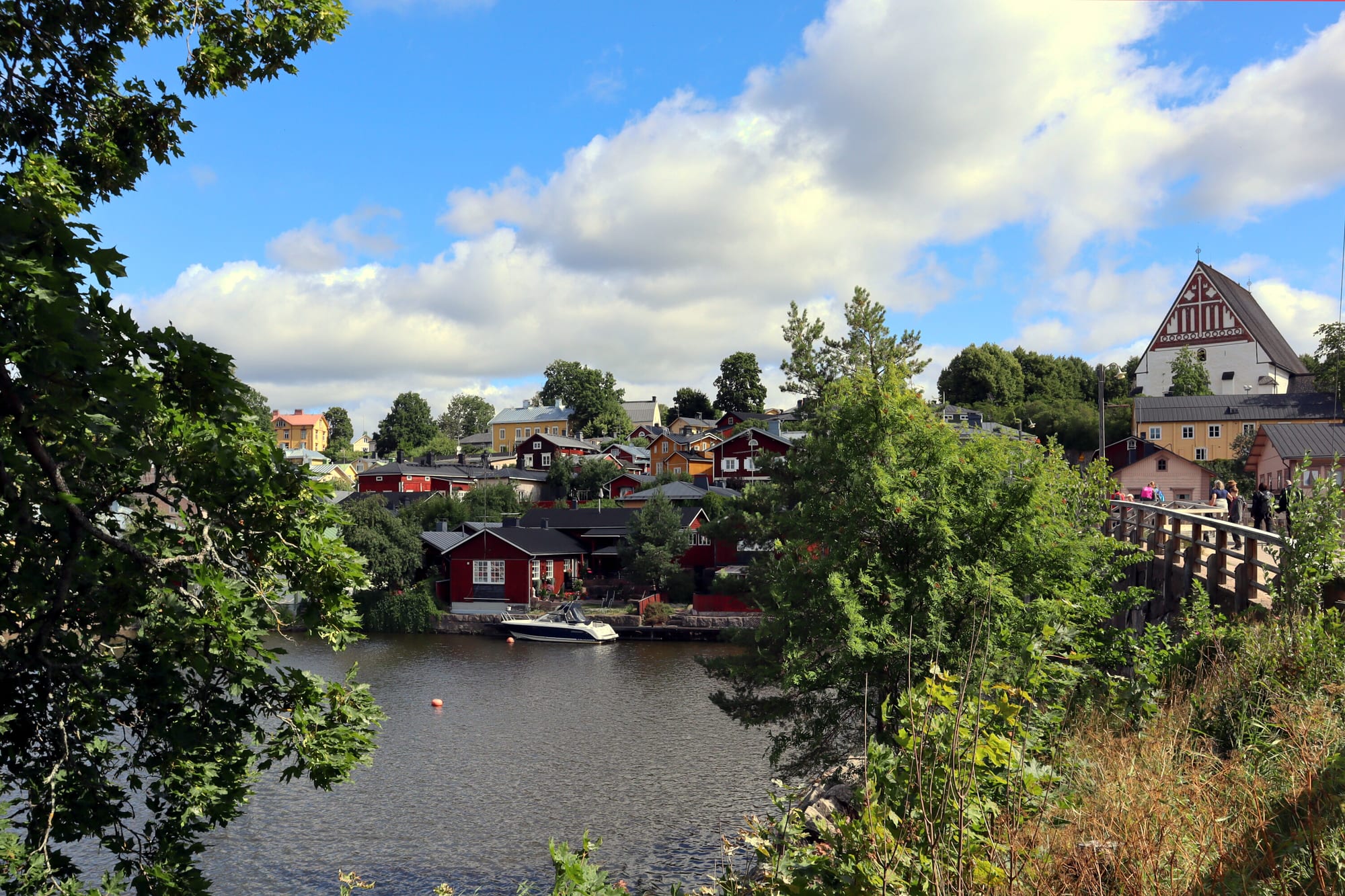
The south coast was settled by Finnic farmers and fishermen long before Swedish colonists arrived in the Middle Ages, giving Uusimaa its Swedish-speaking fringe. Häme was an inland heartland of its own, and the Swedes built Häme Castle there in the 13th century to hold it. Porvoo was already a trading town by the 14th century, and King Gustav Vasa founded Helsinki in 1550 to rival Tallinn across the gulf — for two centuries it stayed small.
The 18th century turned the south into a frontier. After the wars of 1700–21 and 1741–43, Sweden lost the south-east, including Hamina and Lappeenranta, to Russia, and began building the Sveaborg fortress — today Suomenlinna — off Helsinki in 1748 to guard what remained. It surrendered to Russia in 1808, and at the Diet of Porvoo in 1809 Tsar Alexander I received the oath of the Finnish estates as Grand Duke. Russia moved the capital from Turku to Helsinki in 1812, and Carl Ludvig Engel rebuilt its centre in imperial neoclassical style.
Industry followed in the 19th century: sawmills and pulp mills along the Kymi river, the port of Kotka, railways to St Petersburg. The civil war of 1918 was fought hard here, and Helsinki was taken by German troops aiding the Whites. After the Second World War South Karelia became border country when Vyborg and the Karelian Isthmus went to the USSR, and the post-war decades pulled people from across Finland into Helsinki, host of the 1952 Olympics, and its neighbours Espoo and Vantaa, which grew into the country's economic core.