History
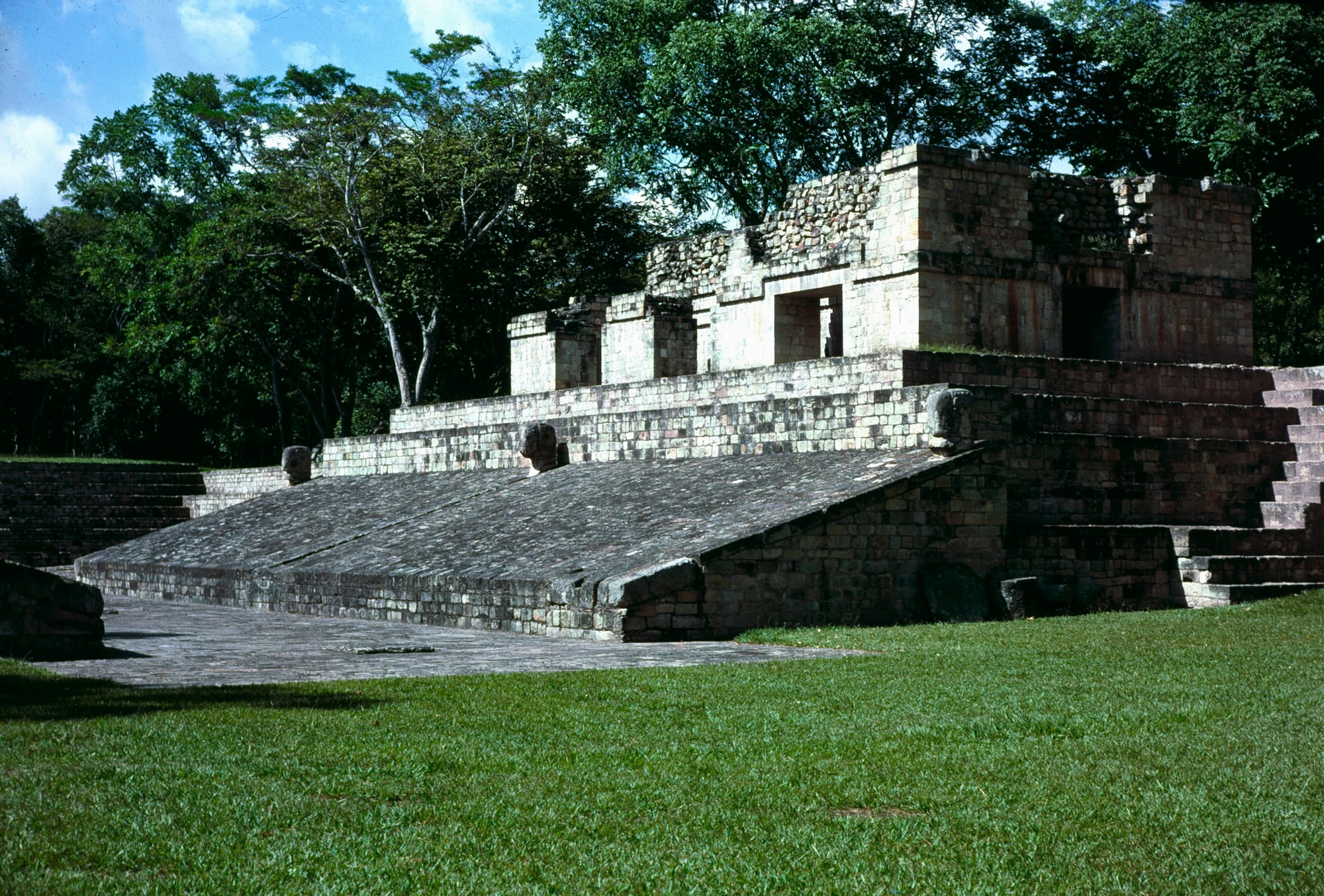
Copán was the south-eastern outpost of the Classic Maya world. A dynasty founded by K'inich Yax K'uk' Mo' in the early fifth century AD ruled the Copán valley for about four hundred years, and sixteen kings are shown on Altar Q, carved for the last great ruler, Yax Pasaj. The thirteenth, Waxaklajuun Ub'aah K'awiil, often called 18-Rabbit, filled the Great Plaza with sculpted stelae before being captured and executed by the ruler of nearby Quiriguá in 738. His successor rebuilt the Hieroglyphic Stairway he had begun and doubled its length, but by the ninth century royal power had collapsed and the valley slowly emptied. The American John Lloyd Stephens and the artist Frederick Catherwood brought the ruins to world attention in Stephens's book of 1841.
The highlands further east belonged to Lenca peoples. Around 1537 the Lenca leader Lempira led resistance to the Spanish from the fortified rock of Cerquín before being killed, and the department of Lempira and the national currency now carry his name. The Spanish founded Gracias a Dios in 1536, and in 1544 it became the seat of the Audiencia de los Confines, the court that governed Central America, before that moved to Guatemala a few years later. In the eighteenth century Santa Rosa de Copán grew as the centre of the Spanish crown's tobacco monopoly. In the twentieth century the west turned to coffee, and it remains a major coffee region.